
Mount Prospect Landscape Design Near Rivers Trails Middle
Landscape design near Rivers Trails Middle School in Mount Prospect sits on the east side of town off Wolf Road, where lots are larger and tree cover is heavier than the central Prospect High side. That extra room changes the kinds of design moves available. There’s space for a paver patio that actually feels like a separate outdoor room, water features that don’t crowd the property line, and lighting plans that use the mature canopy as part of the composition.
The housing on the streets feeding off Wolf and Camp McDonald skews 1960s through 1990s. Larger ranches, two-story colonials, the occasional contemporary. The trees are old, the soil is heavy clay common to this part of Cook County, and drainage along the back lot lines is a regular conversation early in the design process. A landscape that reads beautifully in May and floods in October didn’t account for the way the water actually moves on the lot.
Amliv has worked the east side of Mount Prospect for over twenty years, and the streets around Rivers Trails are familiar territory. Vilma starts with the site, the architecture, and the existing canopy before any plant gets specified. If you want the bigger view of where we work across the north suburbs, check the neighborhoods we cover.
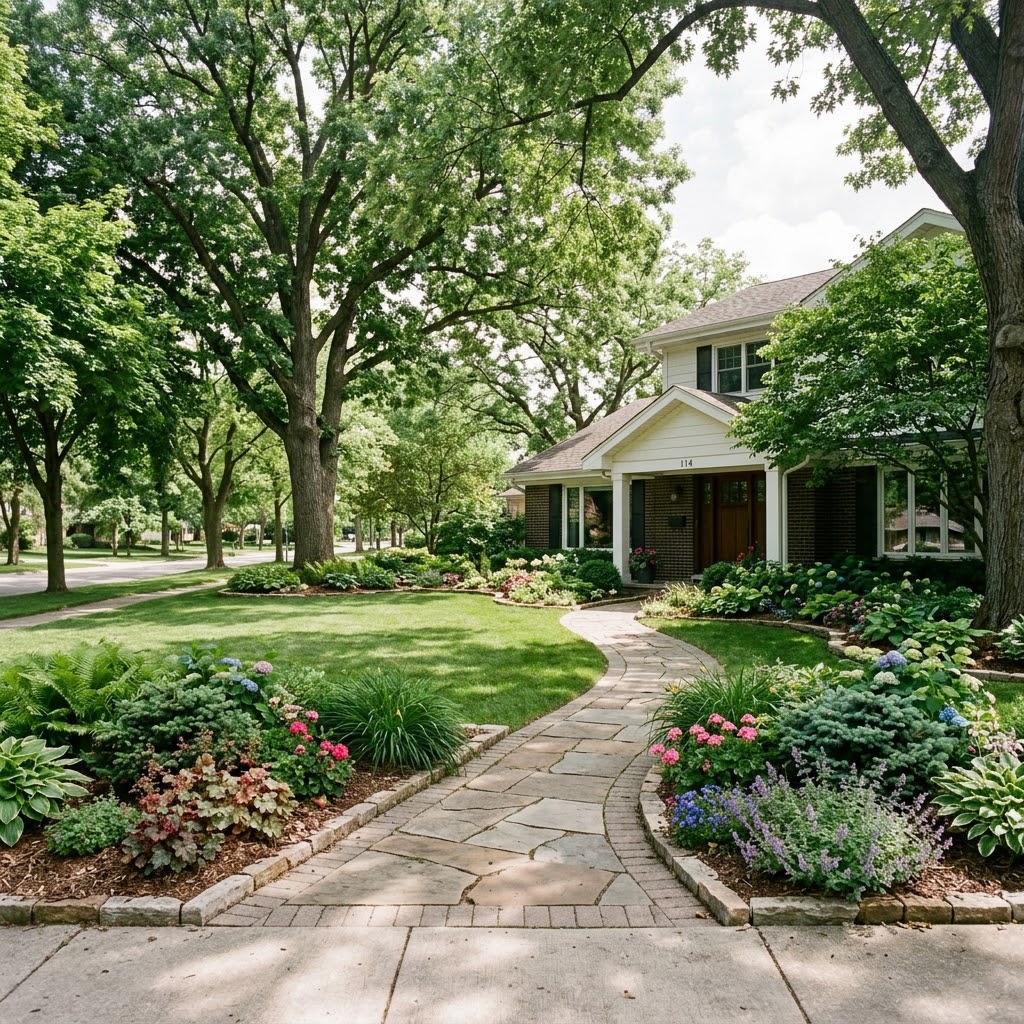
What Homeowners Near Rivers Trails Middle Should Know About Designing a Larger Lot
The east-side Mount Prospect lots feeding off Wolf Road and Camp McDonald run noticeably larger than the central Mount Prospect side, and that changes the design conversation in real ways. There’s room for a paver patio that holds a dining set and a separate seating area without crowding the property line. There’s room for a lawn that reads as part of the composition rather than just leftover space. There’s room for layered planting depth that doesn’t exist on a forty-foot lot.
The first decision on any Rivers Trails area design is figuring out what the lot actually wants to do. Some clients use the back yard for daily family life and need a hardscape forward design. Others use the front yard for curb impact and put most of the budget there. The lot can support either intent, but the design has to commit to one direction rather than splitting the budget thin across both.
The mature canopy in this pocket varies a lot. Some streets still have full 1960s tree cover. Others lost mature trees over the last decade and are growing in. The planting plan has to track the actual sun and shade pattern on the property, not a generic assumption about the neighborhood. We measure light patterns at three different times of day before specifying any planting.
The other regular conversation here is drainage. Heavier clay soil and the gentle slope toward the Des Plaines River bottom mean water moves slow through these properties. We look at where it pools first, then design around that.
Why Drainage and Slow-Moving Clay Shape East-Side Mount Prospect Designs
The east side of Mount Prospect, including the streets feeding off Wolf Road near Rivers Trails, sits on a slow gradient toward the Des Plaines River bottom. The grade is gentle enough that a casual walk through a neighborhood doesn’t reveal it, but the water knows. After a hard rain, certain backyards hold standing water for hours longer than properties two blocks west. That is information a landscape design has to use, not ignore.
A landscape that adds plantings without addressing how water actually moves through the property tends to fail in predictable ways. Mulch washes out of the back beds after every storm. Perennials at the low point of the lot drown by their second summer. The lawn at the back fence reads green in May and brown by August because the soil compacted while it was saturated.
We start every Rivers Trails area design with a grading conversation. Sometimes the answer is regrading a back-yard low spot. Sometimes it’s a French drain along a property line. Sometimes it’s selecting plants that actually want wet feet, like swamp milkweed, switchgrass, or sedges, and using them where the water collects naturally. The point is to make the water part of the design rather than fight it.
The plant palette also has to track with the heavy clay subsoil that’s typical in this part of Cook County. We test, we amend where it makes a difference, and we choose species that perform on clay long term rather than fade after the first hot August.
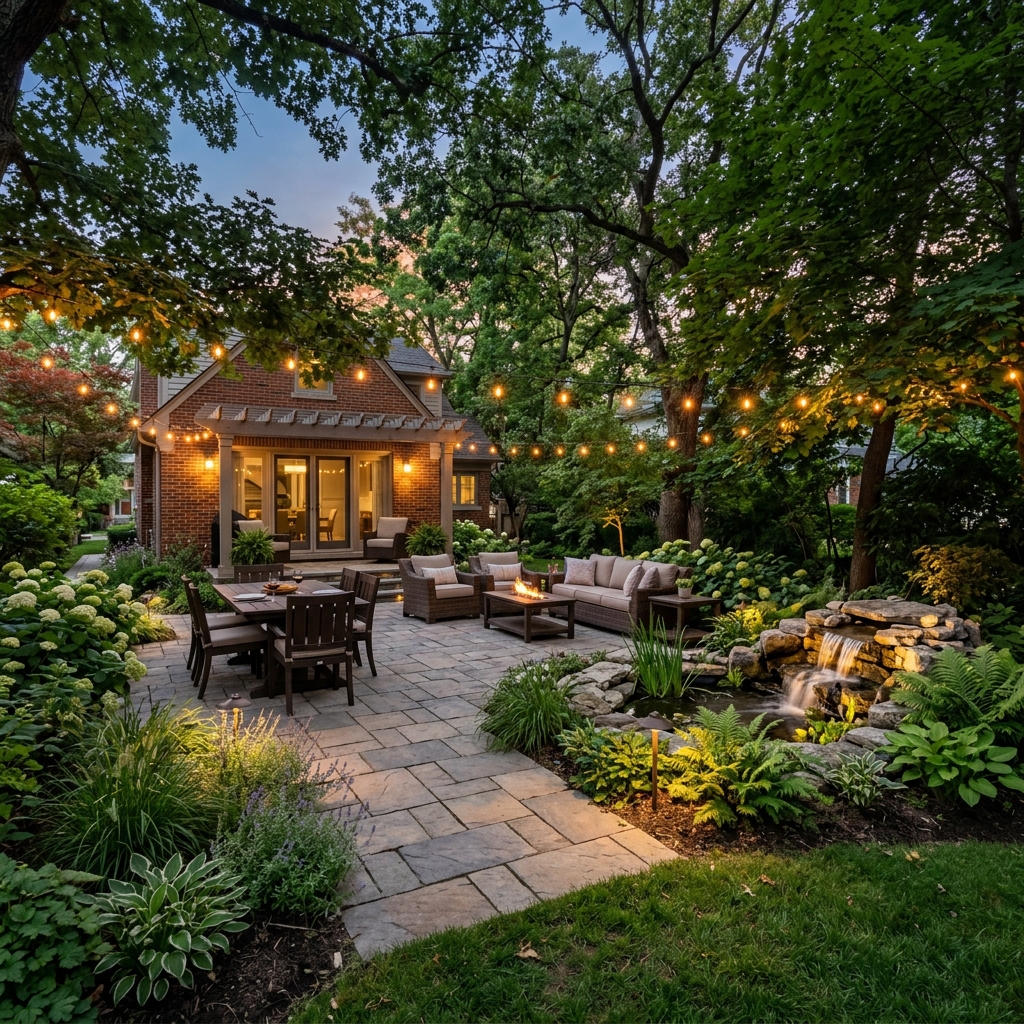
Outdoor Living Spaces and Layered Hardscape on East-Side Mount Prospect Lots
The lots around Rivers Trails support the kind of full backyard outdoor living arrangements that smaller north suburb properties simply can’t accommodate. There’s room for a primary patio of fifteen by twenty or larger, a separate fire-pit seating area, a shaded pergola or covered structure, and the planting depth around all of it that makes the whole thing read as a designed garden room rather than a furniture display.
The order of decisions matters. We start with how the family actually wants to use the back yard. Daily family dinners. Weekend entertaining. A reading spot. Kid play space. Dog run. Each of those uses takes priority on the layout differently. Designing a beautiful patio that nobody uses is a waste of budget. Designing a patio sized and placed for the family’s actual rhythms earns its keep every week.
Material choices on these lots tend to lean fuller. Bluestone slabs, larger-format porcelain pavers, mixed-material patios that combine flagstone with crushed-stone seating areas. We move away from the smaller-format brick paver patios that work on tight lots in central Mount Prospect. The proportions need to match the lot.
The other layer is shade. Many of these properties have a mature oak or maple in the back yard that’s worth designing around. A patio placed thoughtfully under a mature canopy stays usable in July afternoons that would bake a fully-exposed patio. Working with the existing canopy is one of the highest-value moves on lots this size.
Backyard Drainage and Grading on East-Side Mount Prospect Lots
Drainage runs through almost every design conversation we have on the east side of Mount Prospect. The grade is gentle. The clay subsoil drains slowly. The neighborhood pre-dates modern stormwater handling. Heavy rain events leave standing water on certain lots that takes hours to recede. A landscape design that doesn’t reckon with that reality runs into trouble.
The easiest fixes are the ones that re-route a single point of failure. A rain leader that discharges into a backyard low spot becomes a buried extension that runs to a useful discharge point near the property edge. A neighbor’s grade that flows water across a side yard becomes a small swale that intercepts and redirects. A back-yard low point that ponds becomes a French drain or a planted rain garden that absorbs the water rather than fights it.
The harder cases involve regrading. When the existing yard pitch sends water in a direction that doesn’t work, the only real fix is moving soil. We do that work at the start of the install rather than at the end, because every later step is affected by it.
Plant selection follows the drainage decisions. Low-spot beds get plants that handle wet feet. Higher beds get plants that prefer drier conditions. The whole landscape becomes a system that works with the water on the lot rather than against it. That sequencing makes for landscapes that hold up over time rather than failing the second wet spring after install.
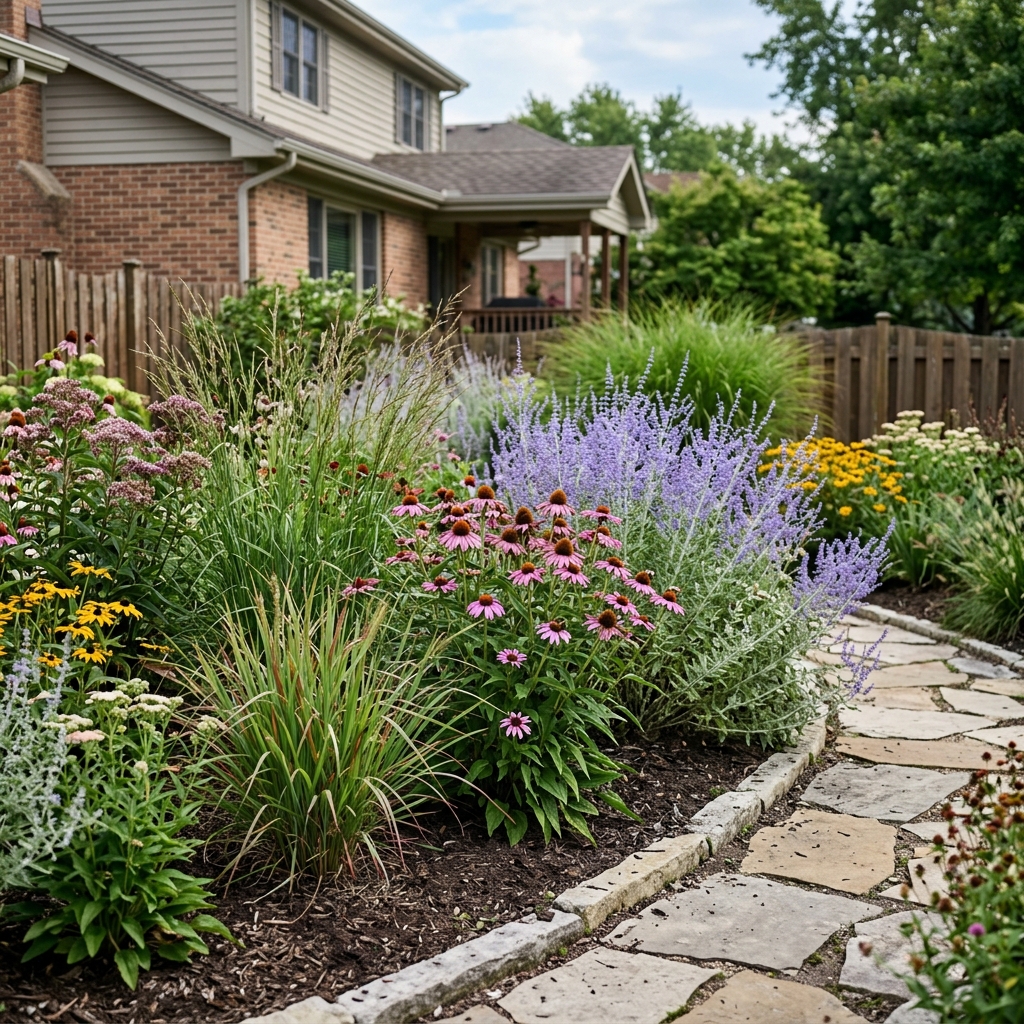
Starting a Design Project Near Rivers Trails
The east side of Mount Prospect is large-lot, full-design territory. A typical project here starts with a site visit during which Vilma walks the property carefully, looks at how water actually moves on the lot, notes the existing canopy, and asks how the family wants to use each section of the yard. The site visit is unhurried because the lots are big enough that there’s a lot to see.
A first design concept follows in the next week or two. We share it as a hand drawing first because it invites real conversation rather than locking the direction in too early. From there we refine, choose plants and materials together, and develop a project schedule that fits the family’s preferences and the install crew’s capacity.
Installation on a Rivers Trails area property usually runs longer than on a small Park Ridge lot because there’s more hardscape and more planting depth involved. A two-to-four-week window is typical for projects with patio, lighting, and full planting. We sequence carefully so the property is usable as long as possible during the install rather than fully shut down.
The east side of Mount Prospect is part of our regular weekly territory. For the wider view of where we work, view the neighborhoods we serve.
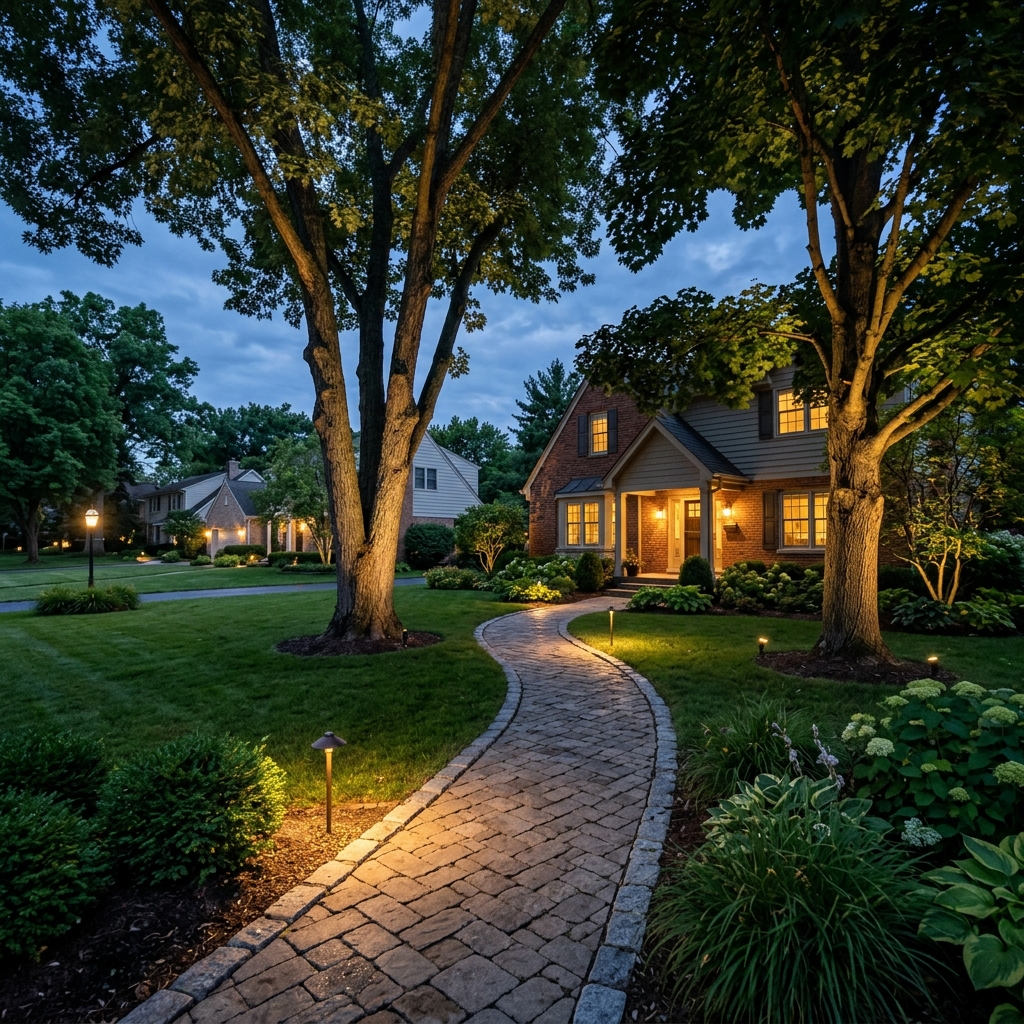
Frequently Asked Questions About Landscape Design Near Rivers Trails
Do you service the east side of Mount Prospect around Rivers Trails Middle?
Yes. The streets feeding off Wolf Road, Camp McDonald, and the larger-lot east-side neighborhoods are all part of our regular weekly Mount Prospect territory. Call us with your nearest cross street and we can give you a realistic timeline.
Can you handle a full backyard outdoor living build?
Yes. The bigger lots in this part of Mount Prospect support real outdoor living projects, and that is some of the most rewarding work we do. Patio plus fire pit, water feature, lighting, planting, and irrigation all coordinated as a single design rather than picked off one element at a time.
My back yard pools water after every rain. Can the design fix that?
Almost always, yes. Drainage is the conversation that runs through most east-side Mount Prospect projects. We handle regrading, French drains, rain leader extensions, and rain garden plantings as part of the design rather than as an afterthought. The landscape works with the water rather than against it.
Are mature trees on my lot a constraint or an asset?
Both, but mostly an asset. A sixty-year oak in a back yard is a design opportunity that no new construction will replicate for fifty years. We design around the existing canopy and protect it during install. Occasionally a tree in decline is the right call to remove and replace, and we are honest about that when it comes up.
Do landscape projects in Mount Prospect require permits?
Some types of work do. Hardscape over certain sizes, retaining walls past a height threshold, and drainage modifications that affect neighboring properties. We pull every permit our work requires and handle inspections as part of the project.
Schedule a design consultation with Amliv Land Designs at (847) 485-9619 or email amlivlanddesigns@gmail.com. Vilma works with homeowners across Des Plaines and the northern Chicago suburbs on residential landscape design, installation, drainage, and outdoor lighting. The EPA notes that thoughtful landscape design can reduce outdoor water use by half, which is part of why plant selection matters.