
Arlington Heights Landscape Design Near Windsor Elementary
Landscape design near Windsor Elementary in Arlington Heights happens on lots that are noticeably bigger than what we see in Mount Prospect or Park Ridge. The typical Windsor neighborhood lot has room for a real outdoor living arrangement, layered perennial borders, and design intent that reads from the street as well as from inside the house. The design ambition tends to scale with the lot, and the budget conversations here usually leave room for full hardscape, lighting, and irrigation rather than picking one element at a time.
The streets around Miner Street and Windsor Drive carry a mix of mid-century split-levels and the early-2000s teardown-rebuild homes that filled in the bigger lots over the last twenty years. The trees vary block to block. Some streets still have the mature canopy that came with the original 1960s development. Others lost their oaks to disease or replacement and are growing in younger maples and elms. Every design starts with what’s actually overhead and what’s actually in the ground.
Amliv runs Arlington Heights weekly and the Windsor area is a familiar territory for Vilma. The process is the same here as anywhere: a site visit, careful measurement, a hand sketch, then a refined design that respects the architecture, the canopy, and the way the family actually moves through the yard. For the wider view of where we work, see all the areas we serve across the region.
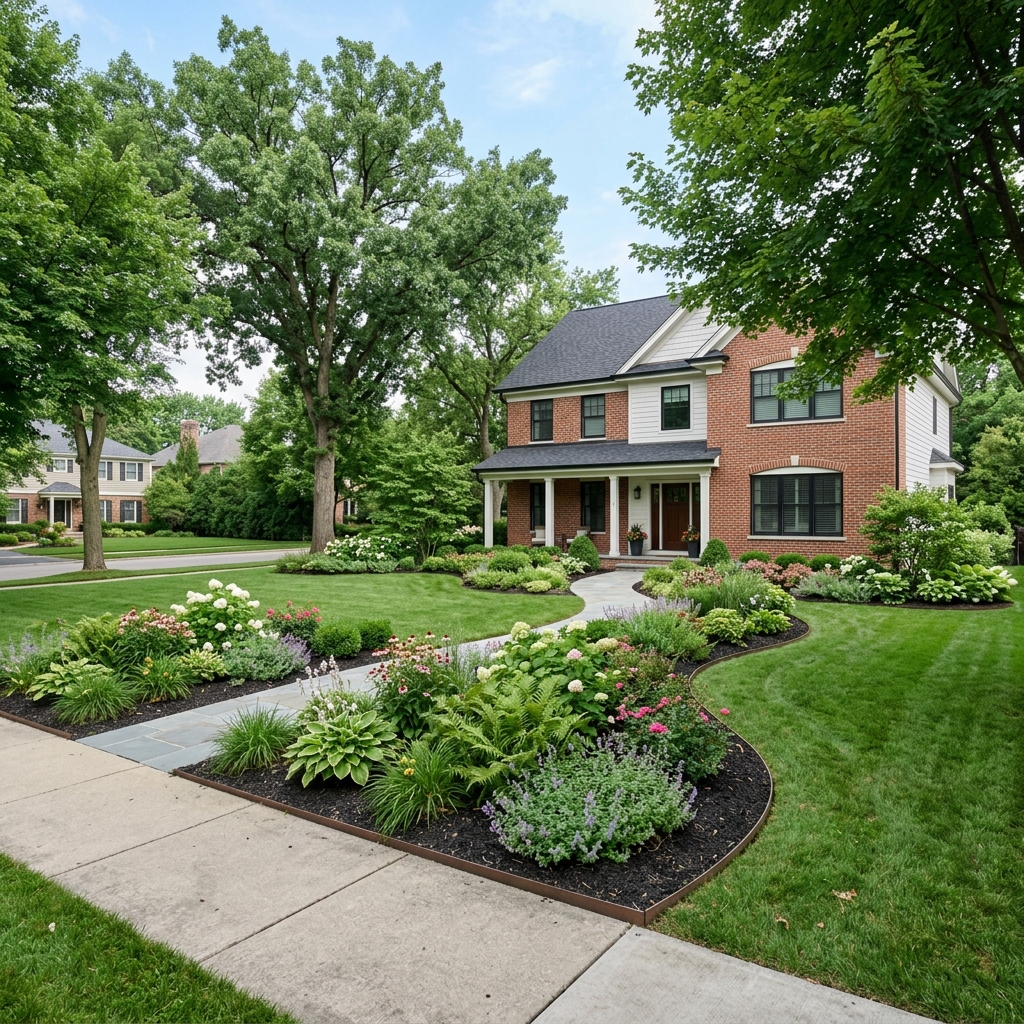
What Arlington Heights Homeowners Near Windsor Elementary Should Know About Landscape Design
Arlington Heights lots in the Windsor Elementary area are the kind of canvases that let a landscape design carry real ambition. There’s room for full hardscape, real planting depth, integrated lighting, and the kind of irrigation system that actually keeps a layered perennial border alive through August. The challenge isn’t fitting a design onto the property. The challenge is choosing among the design moves the lot can support.
What that means in practice is that the early conversation on any Windsor area design is about prioritization. Front yard curb impact or backyard outdoor living. Plant-forward design or hardscape-forward design. Subtle and refined or generous and layered. The lot can support all of it, and the budget conversation gets clearer when we name what the family actually wants the landscape to do.
The architecture in this area runs from original 1960s split-levels to the early-2000s teardown rebuilds that filled in the bigger lots over the last twenty years. The design language has to track the architecture, not the address. A clean modern house and a traditional brick colonial sitting on the same street get different planting plans even if their lots and exposures match.
The other reality on these bigger Arlington Heights properties is that the mature trees are doing real work in the composition, and any design that fails to account for them ends up working against itself.
Why the Mixed Housing Stock Around Windsor Elementary Calls for a Tailored Approach
The streets surrounding Windsor Elementary carry one of the more architecturally varied housing mixes in the north suburbs. On a single block you might see a 1962 split-level next to a 2008 teardown rebuild next to an early-1970s ranch. Each of those houses calls for a different landscape language, and a one-size-fits-all neighborhood approach doesn’t serve any of them well.
The 1960s and 1970s housing in the Windsor area tends to want restrained, masses-of-plants design that respects the original architecture. The teardown rebuilds usually want fuller, more layered design that matches the increased scale of the new house. Older split-levels often need a structural conversation about how the front entry actually meets the sidewalk, since those original walkways were undersized for current expectations.
The other reality is that the mature trees in this neighborhood are a real design asset, and any plan that fails to account for them gives up significant compositional value. We measure existing canopy, plot the shade pattern, and choose plants that work with the trees rather than under stress beside them.
Soil here is the same heavy clay that runs across most of the north Cook County suburbs. The same plant performance rules apply. Test where the design calls for it, amend where amendment matters, and choose species that thrive on clay rather than tolerate it.
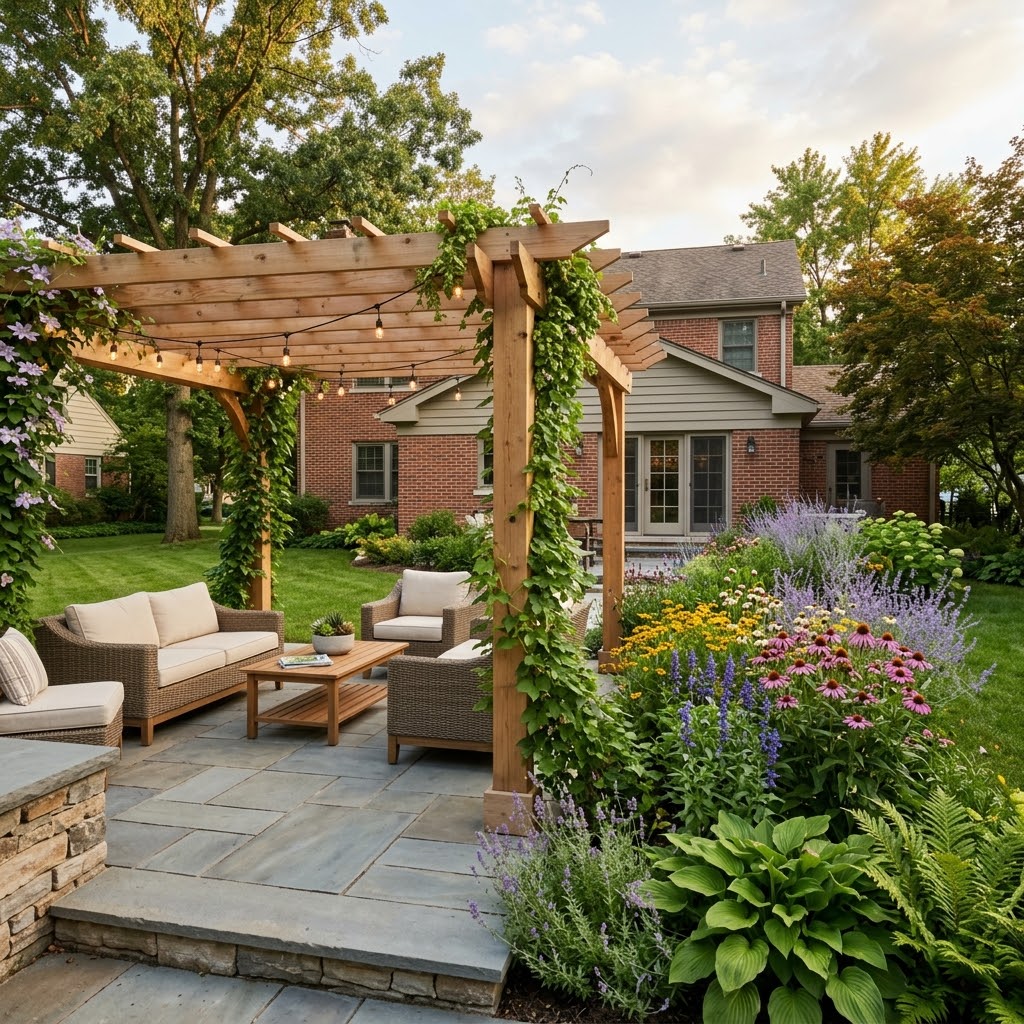
Lighting and Four-Season Design on Larger Arlington Heights Properties
Landscape lighting earns its keep on Arlington Heights lots in a way it rarely does on smaller properties. There’s enough composition to actually light. There’s enough planting depth that uplighting trees and accent-lighting beds creates real visual layering after dark. There’s enough budget conversation around full hardscape that integrated path and step lighting reads as part of the design rather than as an add-on.
Our approach on Windsor area properties is to plan the lighting in the same conversation as the planting and hardscape, not after both are installed. That sequencing matters. Pre-planned conduit runs cost a fraction of retrofit work, and the photometric design for trees and structural plants reads better when it’s been considered alongside the plant selection rather than imposed afterward.
The four-season conversation also runs deeper here. With more lot to work with, we can build composition that holds visual interest in winter without sacrificing summer impact. Evergreen anchors in scaled positions, ornamental grasses left standing through January, hardscape in materials that read as carefully against winter snow as they do against summer flowers. The landscape stops being a May-through-October show and starts being a year-round composition.
Irrigation matters more on these properties too. Larger planted areas with layered perennial beds need predictable summer water to perform, and a properly designed drip and zoned spray system pays for itself over time in plant survival rates.
Working With Existing Trees on Arlington Heights Properties
Mature trees on the bigger Windsor area lots are a real design asset and a construction risk at the same time. A sixty-year-old oak that anchors a front yard composition is also a tree whose root system runs ten or fifteen feet past the drip line, and any heavy hardscape work or aggressive grading inside that root zone can damage or kill the tree years after the install crew has gone home.
Tree protection becomes a first priority on any Windsor design that involves construction. Tree-protection fencing across the drip line during demolition. Hand-digging in critical root zones rather than equipment-trenching. No staging of materials or stockpiling of soil under existing canopy. Root-friendly hardscape choices like permeable pavers, open-graded gravel base, or concrete-free edging on areas that span existing root mass.
Plant selection alongside a mature tree is its own conversation. Aggressive shade-tolerant plants thrive under a sixty-year oak. Sun-lovers fail completely. Plants that need consistent summer water lose every battle against the tree’s pull, which can be hundreds of gallons a day in heat. Choosing plants that actually want the conditions the tree creates, rather than tolerating them under stress, is the difference between a healthy bed and a perpetual replacement project.
The honest conversation comes up when an existing tree is in decline or sited badly for the design. Sometimes the right call is removal and replacement with a younger, better-located specimen. We base those calls on what the tree is actually doing, not on sentiment, and we are direct about the tradeoffs.
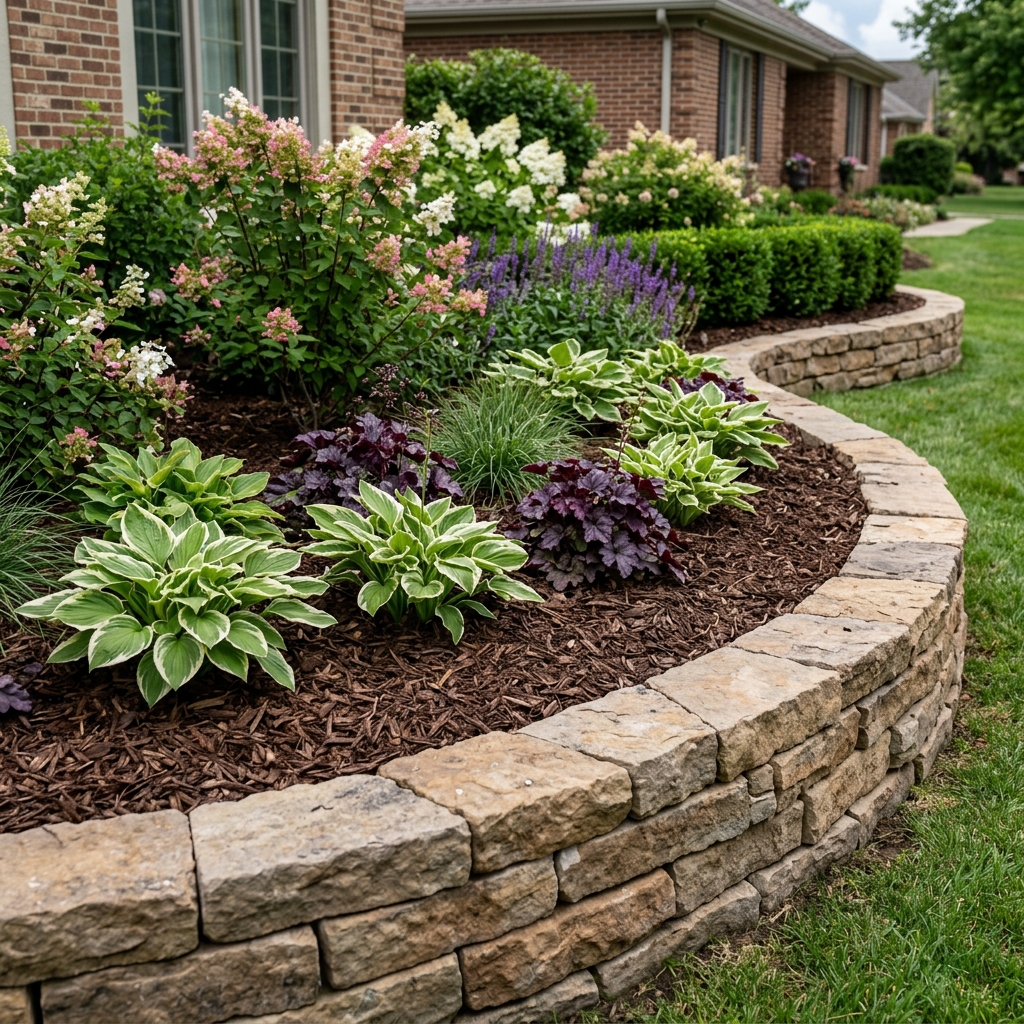
Working With You on an Arlington Heights Design
Projects on Windsor area properties usually start with a long, careful site visit. The lots are big enough that walking them takes time, and the design questions are layered. Vilma looks at the architecture, the existing trees, the soil at a few representative spots, the way water moves across the lot, and the way the family currently uses each part of the yard. Notes, photos, and measurements all get captured before we leave.
A first design concept follows in the next week or two as a hand sketch and a conversation rather than a finished computer rendering. The hand stage invites real input. Once the direction is locked, we develop a refined plan, finalize plant material and hardscape selections, and build a project schedule.
Larger Arlington Heights projects often run a multi-week install window because the scope is layered. Hardscape, lighting, irrigation, and planting all happen in their right sequence. We give clients a realistic timeline rather than a hopeful one, and we keep them informed as the schedule develops.
The Windsor area is part of our regular Arlington Heights territory and we know the soils, the sun patterns, and the architectural mix well. If you want the bigger view of where we work across the region, you can browse the full coverage area.
Frequently Asked Questions About Landscape Design Near Windsor Elementary
Do you cover the Windsor Elementary area of Arlington Heights?
Definitely. Miner Street, Windsor Drive, the surrounding blocks. Arlington Heights runs as a regular weekly stop through the design and install seasons, and the Windsor area is part of that rotation. Drop your cross street when you call and we will give you a realistic site visit window.
Larger lot, more design ambition. Can you actually scope the full project?
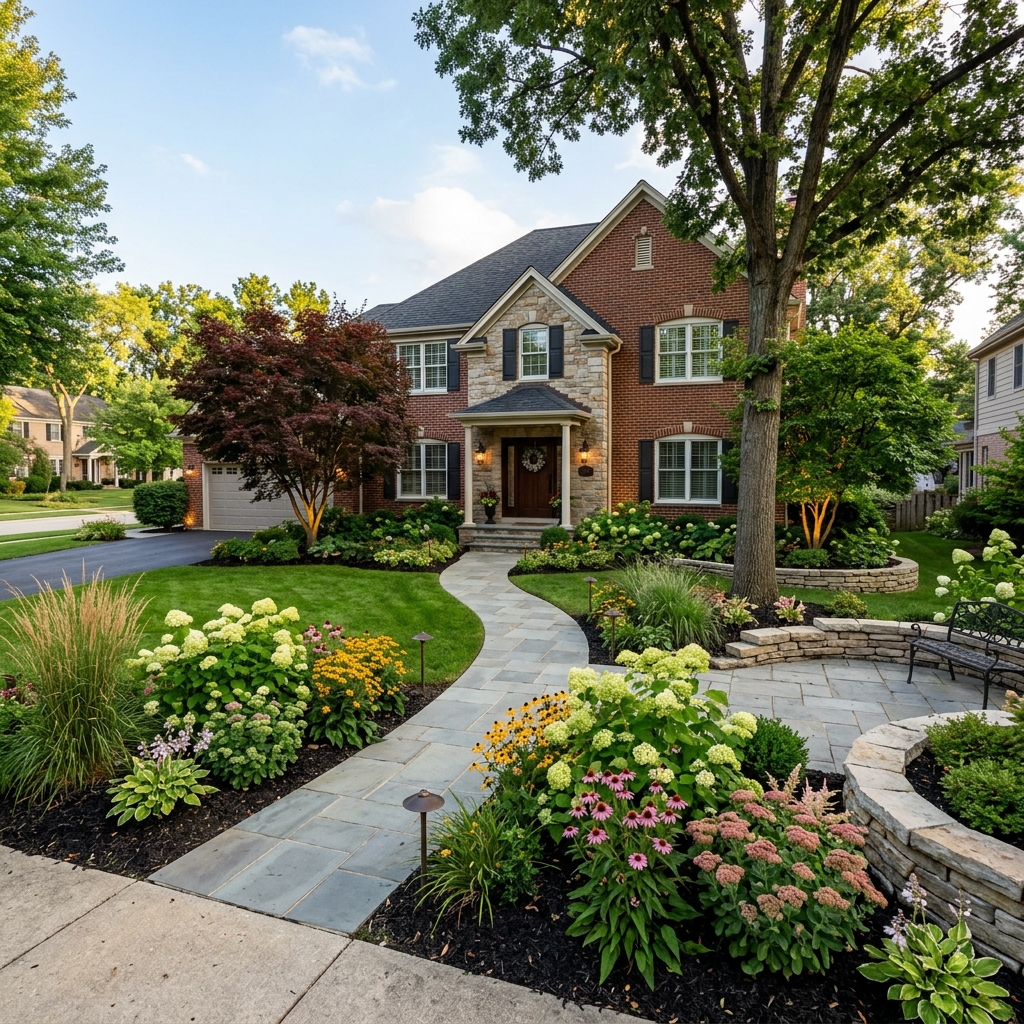
Yes, and Windsor area lots are some of our favorite to design. Full hardscape, integrated lighting, irrigation that keeps a layered perennial border alive in August, planting depth that reads from the street and from inside the house. The bigger lot supports moves that smaller properties simply cannot.
There is a sixty-year oak in the front yard. How does that affect the design?
That tree is part of the design, full stop. We measure the drip line and the root zone, choose plant material that thrives in the conditions the tree creates, and protect the root system carefully through any construction. Occasionally a mature tree is in decline or sited badly and replacement is the right call. If that comes up, we say so plainly.
Heavy clay soil. Is that a real problem?
A manageable one. Our plant palette in Arlington Heights leans heavily on species that perform on clay rather than tolerate it. We amend where it makes a real difference and skip amendment where the catalog claim was bigger than the reality. Same approach we have used in this neighborhood for two decades.
Will my project need permits from Arlington Heights?
Probably some. Larger paver patios, retaining walls beyond a certain height, drainage modifications, certain tree removal cases. We handle every permit our scope requires and coordinate inspections directly with the village so it stays off the homeowner's plate.
Schedule a design consultation with Amliv Land Designs at (847) 485-9619 or email amlivlanddesigns@gmail.com. Vilma works with homeowners across Des Plaines and the northern Chicago suburbs on residential landscape design, installation, drainage, and outdoor lighting. The EPA notes that thoughtful landscape design can reduce outdoor water use by half, which is part of why plant selection matters.