
River Rock and Decorative Stone Design in Des Plaines, IL
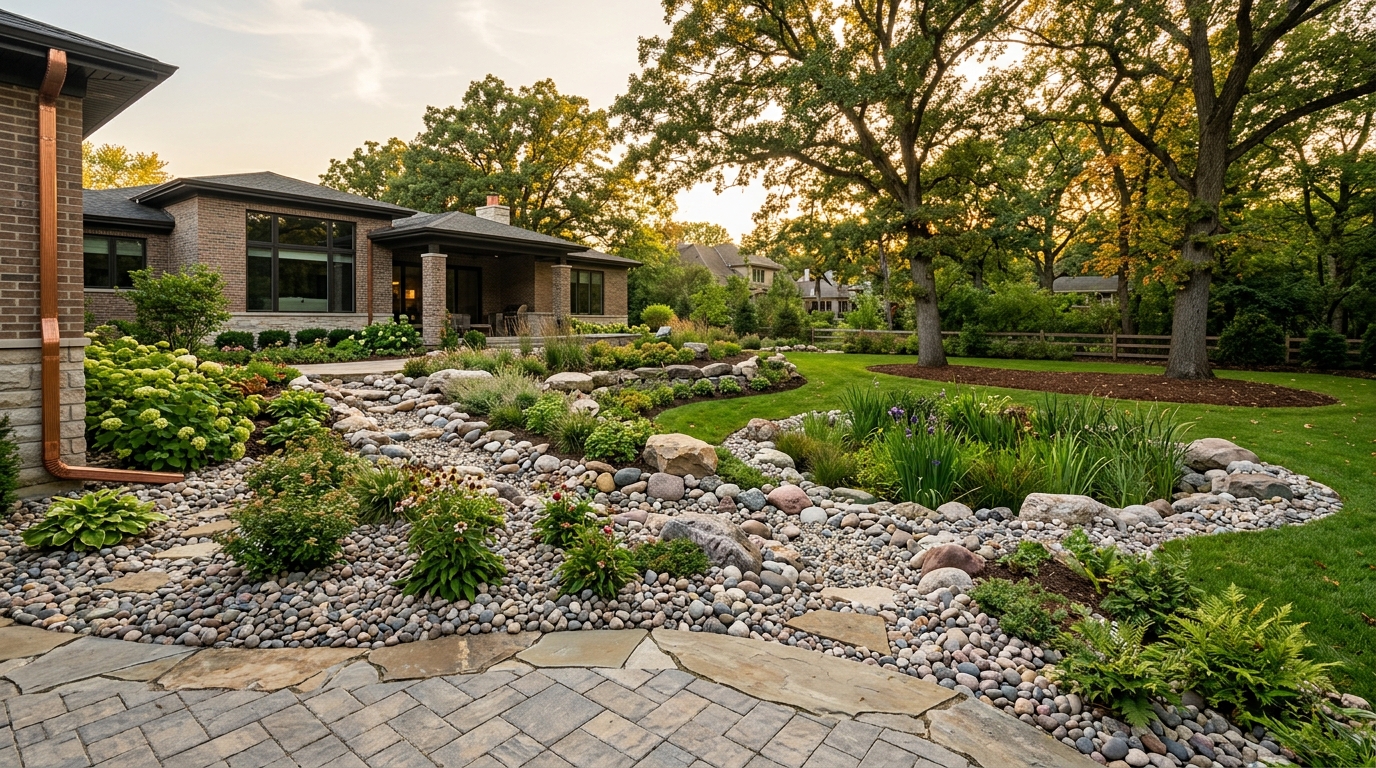
River rock and decorative stone design in Des Plaines is the planning step that decides whether your beds, dry creek beds, accent boulders, and edging read as one coordinated landscape language or as a pile of rocks somebody dumped on a Tuesday. Stone size, color, placement, quantity, fabric or no fabric underneath, and how the stone transitions to plants and turf all get drawn before any rock arrives on the truck.
TLDR
- Stone design is the planning artifact: where the rock goes, what size, what color, how much.
- Bigger boulders work as accents. Smaller stone fills beds and replaces high-maintenance turf zones.
- We spec the right fabric (woven, not nonwoven felt) underneath so the bed doesn’t migrate into the soil.
- Dry creek beds double as drainage routes that move water away from the foundation.
- Done well, stone elements last decades and replace mulch that has to come back every two or three years.
We are Amliv Land Designs. Family-run, twenty-plus years specifying decorative stone across Cook and DuPage Counties. Our designs treat stone as a structural element, not as filler. Boulders get sized to the bed they anchor. Smaller stone gets matched to the surrounding color palette. Fabric underneath gets specified to keep the rock from sinking into clay over the next ten years. Each piece earns its place on the plan.
Below: how the stone design phase actually runs on our projects, the failure modes we see when stone gets selected at a yard supply store on a Saturday and dumped without a plan, why Chicago drainage changes how decorative stone gets specified, and customer-intent answers about scope, transitions, and how to avoid the stone-island look.
Decorative stone rarely sits on its own. Most of the projects we run also coordinate with the planting plan that frames the stone, with the patio in the hardscape build phase, and with the broader site decisions made during the first onsite walk.
What River Rock and Decorative Stone Design in Des Plaines Actually Covers
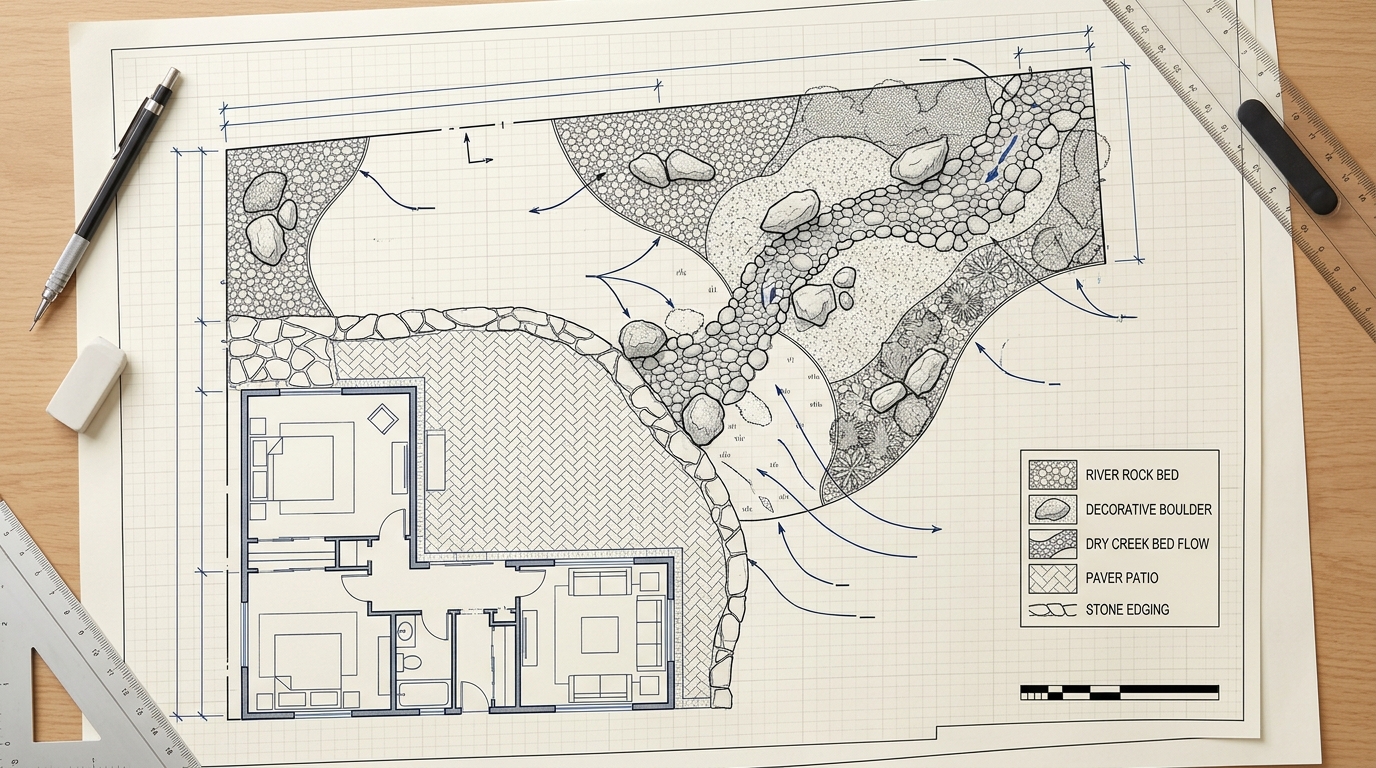
Every stone design we deliver follows the same shape. Site walk first to look at existing beds, drainage routes, foundation plantings, and the architectural color palette of the house. Bed-by-bed analysis to figure out which beds want stone (low-traffic, drainage prone, or color-anchor positions) and which beds are better served with mulch and plants.
Stone size and color spec for each bed, written against actual supplier swatches not generic catalog names. Boulder placement plan with elevations and a count, plus delivery and staging logistics. Fabric and edging spec for each zone. Dry creek bed routing where drainage is part of the job. The plan ships with a quantities sheet so the install crew or another contractor orders the right amount on the first delivery.
What 20 Years of Stone Design in Cook County Taught Us
Twenty years of running decorative stone design in this corridor teaches you the patterns nobody warns the homeowner about.
First mistake we see: too many stone sizes and colors in one yard. Owner picks pea gravel for the front, river rock for the side, and big chunky cobble for the dry creek out back. The yard reads as three different jobs stitched together. Plans we draw use one or two stone families across the whole property so the visual language stays consistent.
Second mistake: nonwoven felt fabric under decorative beds. The fabric clogs with clay particles in two seasons, water stops draining through the bed, the stone starts holding moisture, and the surrounding plants suffer. Woven monofilament fabric is the right answer on Chicago clay. We spec it on every job.
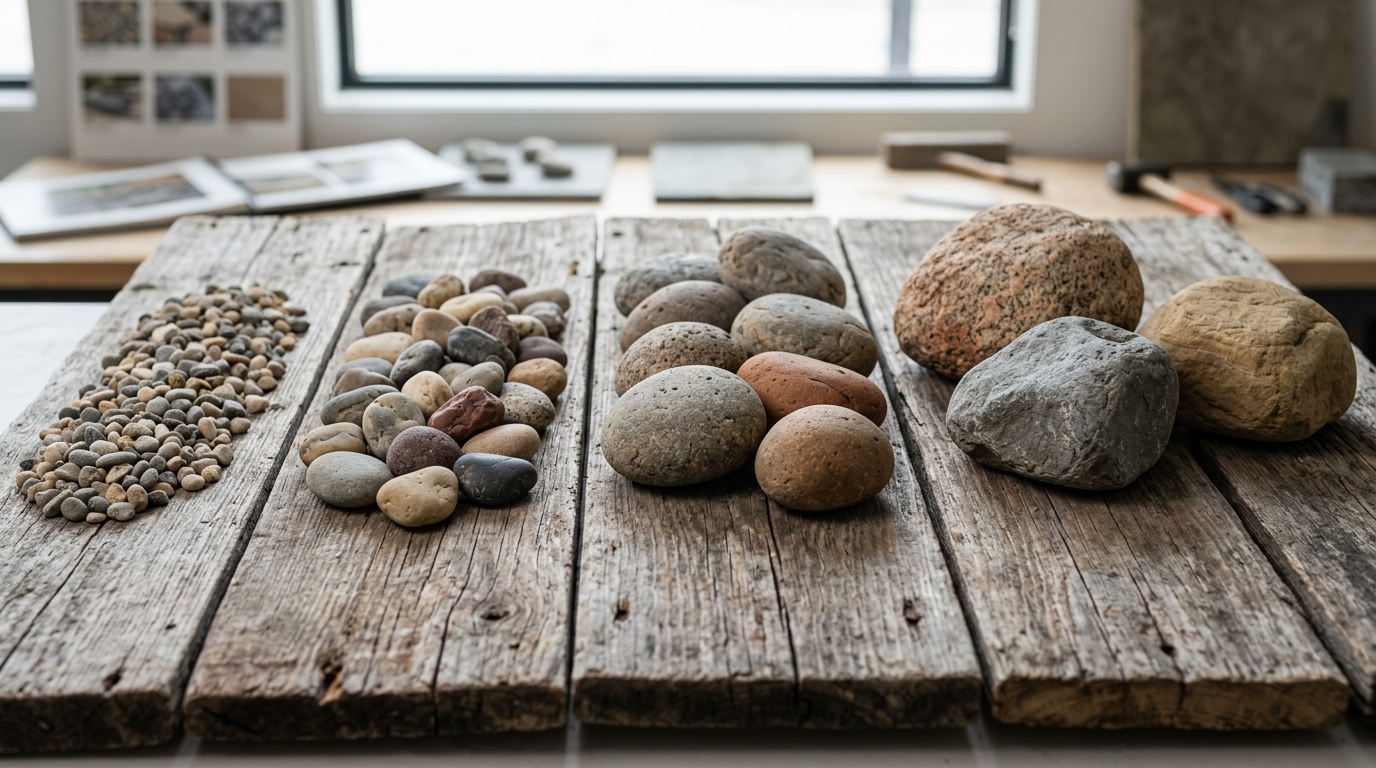
Third mistake: boulders placed singly at random. Single boulders look like somebody dropped a rock. Boulders work in groupings of three or five, sized in proportion (one large, one medium, one small), partially buried so they read as if they grew there. Plans show every boulder placement and its burial depth.
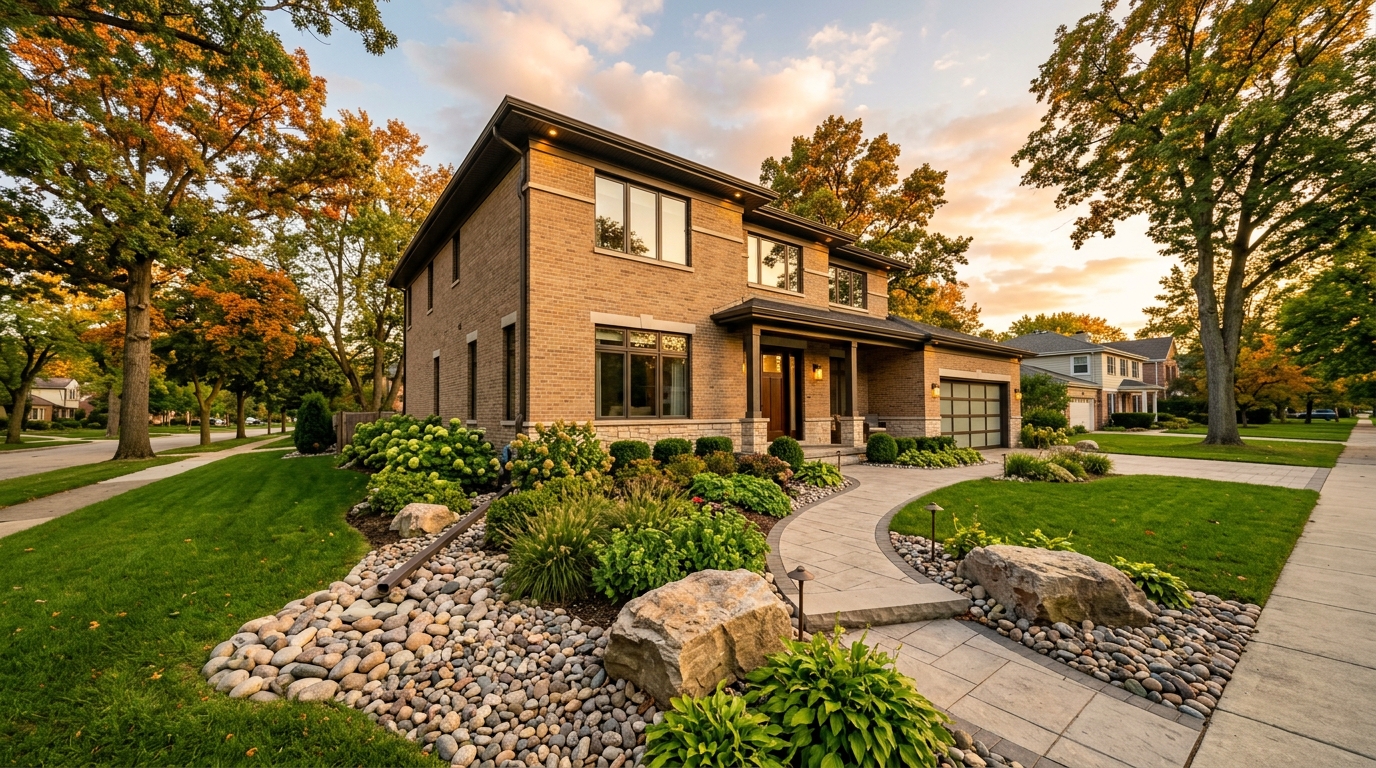
Fourth mistake: stone right up against the foundation. Splash from rain hits the stone, kicks back at the siding, and stains the lower courses of brick or accelerates wear on hardboard. We pull stone six to twelve inches off the foundation and cover the gap with a strip of low groundcover or mulch.
Done right, decorative stone is one of the lowest-maintenance landscape elements available. Done without a plan, it’s a fast way to make a yard look unfinished.
Why Chicago Drainage Changes How Decorative Stone Gets Specified
Chicago drainage changes how stone gets specified more than the design magazines admit. Sandy soil drains, so a decorative stone bed over sandy soil acts as a permeable surface and water leaves through it. Clay soil does not drain, so the same bed over clay holds water unless the design routes it elsewhere.
We specify decorative stone with that reality in mind. Beds in low-lying corners of the yard get a built-in drainage layer of larger stone underneath the visible top course, plus a perforated drain pipe routing water out to daylight or a sump. Dry creek beds get pitched to actually carry water during a rainstorm, not just look picturesque on a sunny day.
Freeze-thaw is the second piece. Stone sitting in saturated clay heaves during a December freeze, shifts position by spring, and the bed loses the deliberate composition the design called for. Plans built without freeze-thaw factored in start looking sloppy by year three. Fabric spec, base depth, and bed routing all account for the freeze-thaw cycle on a Des Plaines lot.
When River Rock and Decorative Stone Design in Des Plaines Pays Off Long-Term
Decorative stone pays back over time on three measurable lines. Maintenance is the obvious one: mulch beds get topped up every two or three years and fully replaced every five, while river rock and decorative stone last decades with nothing more than the occasional rinse and weed pull.
The second is drainage. Beds that route water away from the foundation through a designed dry creek bed cost less than a separate drainage solution and look intentional rather than utilitarian. The same surface area handles two jobs.
The third is the way stone reads year-round. Plants change with the season. Stone holds the visual structure of the bed in November when everything else has gone dormant. A property that looks composed in late February instead of empty is a property where stone is doing its work.
For more on how stone affects residential drainage, the EPA permeable pavement guidance covers the same infiltration logic we apply when specifying decorative stone over Chicago clay.
Frequently Asked Questions
What Does River Rock and Decorative Stone Design Actually Cover?
The design covers stone size, color, quantity, placement, the fabric underneath, edging spec, and how each bed transitions into plantings or turf. The plan ships with a quantities sheet so the install crew or another contractor orders the right amount on the first delivery.
Do I Need a Permit to Install Decorative Stone Beds in Des Plaines?
Decorative stone beds at residential scale typically don't need a permit. Larger drainage-related projects (substantial regrading, dry creek beds tied into municipal stormwater) sometimes do. We assess during the site walk and tell you which category your project falls into.
Can Decorative Stone Replace Mulch in My Existing Beds?
Often yes, especially in beds that get hot afternoon sun, sit near downspouts, or are tough to mulch. The bed has to be regraded slightly and have the right fabric installed underneath. We assess existing beds during the design phase and tell you which ones convert well and which are better left as mulch.
Will Decorative Stone Work With My Existing Plantings?
For the most part, yes. Stone in a bed isn't a problem for plants as long as it's pulled back from the trunk by a few inches and the bed is graded so water still reaches root zones. The exceptions tend to be acid-soil specialists and constant-moisture plants, which fare better in mulch.
How Long Does the Stone Design Phase Take?
Most stone design plans wrap in 2-3 weeks from site walk to final document. Larger properties or projects with multiple bed types and a dry creek bed run 4-5 weeks because each zone needs its own size, color, and fabric spec.
Can I Use the Stone Plan With a Different Installer?
Yes. Plans are written so any qualified landscaper can build to them. Stone supplier names, size and quantity per bed, fabric type, edging spec, and placement diagrams are all documented. We don't tie the plan to a specific install crew.
Ready To Get Started?
Looking for river rock and decorative stone design in Des Plaines? Schedule with Amliv Land Designs. Family-run, twenty-plus years across Cook and DuPage Counties. Call us at (847) 485-9619 to get your stone design project started today!