
Native Plant Garden Design in Des Plaines, IL
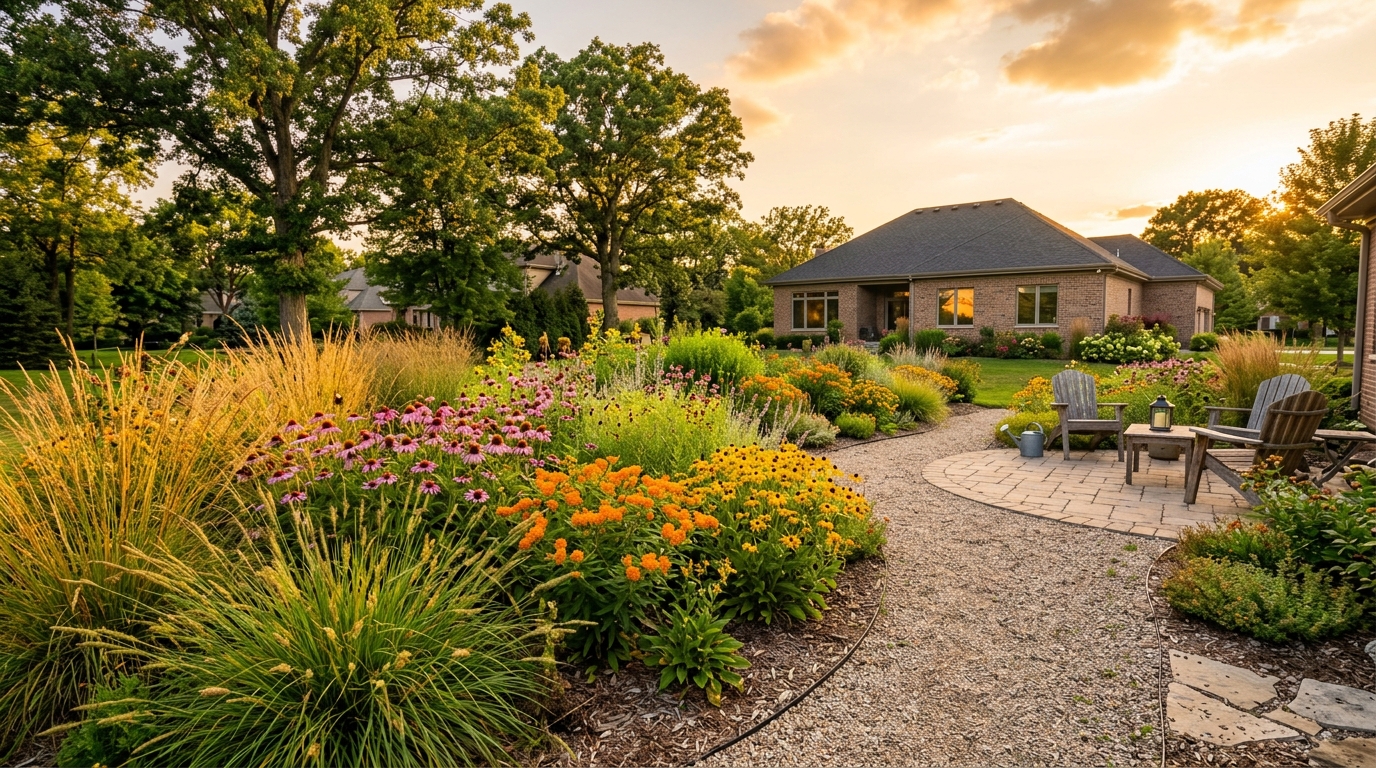
Native plant garden design in Des Plaines starts from a different premise than ornamental gardening. Ornamentals get specified for one perfect catalog photo and replaced when they die in year three. Native species from the Illinois prairie and woodland palettes hold up to the soil and climate without intervention, develop deeper root systems each year, and read as a real designed garden rather than a maintenance schedule.
TLDR
- Native plant gardens use Illinois prairie and woodland species that evolved for Chicago clay and Chicago winters.
- Design covers species selection, layout, succession (plants that bloom across seasons), and root depth for drainage.
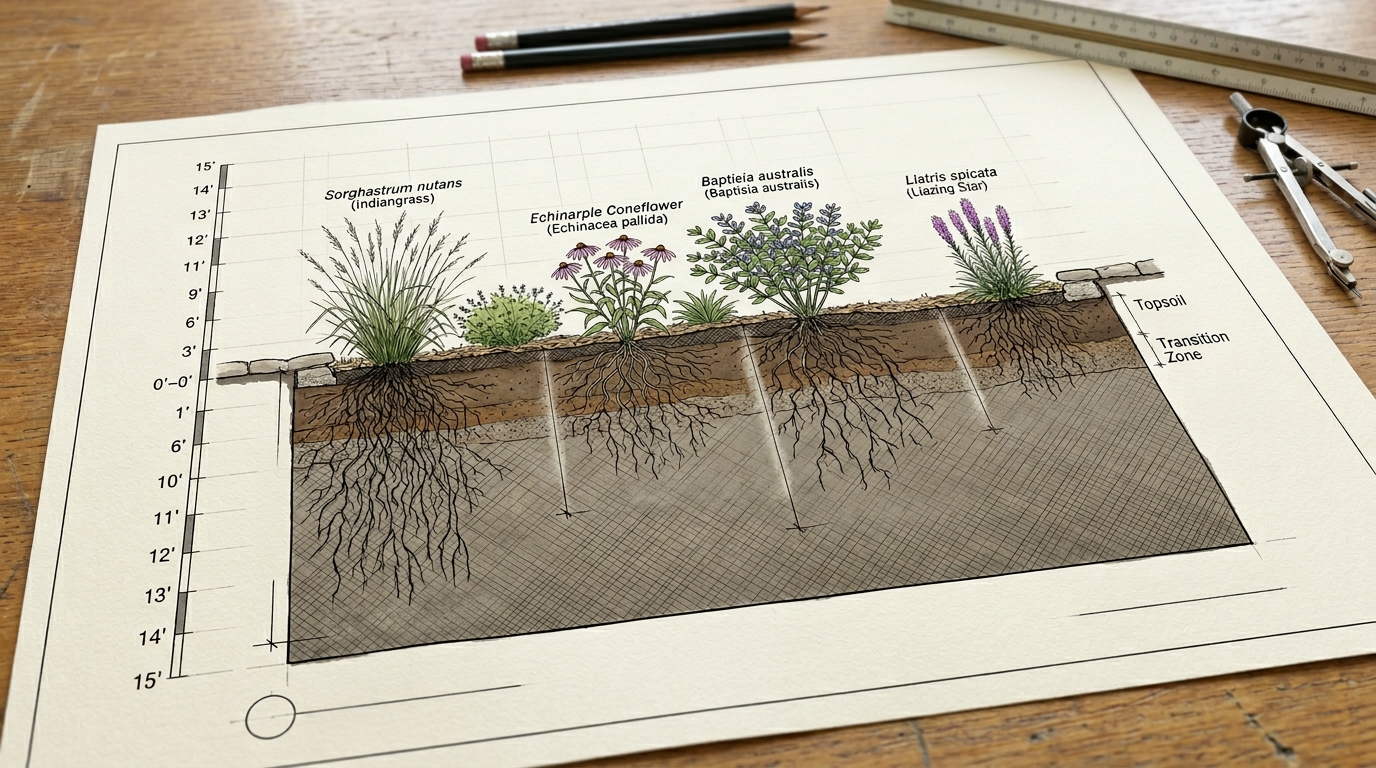
- Native root systems run 4-15 feet deep, which means they pull stormwater down through the soil instead of letting it pool.
- Once established (typically year three), native gardens need almost no irrigation, fertilizer, or replacement.
- Pollinator support, drainage benefit, and visual interest run year-round, not just for one peak season.
We are Amliv Land Designs. Family-run, twenty-plus years designing residential plantings across Cook and DuPage Counties. Our native plant gardens build on the broader garden design framework and treat species selection as a structural decision: which plants hold which roles in the system, how they interact across seasons, what the bed looks like in February as well as in June. The plan accounts for the actual soil profile of the lot, the drainage routing, and the existing tree canopy that decides whether the bed is full sun, part shade, or full shade.
Below: how the native plant garden design phase actually runs, why ornamental beds keep failing in Des Plaines, what Illinois native species actually deliver beyond the ecological talking points, and customer-intent answers about timeline, scope, and what to expect during the first three years of establishment.
The conversation about whether native is right for your lot usually starts during the first onsite walk-through, where the existing soil, light, and drainage realities decide what species the plan can actually carry.
What Native Plant Garden Design in Des Plaines Actually Covers
Native plant garden design we deliver runs the same sequence on every project. Site walk first to map sun exposure, soil moisture, existing tree canopy, slope, and drainage routing. Soil core sample where conditions warrant, since amended soil and unamended Chicago clay support very different species lists.
From there, species selection drafts bed by bed against actual conditions. Open dry beds get sun-prairie species. Under-canopy beds get shade-woodland species. Drainage swales and rain garden footprints get wet-meadow species. Bloom succession across April through October gets planned at the species level, with winter structure deliberately maintained for off-season interest.
Root depth and drainage benefit factored into the spec. Plants like prairie dropseed, little bluestem, and butterfly milkweed run roots 4 to 15 feet down through clay, which is why they survive drought and why the garden helps with surface drainage instead of fighting it.
The plan ships as a scaled drawing with a planting list keyed to bed locations. Spacing accounts for mature size rather than nursery-day-one size, which means the bed reads finished by year three instead of looking sparse for the first half-decade. Any qualified install crew can build to it.
What 20 Years of Native Garden Work in Cook County Taught Us
Twenty years of designing native plant gardens in this corridor reveals patterns the ornamental world never has to deal with.
First mistake we see: ornamental cultivars planted in Chicago clay with no soil amendment. The plants showed up looking great at the nursery, they last one full season, and the homeowner pulls them out the following spring. Annual replacement becomes a recurring line item that nobody planned for at the design stage.
Second pattern: native species selected from a generic Midwest list without accounting for the specific microclimate of the Des Plaines lot. A prairie species that thrives on a southwest-facing dry slope fails in a north-facing low spot. We site each species against actual conditions, not against a regional list.
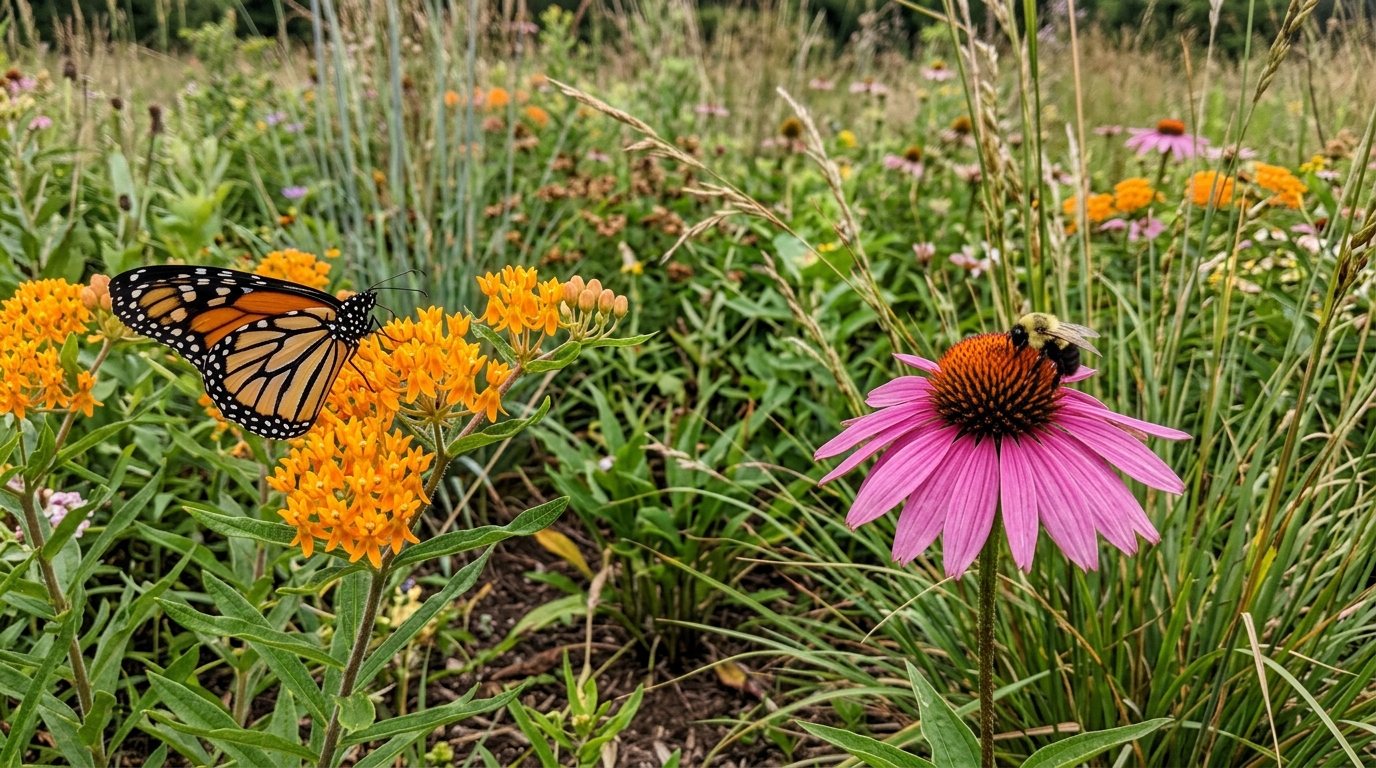
Third pattern: native gardens installed with too much spacing because the homeowner sees the day-one nursery size and assumes the bed will look full immediately. Native plants spread and fill in over three to five years. Crowded day-one plantings end up choking each other. Properly spaced plantings look sparse for two seasons and finished by year three.
Fourth issue: invasive ornamental escapees still being sold at big-box nurseries. Burning bush, callery pear, Japanese barberry, English ivy. They look fine in the catalog. They escape into surrounding natural areas and displace native communities. We never spec them, and we tell the homeowner why.
Fifth pattern: maintenance assumptions imported from ornamental gardens. A native garden does not want fertilizer, does not want frequent irrigation, and does not want clean-bare-mulch surroundings. The maintenance routine that keeps a hosta bed pristine kills a native garden. We hand the homeowner a maintenance brief along with the plan.
Each pattern traces back to design decisions that were never thought through, then got executed and called native.
Why Chicago Soil and Climate Reshape Native Plant Selection
Chicago-area soils and climate make native plant garden design fundamentally different from native gardening anywhere south of the Mason-Dixon.
Soil profile is the first variable. Most Des Plaines lots sit on glacial clay with construction-era fill on top. Native species that thrive on sandy or loamy soils elsewhere often fail here without soil amendment. Our species lists default to clay-tolerant options first, with amended soil reserved for higher-maintenance specialty zones.
Winter hardiness is the second piece. We are in USDA hardiness zone 5b through 6a depending on microclimate. Species rated for zone 7 or warmer survive a few mild winters, then a real polar vortex kills them off. Our plant lists stay within zones we can defend across a full decade of weather variability.
Drainage interaction is the third regional reality, and the one that surprises most homeowners. Native prairie species evolved on landscapes that received episodic heavy rain followed by long dry spells. Their root systems run deep specifically to pull water down through the profile. Designed correctly, a native garden becomes a drainage asset on a Chicago clay lot, not a drainage problem (We coordinate this with grading and slope design on properties that need both at the same time.)
What Native Plant Garden Design in Des Plaines Actually Delivers
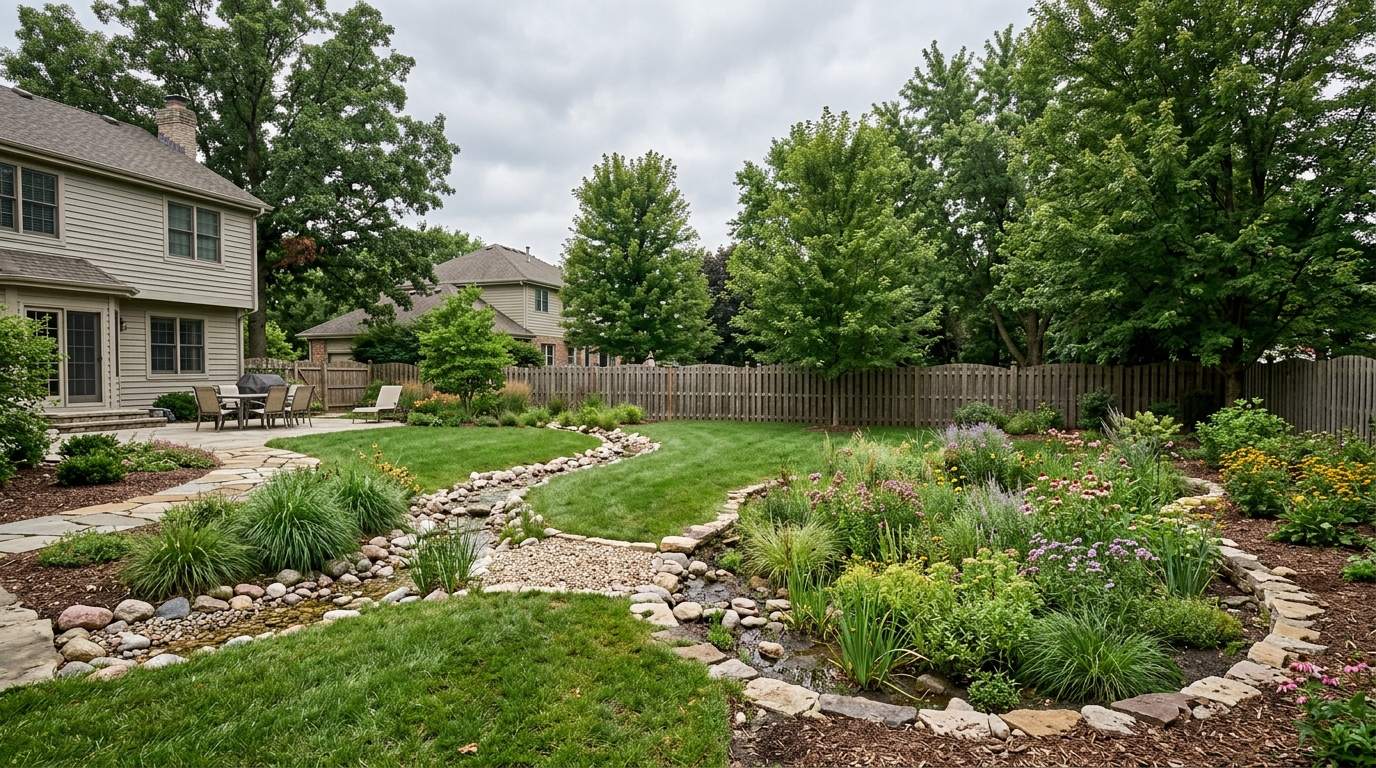
Native plant gardens deliver real benefits beyond the ecological talking points. Five of them show up on every Des Plaines lot we plant.
Drainage protection is the first measurable benefit. The deep root systems on prairie natives (anywhere from 4 feet to 15 feet on grasses like prairie dropseed) move stormwater off the surface and down into the soil profile. Water that would otherwise pool on a lawn or run toward the foundation infiltrates through the planting bed. We pair native plantings with drainage solutions all the time because the math works in both directions.
Maintenance load is the second. After year three of establishment, native gardens want almost no irrigation, no fertilizer, no annual replacement. The same garden of ornamentals would consume hundreds of dollars a year in replacement plants alone. The labor difference compounds even faster.
Pollinator support is the third. Bees, butterflies, and beneficial insects all depend on plants from the local native palette to complete their life cycles. Imported ornamentals support far fewer species. A homeowner planting natives in Des Plaines is participating in a much larger ecological recovery happening across the Midwest.
Property value rounds out the math. Real estate buyers across the Chicago suburbs are starting to treat a designed native garden as a value indicator rather than as deferred maintenance. Younger buyers in particular read the ecological angle as a feature on a listing, not a problem to inherit.
Property value is the fifth, and it is increasingly real. Real estate buyers in the Chicago suburbs are starting to recognize a designed native garden as a positive value indicator rather than a maintenance liability. Younger buyers especially read the ecological angle as a feature, not a problem.
What to Expect During the First Three Years
Native plant gardens behave differently from ornamental beds during establishment. The first three years matter more than any other period, and homeowners who understand the timeline get the result they paid for.
Years four and beyond, the garden largely takes care of itself. Native species spread on their own, fill any gaps that opened during establishment, and need no fertilizer or supplemental water under normal weather. The maintenance brief we deliver with the design covers what to do, what not to do, and when to leave the garden alone.
Year three is when the garden hits its mature look. Plants fill the spacing the plan specified, the bloom succession works through April to October, and the deep root systems start delivering on the drainage and drought-tolerance benefits. Maintenance load drops to occasional weeding and end-of-season cutback only.
Year one looks sparse. Plants ship from native nurseries at smaller sizes than ornamental cultivars, and the spacing on a properly designed plan accounts for mature size three years out. The bed reads under-planted from May through October of the first season. This is intentional and not a sign of problems.
Year two is when the visible growth happens. Plants double or triple in size as root systems push deeper into the soil profile. By the end of year two, most species are blooming on their normal cycle and the bed starts reading as a designed garden rather than a sparse installation.
For broader context on Illinois native species, the Chicago Botanic Garden native plant garden guidance covers the same regional species selection logic we apply on Des Plaines properties.
Frequently Asked Questions
What Does a Native Plant Garden Design Phase Cover?
The design covers species selection, bed-by-bed layout, succession planning across seasons, soil amendment specs where needed, and a maintenance brief for the first three years of establishment. Everything ships as a scaled drawing keyed to bed locations.
Will the Native Garden Look Sparse in the First Year?
Yes, deliberately. Native plants spread and fill in across three to five years, so day-one spacing accounts for mature size rather than nursery-pot size, which means the bed reads sparse for two seasons and finished by year three.
Can Native Plants Help With My Drainage Problems?
Often yes, since prairie root systems run 4 to 15 feet deep into Chicago clay and pull surface water down through the soil. We coordinate native plantings with drainage solutions on properties where stormwater routing is part of the broader scope.
Do Native Gardens Need Irrigation?
Only during the first two seasons of establishment, after which native gardens designed correctly handle Chicago weather without supplemental water. Permanent irrigation systems are usually not part of the design.
How Long Does Native Plant Garden Design Take?
Most plans wrap in 3-5 weeks from site walk to final document. Larger properties or projects with multiple bed conditions (sun, shade, wet, dry) can run 5-7 weeks because each zone needs its own species list.
Can I Use the Native Garden Plan With a Different Installer?
Yes, plans are written so any qualified landscaper can build to them. Species lists, bed locations, spacing, and soil amendment specs are all documented in the plan.
Ready To Get Started?
Looking for native plant garden design in Des Plaines? Schedule with Amliv Land Designs. Family-run, twenty-plus years across Cook and DuPage Counties. Call us at (847) 485-9619 to get your native garden project started today!