
Landscape Design Near White Oaks Nature Park in Wood Dale
Landscape design near White Oaks Nature Park in Wood Dale means working under one of the heaviest tree canopies in DuPage County. The blocks around Wood Dale Road and Montrose Avenue are shaded by mature white oaks that have been on these lots since before the houses were built. The design today has to layer a refreshed planting and hardscape under that canopy without disrupting the root zones that have been undisturbed for fifty or sixty years.
Housing through this part of Wood Dale leans toward brick colonials, brick ranches, and tri-levels from the sixties and seventies. The architecture is solid and unfussy. The landscape design answers it with horizontal beds, plant material that thrives in shade and clay, and hardscape that respects the existing tree footprint rather than fighting it.
Amliv has been working established Cook and DuPage County lots for more than twenty years. Vilma’s design process is the same in Wood Dale as anywhere in the service area. A walking site visit, hand measurement of the canopy and bed lines, a sketch on site, and a refined drawing two weeks later. To see the rest of the neighborhoods Amliv covers, browse all the locations served.
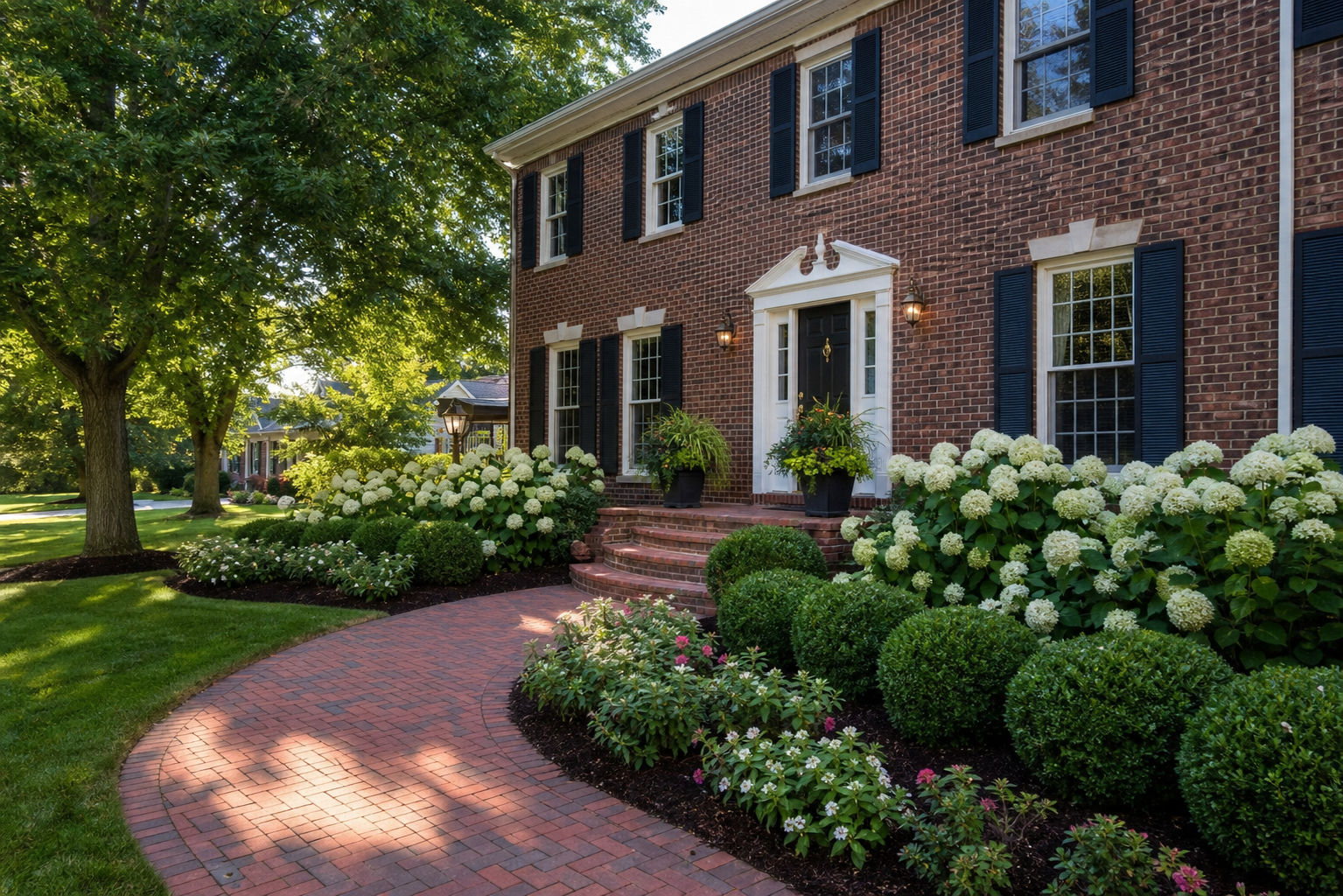
What Homeowners Near White Oaks Should Know About Designing Under Mature Canopy
Tree canopy is the design anchor on every lot near White Oaks. The mature oaks set the light conditions, the soil moisture, and the critical root protection zones. The refresh design starts with mapping the canopy lines so new beds and hardscape sit outside the protection zones rather than threatening trees that have been on the property for decades.
Soil through this area runs heavy clay with a thin loam cap and chronic moisture in the low corners. The design responds by raising bed lines slightly, amending with compost, and routing any new hardscape away from the natural drainage paths. The plant palette leans toward species that thrive in shaded clay rather than fighting it.
The third early decision is what comes out. Self-seeded buckthorn at the back tree line, leggy yews against the foundation, and a tired single-row perennial bed are the three most common findings. Removing those resets the design canvas and lets the new planting work at the correct scale for both the house and the canopy overhead.
Why Native Plant Design Works Under the White Oaks Canopy
Native species evolved under exactly this kind of canopy and soil. Wild ginger, woodland phlox, native sedges, and Solomon’s seal carry the planting layer at ground level. Serviceberry, witch hazel, and pagoda dogwood work as understory accents. The design integrates these with traditional shade plants like hosta and astilbe so the bed reads layered rather than purely naturalistic.
Native pollinator additions enter the planting where there is sun. The sun pocket at the south edge of the lot or along the driveway holds coneflower, bee balm, and switchgrass. Under the heavy canopy itself, the planting stays shade-tolerant. Mixing the wrong plant into the wrong light condition is how a design reads tired by year two.
Mulch under the canopy stays leaf-shred or fine hardwood. Bagged dyed mulch reads commercial against a naturalistic native planting. The leaf-shred option also breaks down to feed the soil rather than depleting it, which matters more under mature oaks than it does in an open sunny lawn.
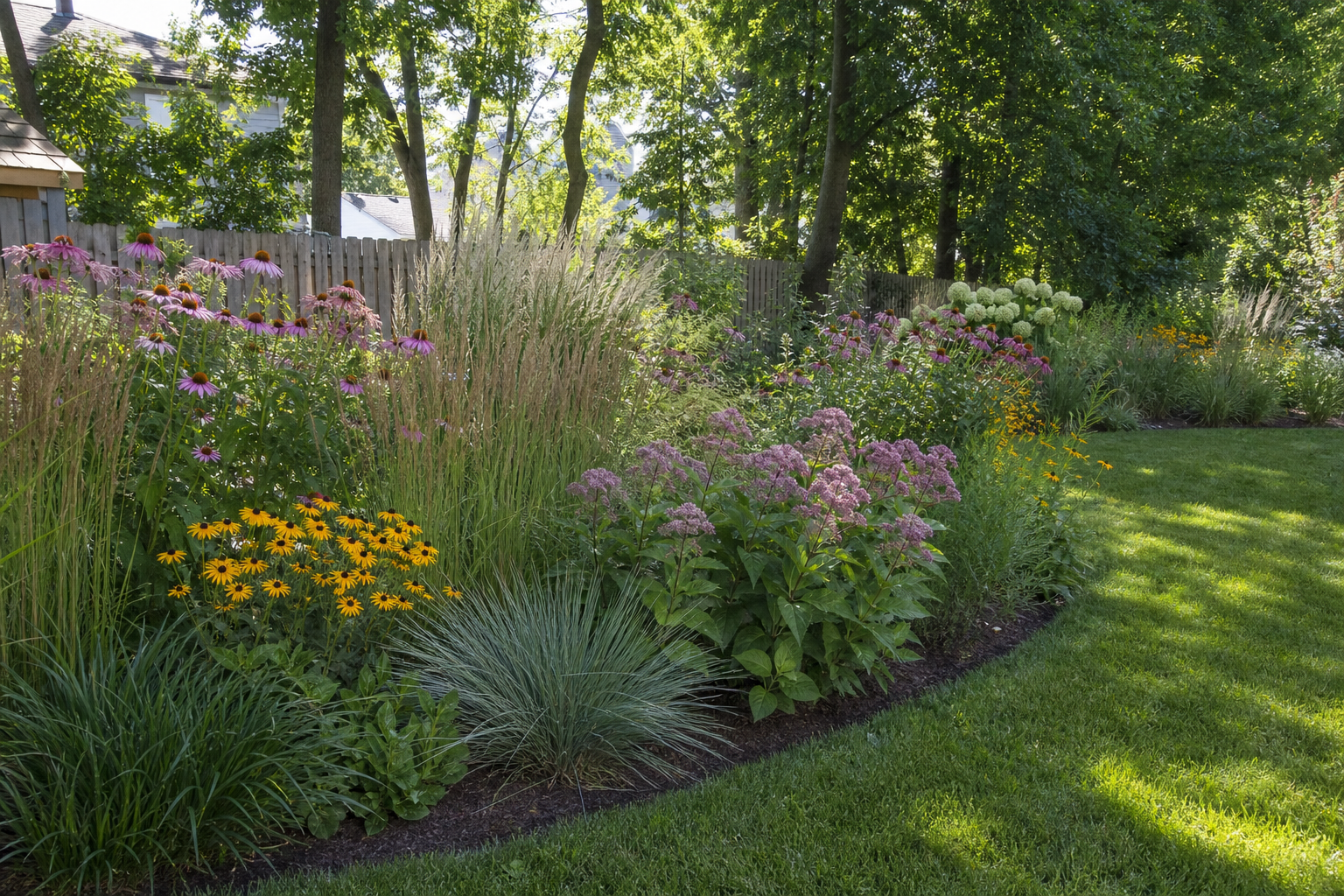
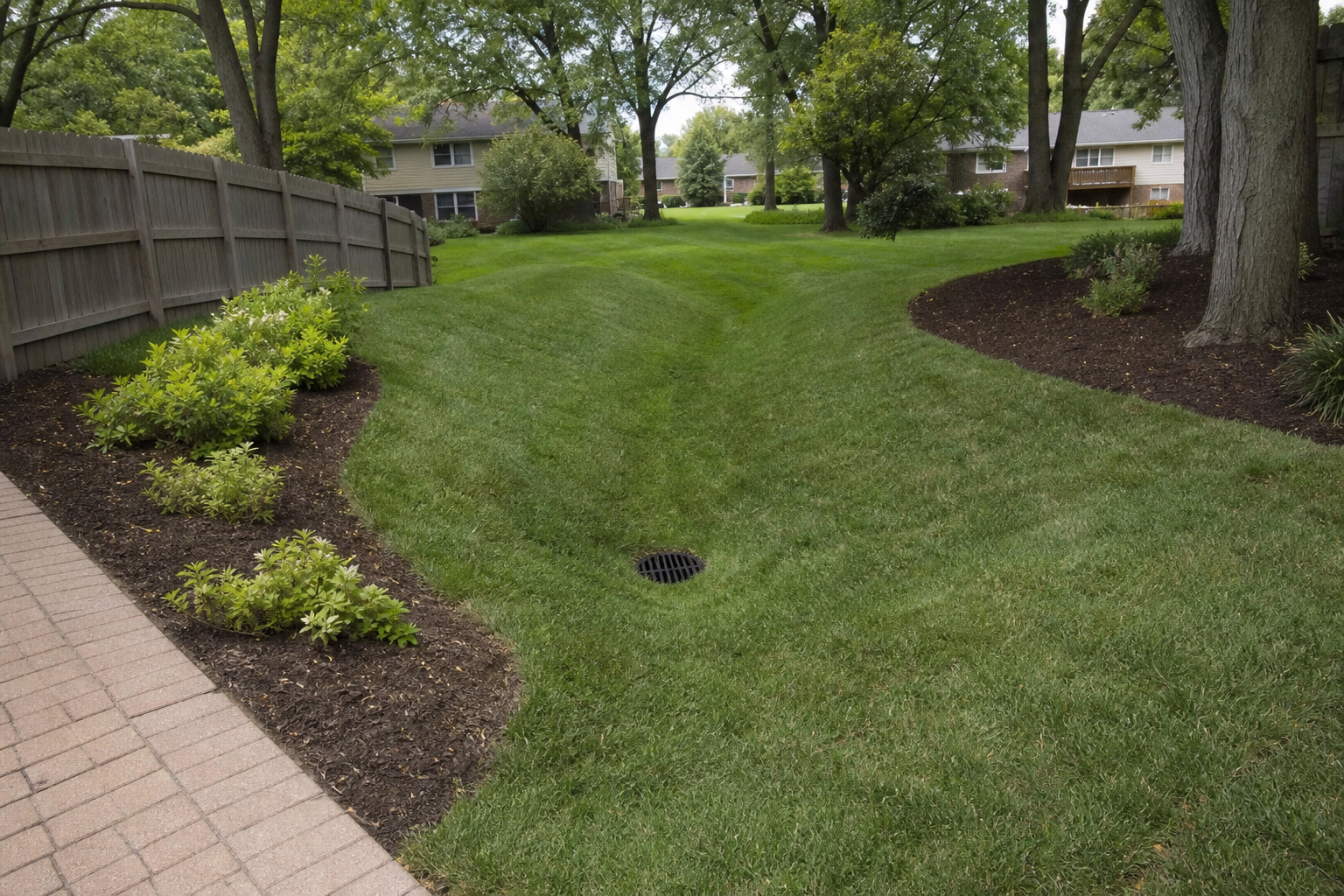
How Drainage Planning Carries the Design Under the Oaks
Heavy clay under a mature canopy holds water in spring. The design responds with subtle regrading where the slope allows, a French drain at the right inlet, and a planted swale where the bed line can absorb the seasonal volume. The work happens during the dormant season when the trees are not actively drawing water and the soil is workable.
Wood Dale Municipal Code Title 8 sets the residential stormwater framework for any hardscape addition past a certain footprint. The design is built with that requirement in mind from the first sketch so the project does not get redrawn during permitting. Patio sizing and any new impervious additions are checked against the lot coverage allowance early.
Plant choices along the drainage path lean native and clay-tolerant. Switchgrass, joe pye weed, swamp milkweed, and inkberry holly absorb seasonal moisture without the artificial look of a manicured perennial bed. The transition into the rest of the landscape stays gradual so the drainage planting reads as part of the design.
How a Design Installation Runs on a Wood Dale Oak-Canopy Lot
The first site visit takes about ninety minutes. Walking the property, mapping the canopy and drainage paths, photographing existing planting and hardscape, and listening to how the family currently uses the yard. The design comes back as a refined drawing two to three weeks later depending on whether stormwater calculations are needed.
The second meeting walks the drawing. Plant choices, hardscape specs, lighting and drainage plans, and the install sequencing. Most projects under a heavy canopy phase the work across two seasons. Hardscape and drainage in the fall, planting installation in the spring once the soil has settled.
Install starts with tree-protection fencing inside the drip line, then drainage and base work, then any hardscape, then bed amendment, then planting, then lighting and final mulch. Each phase has a clean stopping point so the property never sits torn up for more than the duration of one work block.
Working With Vilma on a Design Near White Oaks Nature Park
Vilma walks every property and draws every plan by hand. The crew installs from those drawings rather than from a verbal brief. That single-author process is the reason designs under heavy canopy in Wood Dale read coherent at the ten-year mark instead of looking like a sequence of separate fixes stitched together.
Most projects start with one specific concern the homeowner has been living with. The wet back corner, the failing walkway, the buckthorn at the tree line that has crept fifteen feet into the yard. From that single anchor, the design walks the rest of the property forward into a plan that protects the oaks while bringing the rest of the landscape back into shape.
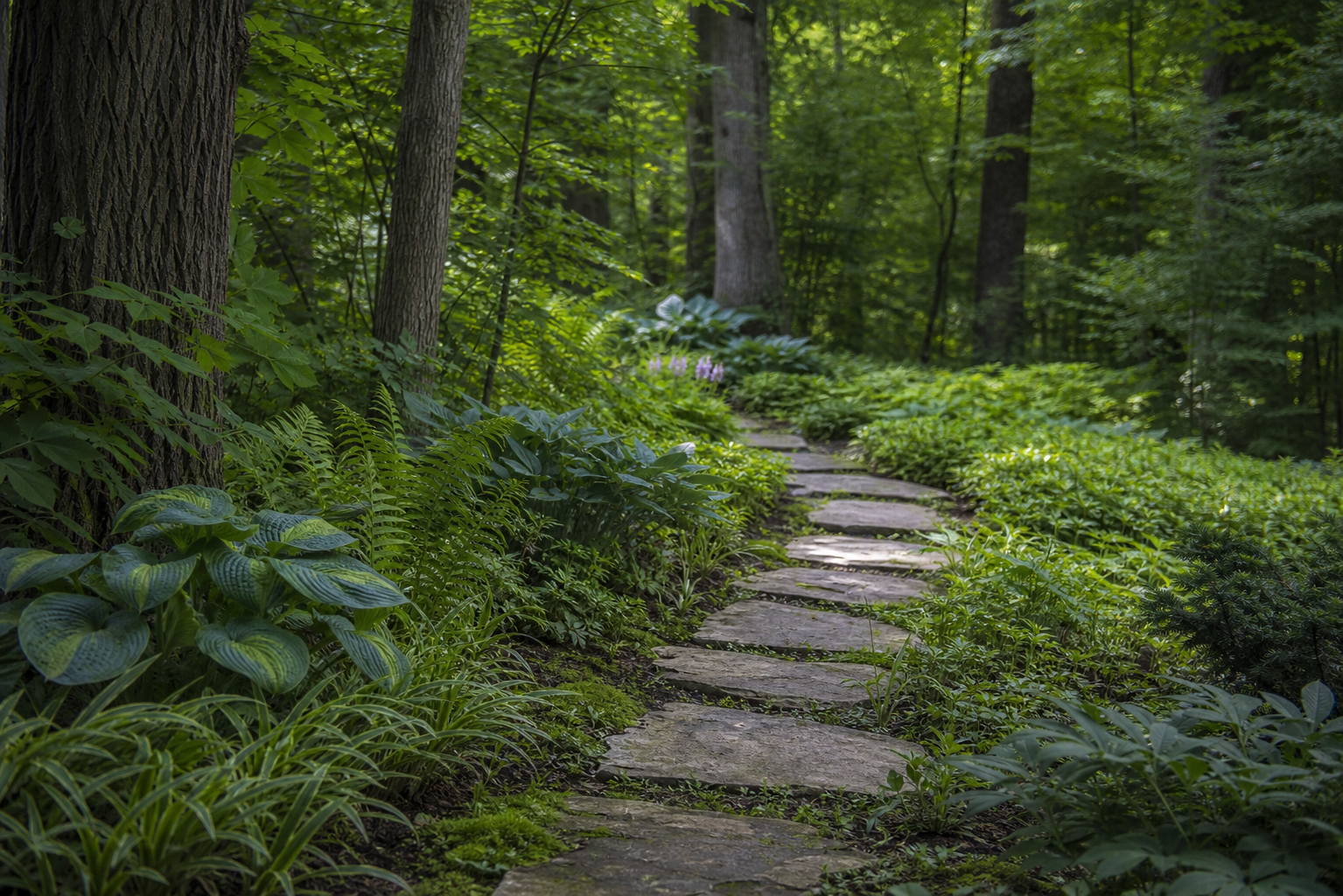
Want to talk through a refresh design near White Oaks Nature Park in Wood Dale? Reach out for a site visit and we can walk the property together.
Frequently Asked Questions About Landscape Design Near White Oaks Nature Park
Can you design around mature white oaks during a refresh near White Oaks Nature Park?
Mature oaks are treated as design anchors. Tree-protection fencing inside the drip line is standard practice, and grading or trenching stays outside the critical root protection zone.
What native plants work best in shaded clay near White Oaks Nature Park?
Wild ginger, woodland phlox, native sedges, and Solomon’s seal carry the ground layer. Serviceberry and pagoda dogwood work as understory accents in shaded clay conditions.
Do you handle Wood Dale stormwater requirements during a design?
Stormwater management under Municipal Code Title 8 is checked during the design phase and any required documentation is coordinated as part of planning. Hardscape sizing stays within the lot coverage allowance.
Can you remove buckthorn at the back tree line on a Wood Dale lot?
Buckthorn removal is a frequent refresh line item along the rear tree lines of these properties. The work is paired with native understory replanting so the area reads intentional rather than cleared.
What is the best time of year to start a design near White Oaks Nature Park?
Early fall through late winter is the strongest design window because installs can be scheduled for spring planting. Drainage and hardscape work under a heavy canopy runs best in the dormant season.