
Landscape Design Near Centennial Park in Park Ridge
Landscape design near Centennial Park in Park Ridge means working with one of the oldest residential corridors in the northwest suburbs. The blocks along Western Avenue carry Victorians, twenties craftsman bungalows, and brick Tudors from the twenties and thirties. The architecture is layered and specific, and the landscape design has to answer it with the same level of specificity rather than dropping in a generic suburban planting palette.
The lots through this part of Park Ridge tend to run narrow and deep, with mature parkway elms and oaks shading nearly every front yard. The planting design has to navigate filtered light, established root zones, and architectural detail that punishes a careless plant choice. A flowering tree placed wrong can compete with the front gable instead of supporting it.
Amliv has been working established Cook County lots for more than twenty years. Vilma’s process is the same on a historic Park Ridge refresh as on any other project. A walking site visit, careful hand measurement, a sketch on site, and a refined drawing two weeks later. To see the rest of the neighborhoods Amliv covers, browse all the locations served.
What Homeowners Near Centennial Park Should Know About Historic-Lot Design
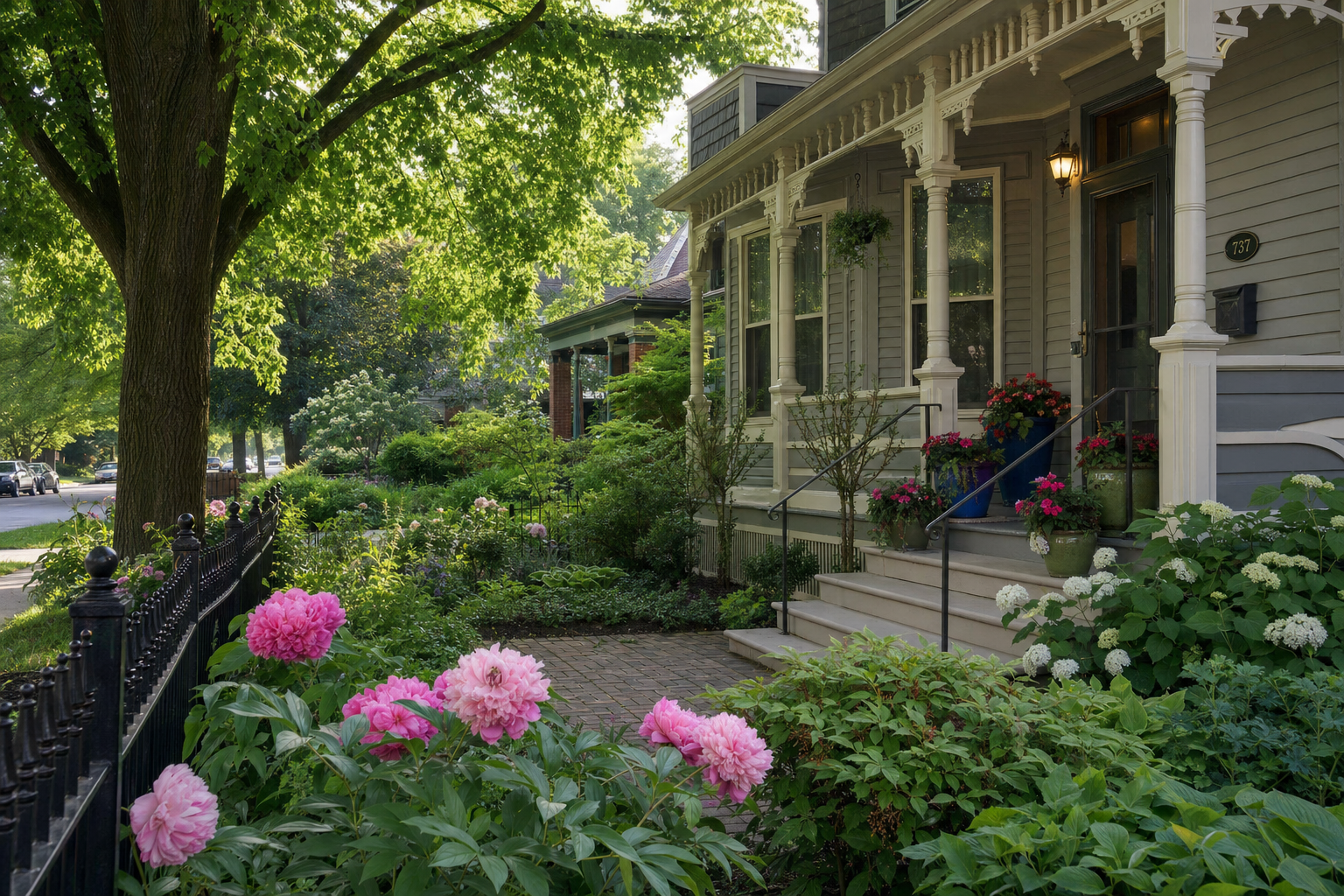
Historic Park Ridge homes carry their own architectural language, and the design has to read that language carefully before proposing changes. A wrought-iron fence, a flagstone walkway, and a cottage-style border belong on a Victorian. A modern poured concrete walk with crisp geometric beds would fight the front elevation rather than supporting it.
Most of these properties still carry an original landscape from the twenties, thirties, or postwar refresh era. Mature peonies that were planted in the thirties are common, and they are treated as anchors rather than rip-outs. The refresh design works around them and pulls in newer plant material that reads as if it has always been there.
The third early decision is the walkway and entry steps. Original limestone or bluestone is preserved where it is intact. Where the walkway has settled or cracked beyond reasonable repair, the replacement uses the same material rather than substituting a modern paver that would read out of place against a hundred-year-old front porch.
Why Cottage-Style Borders Work on Centennial Park Victorians
Cottage-style perennial borders match the visual rhythm of the original architecture. Peonies, hydrangeas, daylilies, and old-fashioned roses layered against a brick or clapboard facade read correctly because the planting style was already established when the houses were built. The design is updating, not inventing.
Plant selection leans toward varieties that have been in cultivation for fifty years or longer. Heritage hydrangea, antique roses, classic peonies, and bearded iris all hold their place against a Tudor or Victorian front without looking trendy. Newer cultivars enter the planting only where they read seamless with the rest of the palette.
Edge material follows the same logic. Hand-set brick edging or low boxwood hedges define the bed line in a way that suits the period architecture. Modern steel or aluminum edging stays visible on these lots in a way that pulls the eye, and it gets used only where it is genuinely hidden by the planting layer.
How Bluestone and Limestone Carry the Hardscape Vocabulary
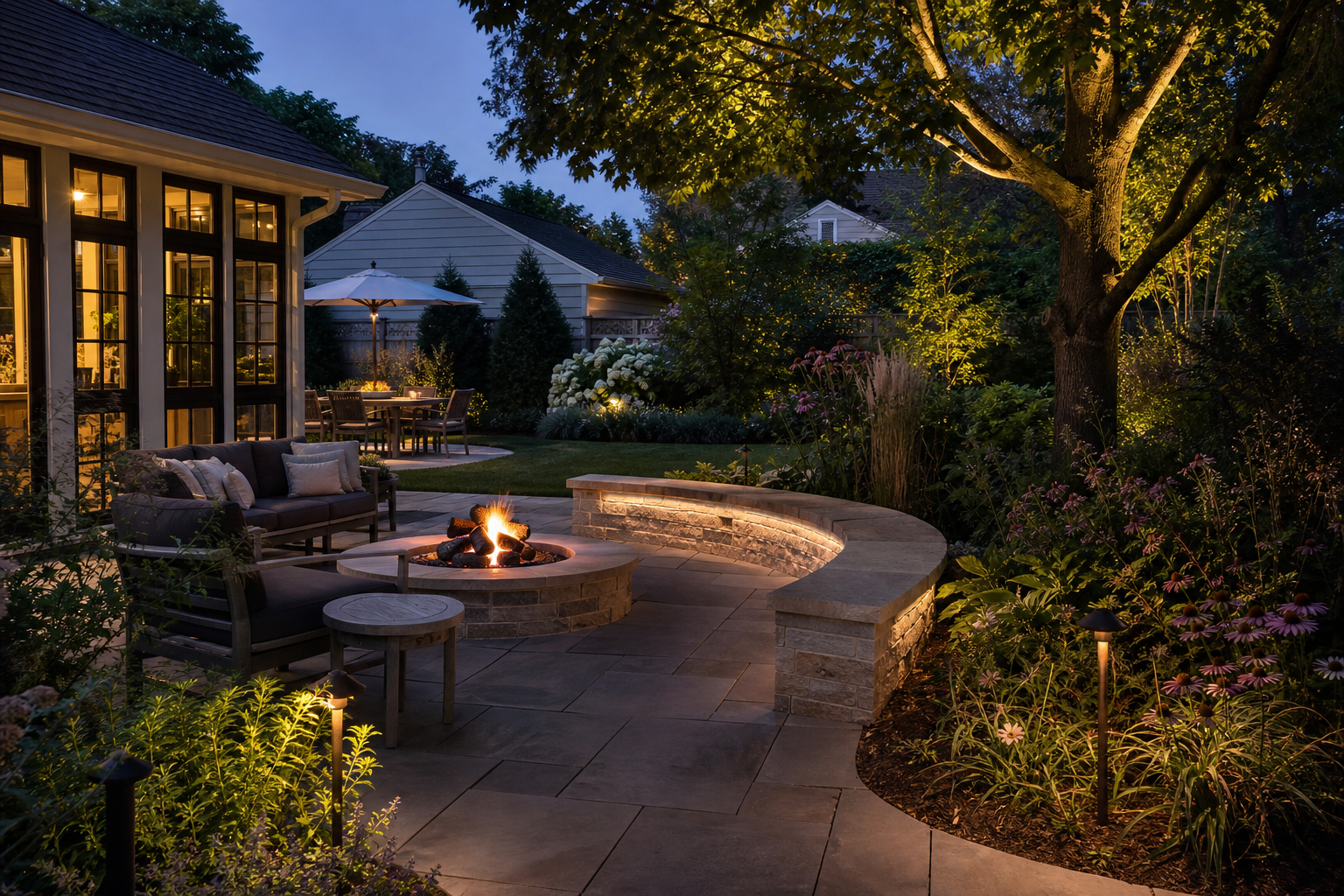
The hardscape material vocabulary on Centennial Park lots leans heavily toward bluestone and limestone. Both materials read correctly against the historic facades and they hold up to a hundred years of freeze-thaw without looking tired. Bluestone front walkways in a thermal finish are the most common new hardscape line item on a refresh project.
Pattern selection follows the architecture. Random-pattern bluestone reads more period-correct than a tightly geometric pattern. A four-foot path width is generous enough for a couple walking together but stays in scale with a narrow lot. Wider walks start to dominate the front elevation on these properties.
Setting bed depth is six to eight inches of compacted aggregate under a one-inch sand bedding for standard bluestone, or a full mortar bed if the project budget supports it. The mortar option lasts longer and reads cleaner long-term but it costs more. The design recommends the right path for the budget rather than over-specifying.
How a Design Installation Runs on a Historic Park Ridge Lot
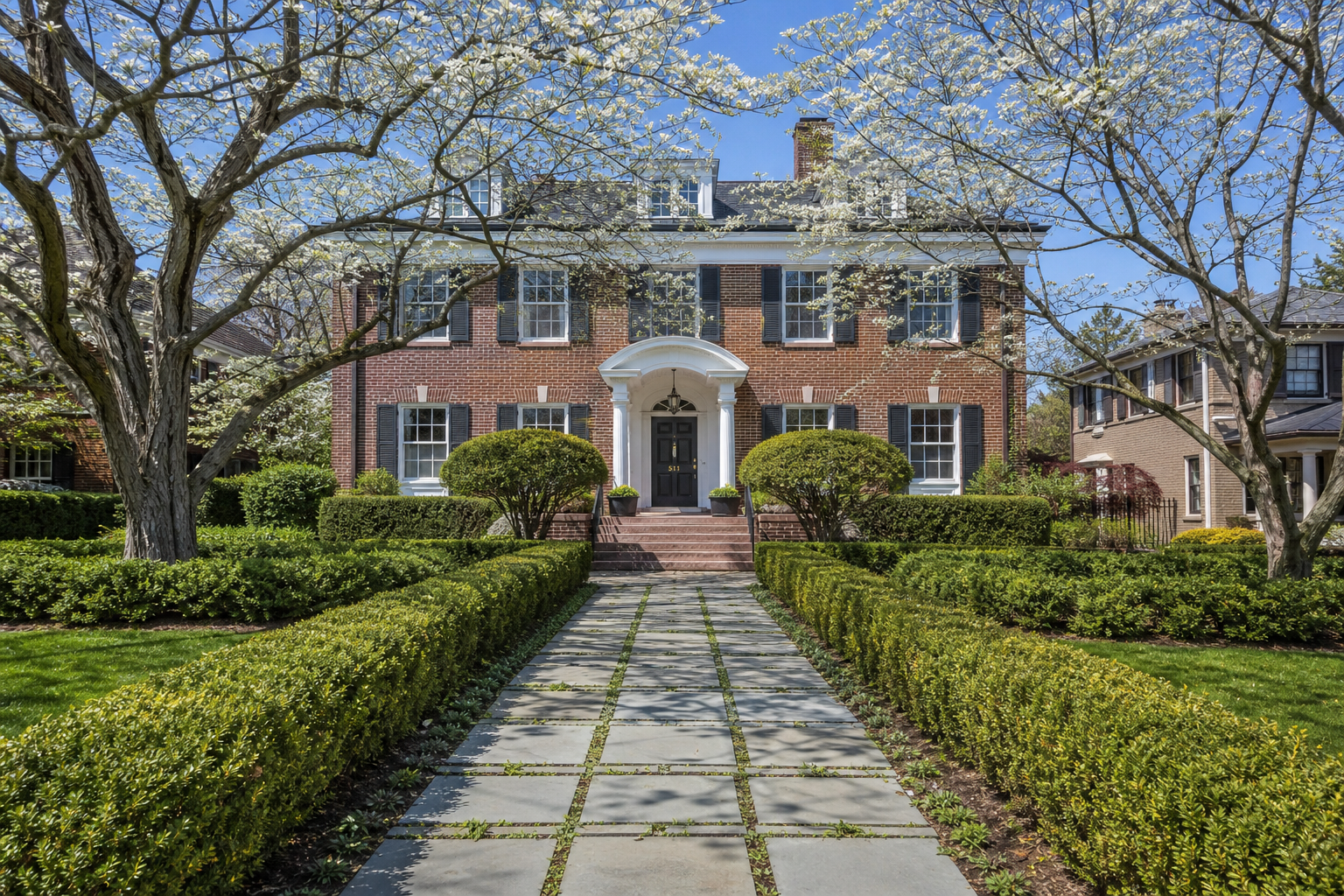
The first site visit takes ninety minutes to two hours. Walking the property, measuring existing beds, photographing the front elevation and any architectural detail the design needs to respect, and listening to how the family wants the property to read. The design comes back as a refined drawing two to three weeks later.
The second meeting walks through the drawing. Plant choices, hardscape material and pattern selection, lighting locations, and any phasing the project needs. Historic-lot projects are frequently phased across two seasons so the hardscape carries the fall and the planting goes in the spring with the soil settled.
Install starts with selective removal of what is leaving, then base work for any hardscape, then bed amendment, then planting, then lighting and final mulch as the last layer. Each phase has a clean stopping point so the property never sits looking torn up against a Victorian front.
Working With Vilma on a Design Near Centennial Park
Vilma walks every property and draws every plan by hand. The install crew works directly from those drawings. That single-author process matters more on historic lots than anywhere else because period-correct design demands consistent judgment from first sketch through final mulch. The work reads coherent because it came from one designer rather than passing through three.
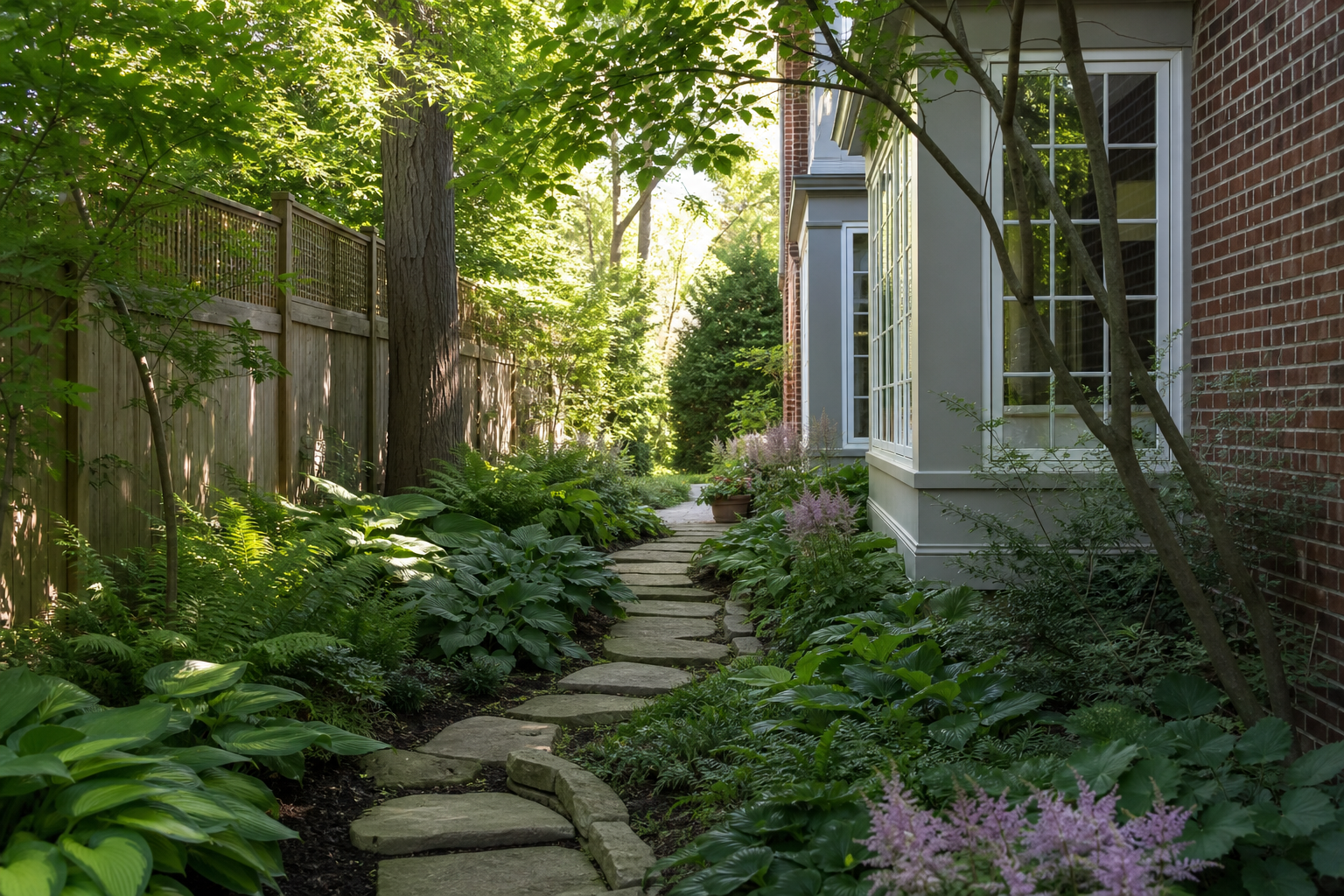
Most projects start with a specific element the homeowner wants to honor or update. The original peony bed, the failed limestone walkway, the brick front steps that have settled. From that single anchor, the design walks the rest of the property forward without losing the architectural language the house has carried for a hundred years.
Want to talk through a refresh design near Centennial Park in Park Ridge? Reach out for a site visit and we can walk the property together.
Frequently Asked Questions About Landscape Design Near Centennial Park
Do you preserve original limestone and bluestone during a refresh near Centennial Park?
Original stone hardscape is preserved wherever it is structurally sound. Replacement work uses matching material so the new hardscape reads as period-correct against the front elevation.
Can you design cottage-style perennial borders for a Park Ridge Victorian?
Cottage-style borders with peonies, hydrangeas, daylilies, and old-fashioned roses are one of the most common design directions on these lots. Plant selection emphasizes varieties that have been in cultivation for decades.
Do Park Ridge historic preservation rules affect a front yard design?
Front yard fence and certain hardscape changes can trigger review under Park Ridge guidelines. The design phase identifies any review requirements and the project is shaped to fit them.
Can you work around mature parkway elms and oaks during install?
Mature parkway trees are treated as design anchors. Tree-protection fencing inside the drip line is standard, and grading or trenching stays outside the critical root zone.
What is the best time of year to start a design near Centennial Park?
Early fall through late winter is the strongest design window because installs can be scheduled for spring planting. Historic-lot projects frequently phase hardscape in the fall and planting in the spring.