
Park Ridge Landscape Design Near Lincoln Middle School
Landscape design near Lincoln Middle School in Park Ridge sits in a denser pocket of the city, closer to Devon, off Lincoln Avenue, where the lots are smaller and the streets carry the original parkway tree pattern. The design conversation here isn’t about big sweeping lawns. It’s about making a forty-by-one-hundred lot read as a layered, considered landscape from sidewalk to back fence. That’s a different kind of design than what’s needed three miles east.
The housing in this part of Park Ridge skews early-to-mid twentieth century. Brick bungalows, Tudor revivals, the occasional Georgian. The architecture is doing real work, and the landscape needs to hold its place against it without competing. Plant scale matters here. A bed of three-foot perennials in front of a six-foot porch reads differently than the same bed in front of a two-story new build out in Hoffman Estates.
Amliv has spent twenty-plus years working these streets, and Vilma’s design process is the same whether the lot is forty feet or eighty: site visit, measurement, hand sketch, refined drawing, then plant selection that reflects the actual sun and soil conditions on the ground. For a fuller picture of the neighborhoods we cover across Cook and DuPage Counties, browse all the areas we serve.
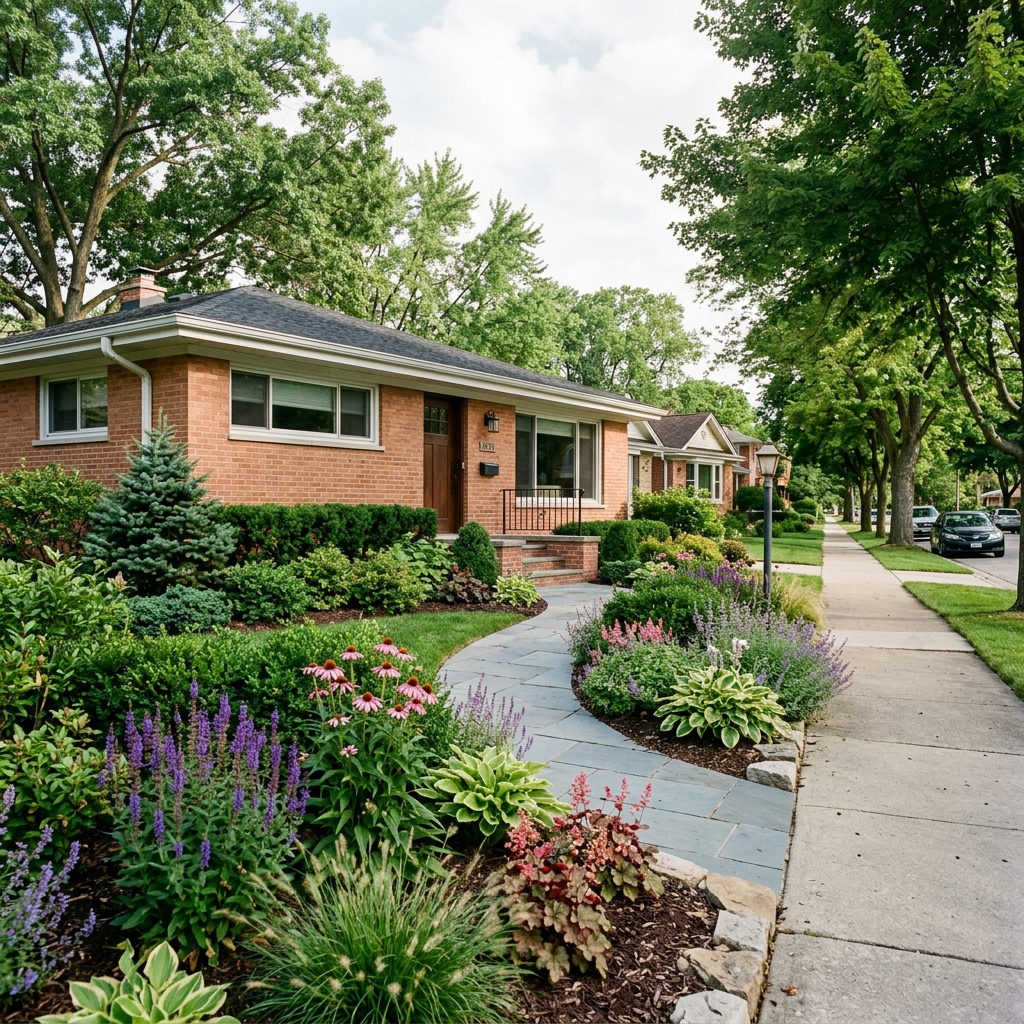
What Homeowners Near Lincoln Middle Should Know About Designing a Smaller Lot
The neighborhoods feeding off Lincoln Avenue and the South Park area run smaller than what people picture when they hear “Park Ridge.” The lots are tighter. The setbacks are tighter. The houses crowd the lot lines closer than they do six blocks west. Designing well on a forty-by-one-hundred is its own skill, and a plan that works on a Glenview half-acre will fail completely here.
The trick on these lots is making the landscape feel layered without making it feel busy. Three plant heights, considered repetition, a clear bed line, and at least one piece of structural hardscape that anchors the front yard composition. Without structure, the design reads as a small lawn with shrubs around the edges. With structure, the same property reads as a designed landscape.
The other reality is that the parkway tree pattern in this part of Park Ridge varies block to block. Some streets still have their full canopy of mature elms or oaks. Others lost trees in the 2000s and have younger maples coming back in. The plant palette has to track with the actual existing canopy, not a blanket assumption that the whole neighborhood is shaded. We measure the sun pattern on every property before specifying anything.
We also pay close attention to where the front walkway meets the sidewalk. On a small lot, that connection point does a lot of design work, and getting it right matters more than the plant list.
Why Park Ridge Clay and Tight Lots Drive the Plant List
The soil in Park Ridge is heavy clay. Wet in spring, dense and hard by midsummer, slow to drain after a heavy rain. The Lincoln Middle area is no exception. That clay has a real effect on which plants succeed long term and which ones underperform regardless of how good they look the first season.
Plants that handle clay well in this microclimate include hellebores, hostas, ornamental alliums, certain coneflowers, switchgrass, and many of the native Midwest perennials. Plants that get sold as “tolerant” but really aren’t include lavender, Mediterranean herbs in unraised positions, certain salvias, and most plants that come with the word “drought-loving” in the catalog copy. We tell clients honestly which plants actually want to live in their soil rather than letting them buy something they’ll have to replant in two years.
The tight lot reality compounds the soil reality. On a forty-foot lot, you can’t move a poorly performing planting somewhere it would thrive. There’s nowhere to move it to. Every plant has to earn its keep in the spot it’s planted. That pushes the design toward a higher bar on plant selection, and a longer conversation up front about what’s actually going to thrive on this specific property.
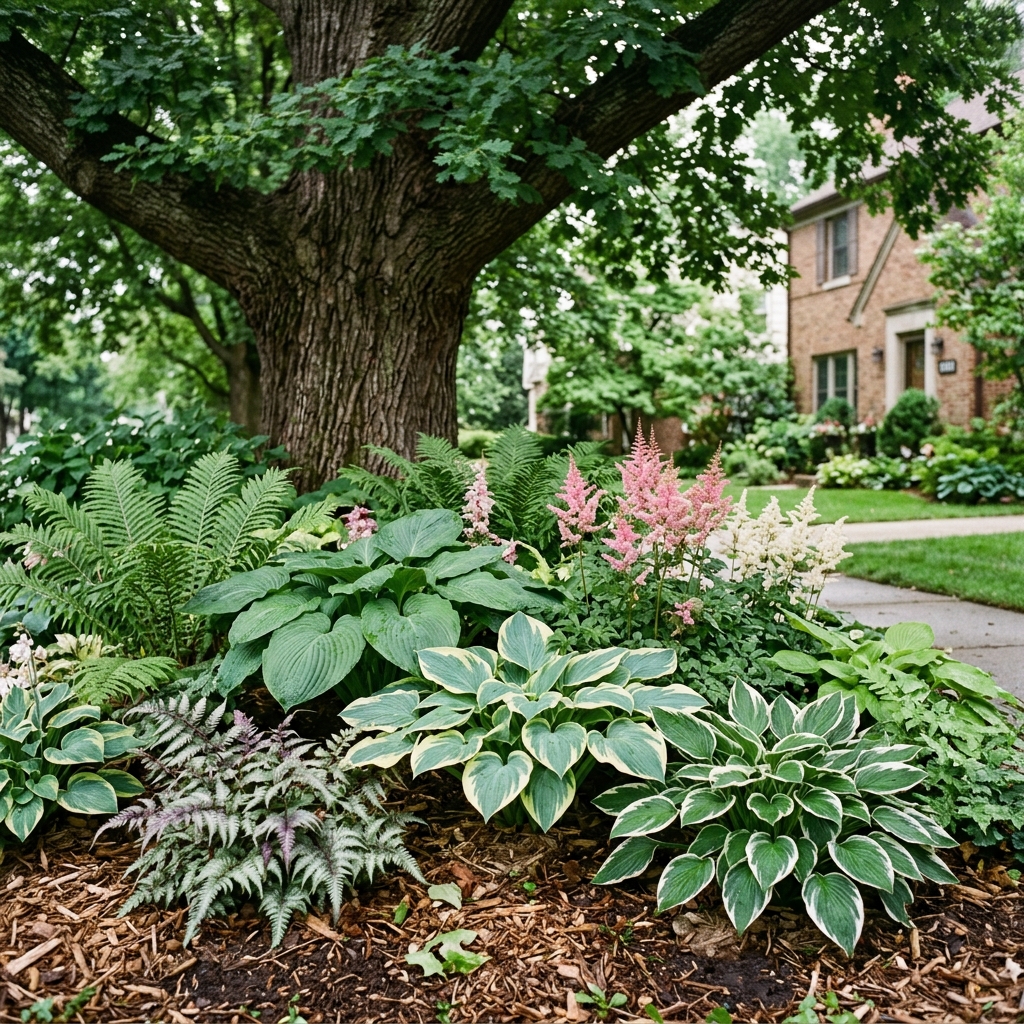
The third factor is shade pattern. The mature canopy in this section of Park Ridge means most front beds run partial-to-full shade. We measure the actual sun pattern on every site at multiple times of day before specifying anything sun-dependent.
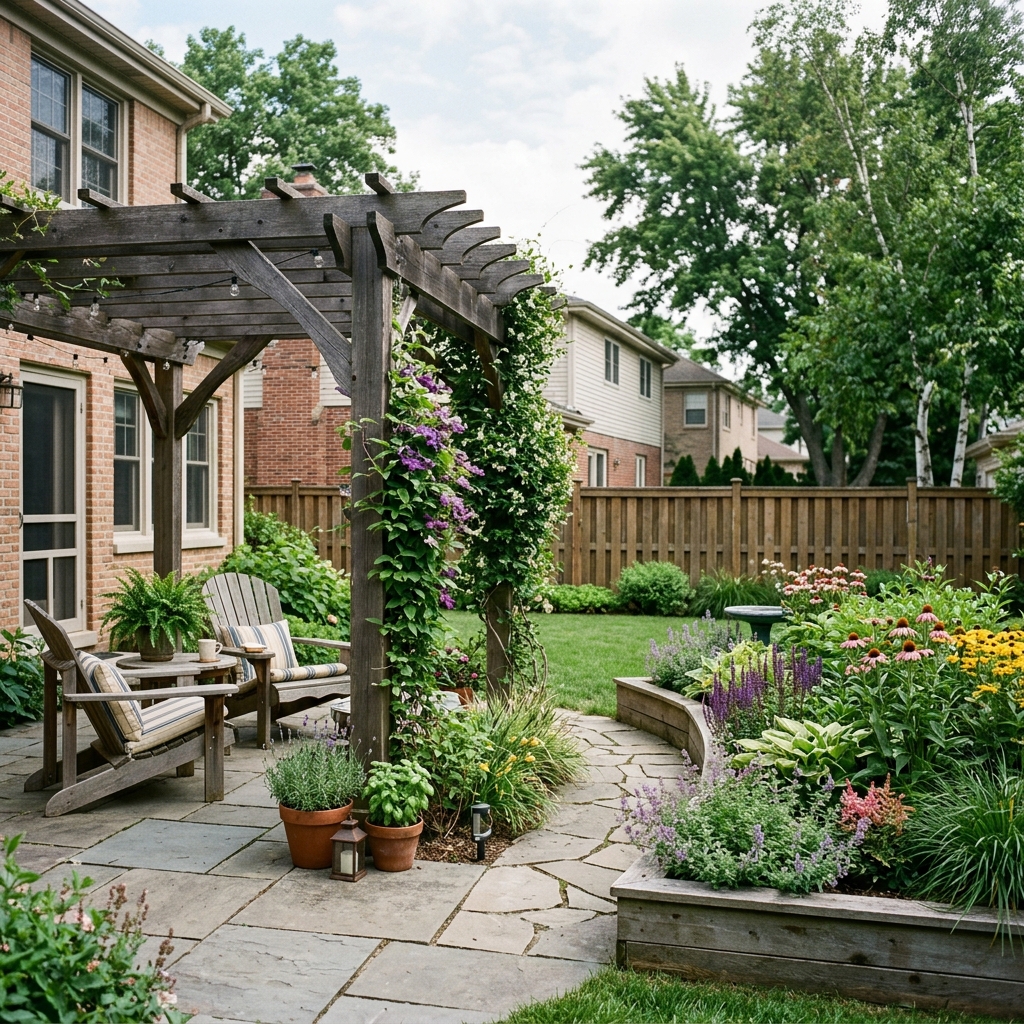
How Hardscape Choices Make or Break a Small Park Ridge Lot
On a forty-foot lot in the Lincoln Middle area, hardscape isn’t a finishing touch. It’s the structural skeleton the entire design hangs from. The choices about where the walkway runs, how wide the front step landing is, what material the bed edge uses, and whether there’s any vertical hardscape element at all decide whether the front yard reads as a designed landscape or just a small lawn with shrubs.
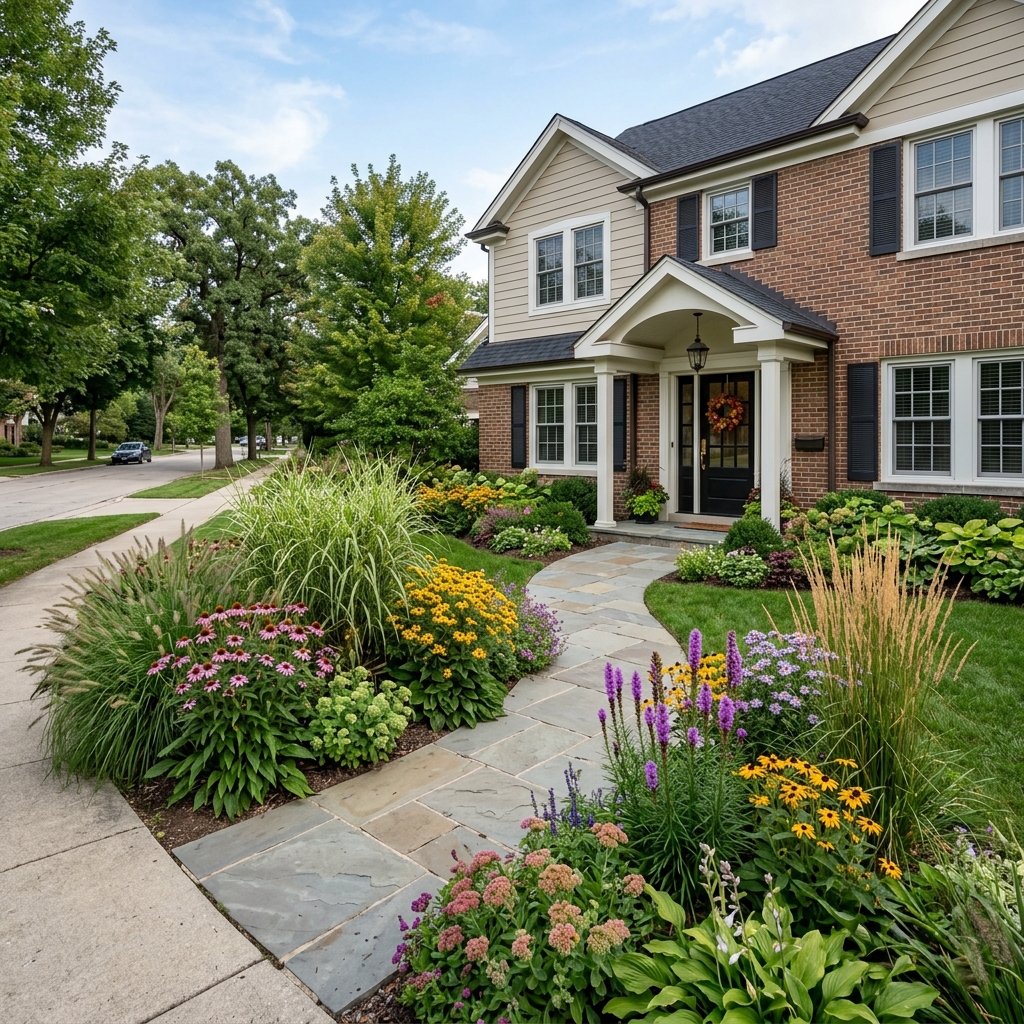
We tell clients early in the conversation that a generously scaled paver walkway from the sidewalk to the front door is one of the highest-leverage moves on a lot this size. A four-foot original concrete walk reads cramped. A five-foot paver walk in a clay-toned brick reads intentional. The cost difference is meaningful but not enormous, and the visual return is significant.
Material matters too. The historic housing in this part of Park Ridge tends to favor brick and limestone rather than the bluer slate or gray-toned manufactured pavers that work in newer subdivisions. We lean toward warm-toned clay pavers, tumbled limestone, and natural-finish concrete pavers in this neighborhood. Material that fights the architecture loses every time.
The other small-lot move that earns its keep is a low retaining wall or planter wall along the front yard’s grade change. Even an eight-inch height differential, when defined by a stone or brick edge, gives the bed a sense of containment that loose mulch doesn’t provide.
How a Design Installation Works on a Tight Park Ridge Lot
Installing a landscape on a forty-foot lot is a logistics conversation as much as a design conversation. There’s no staging area. There’s nowhere on the property to pile bulk soil or stockpile pavers without blocking the front walk or the driveway. The neighbors are close enough that staging on the parkway has to be careful and short. Every cubic yard of material that comes onto the site has to move efficiently to its final location.
We sequence Lincoln Middle area installations carefully. Hardscape demolition first, then base preparation, then paver install, then plant material once the heavy work is done. We schedule deliveries in small loads rather than truck-and-stockpile, and we work with neighbors and parking enforcement on the parkway side when staging is unavoidable.
The other small-lot reality is that the install affects the whole street while it’s happening. Trucks and equipment, dust, foot traffic from crew. We try to minimize the duration on site and keep the disruption to a minimum. Most front yard installations on a property this size finish inside a working week. Backyard work runs longer if hardscape is involved.
The third piece is post-install. New plantings on a small lot need attentive watering for the first season. We walk every Lincoln Middle area client through what to expect, what to water, and what’s normal versus what isn’t. The plant material is doing real work on these lots and we want it established right.
Working With You on a Lincoln Middle Area Design
A typical project on a small Park Ridge lot starts with a site visit during which Vilma walks the property and listens. We look at the existing planting, the original hardscape, the actual sun pattern at multiple times of day, and the connection between the front of the house and the sidewalk. Notes get taken. Photos get filed. Measurements happen on the way out.
A first sketch follows in the next week or two. We share it as a hand drawing rather than a polished render at this stage, because a hand drawing invites real conversation about what’s working and what isn’t. Polished renderings sometimes shut that conversation down. We refine, talk through plant choices and material samples, then move to a finished plan when the direction is right.
Installation on a lot this size is mostly a one-week window for front-yard work and longer for backyard hardscape. We sequence carefully because there’s no staging room on the property. Smaller delivery loads, neighbor coordination, and tight site management are part of the standard rhythm here.
We have been working Park Ridge for over twenty years and the Lincoln Middle area is familiar territory. If you want the wider picture of where we work, you can see where we work across the region.
Frequently Asked Questions About Landscape Design Near Lincoln Middle
Do you cover the South Park and Lincoln Avenue side of Park Ridge?
That is part of our weekly rotation, yes. Lincoln Middle, the South Park residential streets, the smaller-lot blocks running off Devon and Touhy. Drop your cross street when you call and we can give you a realistic site visit window.
Is a forty-by-one-hundred lot too small to do something worthwhile?
Honestly the opposite. Tighter Park Ridge lots usually push the design toward sharper, more considered work, because there is no room for filler. A small lot with a real design move reads better than a large lot with a generic one. We have been doing this in Park Ridge for over twenty years.
How long does install take on a small Park Ridge lot?
Front yard projects almost always finish inside a working week. Backyard work that involves replacing the original concrete patio runs two to three weeks because the staging is tight. We sequence carefully and we keep neighbors informed because there is nowhere on the lot to hide a stockpile of pavers.
Will the heavy clay change what plants will grow?
It shifts the list, not the design. We work from a plant palette that actually thrives on Park Ridge clay rather than tolerates it, and we are honest about which catalog favorites do not survive long-term in this soil. That conversation happens early so nothing gets specified that fails by August.
Are city permits part of the project?
Some scopes need permits, some do not. Significant hardscape, retaining walls past a certain height, drainage work that crosses property lines. Whatever our scope triggers, we pull and inspect through ourselves rather than pushing the paperwork to the homeowner.
Schedule a design consultation with Amliv Land Designs at (847) 485-9619 or email amlivlanddesigns@gmail.com. Vilma works with homeowners across Des Plaines and the northern Chicago suburbs on residential landscape design, installation, drainage, and outdoor lighting. The EPA notes that thoughtful landscape design can reduce outdoor water use by half, which is part of why plant selection matters.