
Landscape Design Near Prospect High in Mount Prospect
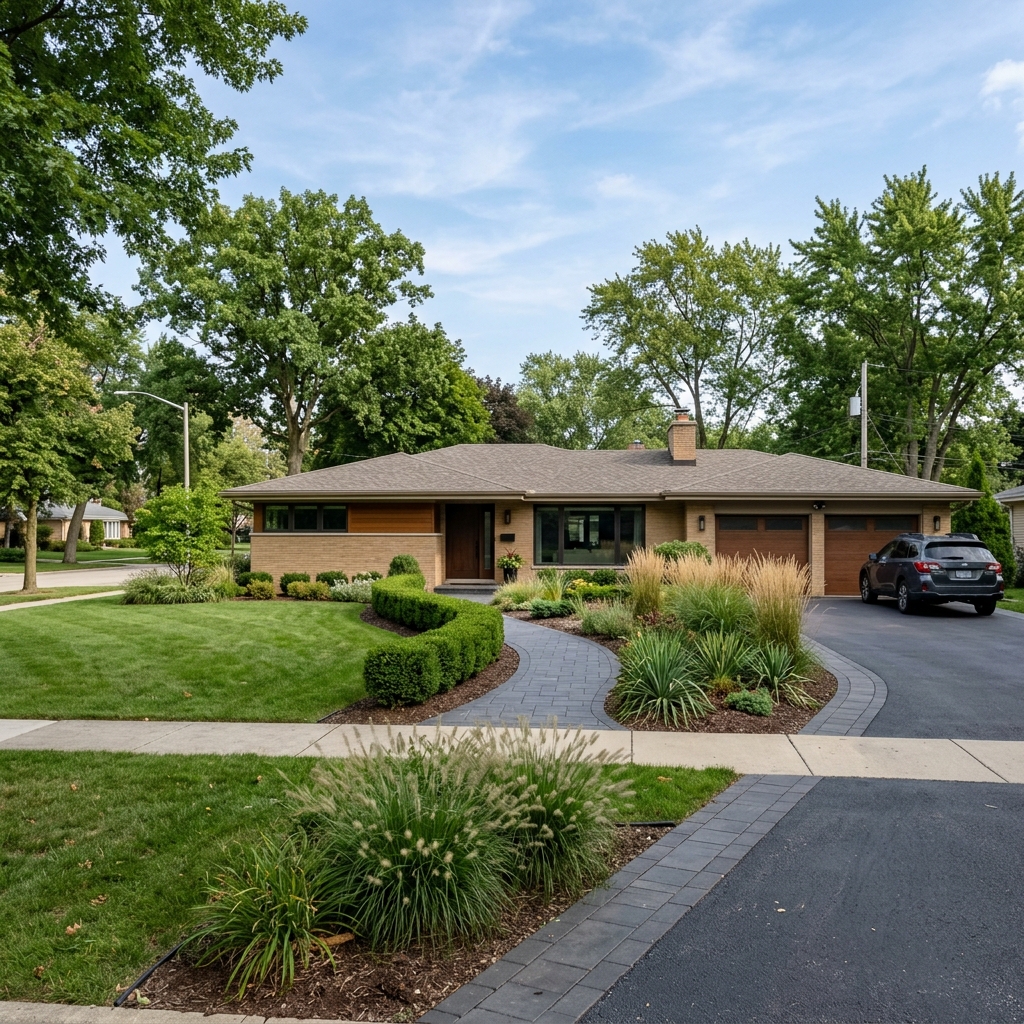
Landscape design near Prospect High School in Mount Prospect runs into an architecture-first conversation almost every time. The neighborhood is heavy on mid-century ranches and split-levels, clean horizontal lines, low-pitched rooflines, big window walls. A landscape with too much fuss in the front bed fights the building rather than supports it. The right design here is restrained, geometric, and built around plant masses rather than mixed-perennial collections.
Most of the housing on the streets feeding off Kensington and Forest went up between the late 1950s and the early 1970s. The hardscape choices popular when those homes were built tend to be undersized for how families actually use a backyard now. The work we do most often in this pocket is replacing a tired ten-by-ten concrete slab with a properly scaled paver terrace, then bringing the planting up to match the new outdoor footprint.
Amliv has been working Mount Prospect for years, and the Prospect High area is a regular stop on the design schedule. Vilma’s process is the same here as anywhere: walk the property first, measure, listen to how the family actually wants to use the yard, then draw. For the fuller picture of where we work across the northern suburbs, see the full list of neighborhoods we serve.
What Mount Prospect Homeowners Near Prospect High Should Know About Landscape Design
The mid-century housing in this pocket of Mount Prospect calls for a different kind of landscape conversation than the older Park Ridge or Glenview neighborhoods. The architecture itself is doing a lot of work. Long, low rooflines. Big horizontal window walls. Brick or limestone in clean unbroken planes. The right landscape here works with that geometry rather than fighting it with cottage-style mixed plantings.
What that usually looks like in practice: bigger sweeps of fewer species. Ornamental grasses in mass plantings. Boxwood as low repetitive structure. Limited use of seasonal-color perennials, with a heavier emphasis on plants that hold form across all four seasons. Hardscape in clean rectilinear shapes that echo the architecture. Bed lines that lean toward straight runs rather than serpentine curves.
The other piece is the original-builder hardscape conversation. Most of these mid-century houses came with concrete walkways and small slab patios that were undersized for how families actually use a backyard now. A first round of design in this neighborhood almost always involves replacing or expanding the existing hardscape footprint, and the planting plan follows from the new layout, not the old.
The starting question on any Prospect High area design is what the architecture wants from the landscape, not what the landscape wants from the architecture.
Why Mid-Century Architecture Around Prospect High Wants a Geometric Landscape
Mid-century residential architecture is built around a small set of principles. Strong horizontal lines. Low-pitched rooflines that read almost flat from the curb. Windows that wrap corners or run wall to wall. Materials in unbroken planes rather than ornamental detail. Most of the homes around Prospect High and the streets feeding off Kensington and Forest fit some version of that pattern.
The landscape that fits a building like that follows the same logic. Long sweeps of one or two plant species rather than mixed-collection beds. Repetition rather than variety. Plants chosen for clean form rather than busy texture. Hardscape in straight lines or simple repeating geometry rather than meandering curves. The landscape reads as the visual continuation of the architecture rather than a separate decorative gesture.
When we work in this neighborhood, the plant palette skews heavier toward boxwood, ornamental grasses like Karl Foerster and prairie dropseed, structural perennials like Russian sage and Amsonia, and seasonal accents that hold form rather than wash over with color. Hardscape leans toward larger-format pavers in clean grid patterns rather than tumbled-stone serpentine paths.
The other reality is that mid-century houses often have undersized original hardscape. A four-foot concrete walkway that was built in 1962 reads cramped today, especially leading to a properly scaled mid-century front entrance. Widening or replacing the original walk is often the first hardscape move on any design conversation in this pocket.
Hardscape Choices That Fit a Mid-Century Mount Prospect Home
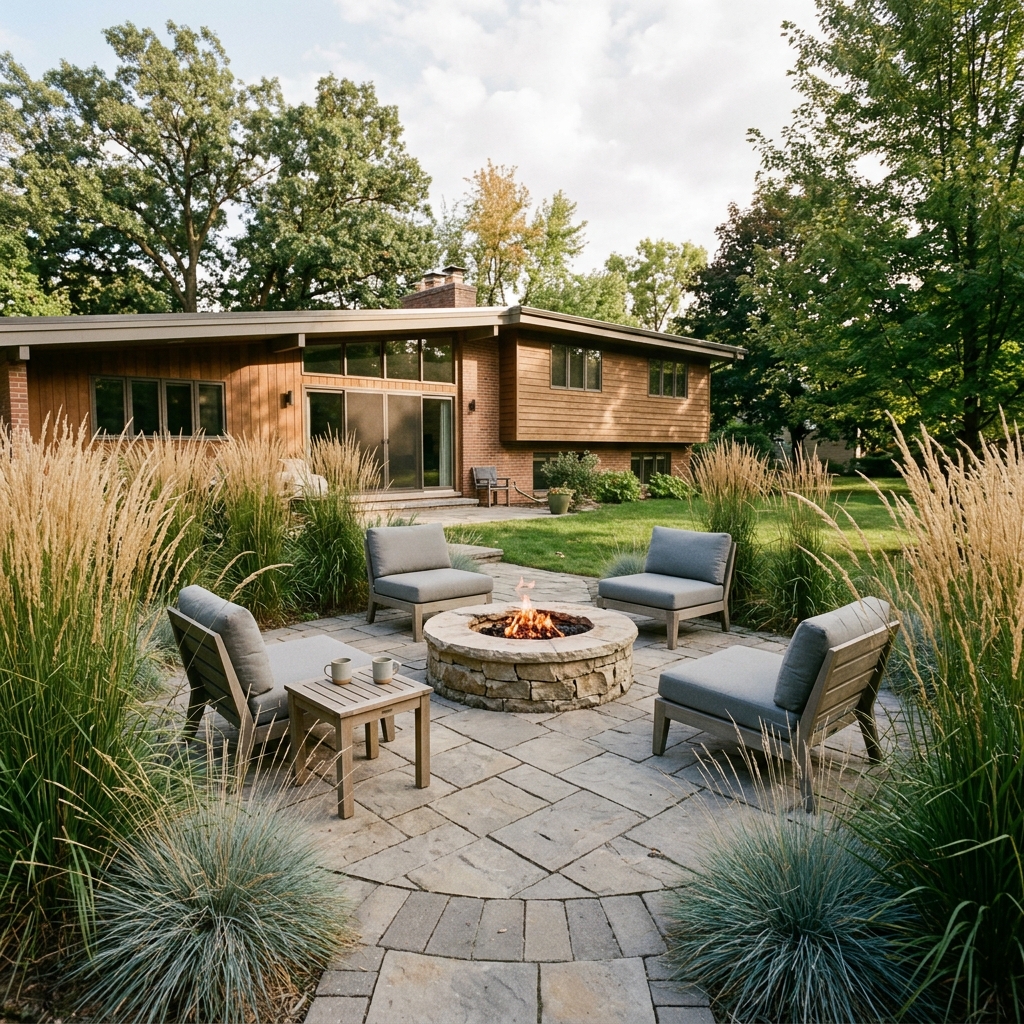
Hardscape on a mid-century home around Prospect High needs to read as part of the architecture rather than as an applied decoration. That means clean materials, clean geometry, and proportions that match the building rather than fight it.
What that looks like in practice: large-format pavers in a regular grid pattern rather than tumbled-stone serpentine. Cantilevered or overhanging step elements that echo the architectural language. Bold straight bed lines that work with the horizontal rooflines. Limited use of edging materials that introduce ornamental detail. A hardscape that does less of the wrong thing and more of the right thing.
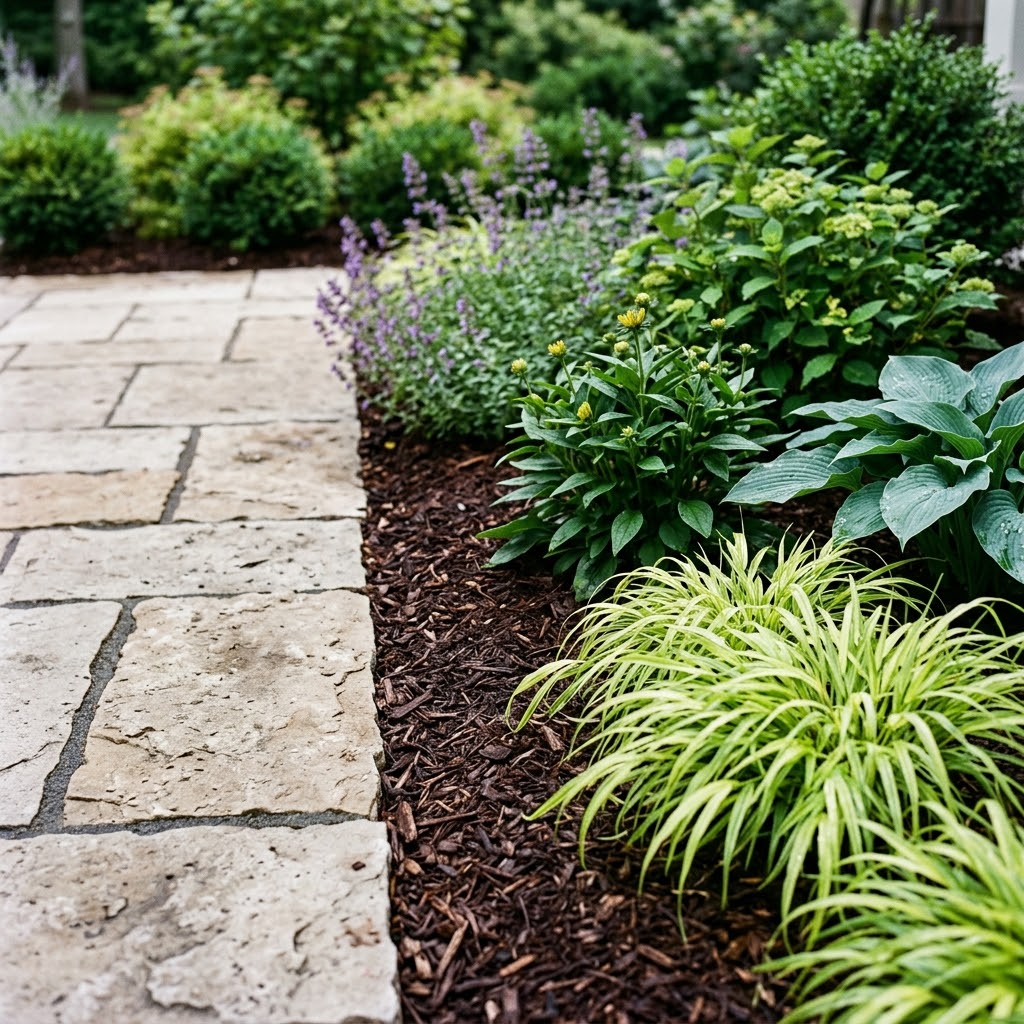
Color matters more than people expect. Mid-century homes tend to use warm brick or cool limestone in their facades, and the hardscape needs to land in the same color range. A blue-gray paver against a warm brick house reads off. A buff-toned paver against the same house reads coordinated. We pull material samples to the property at the design phase and look at them in actual daylight before specifying.
The other move on these properties is reconsidering the original front walk. Most of the mid-century houses in this pocket came with three-and-a-half or four-foot concrete walkways that read undersized today. Widening to five feet, replacing the surface, and softening the connection to the sidewalk with a planted edge does more for these properties than any other single design move.
Backyard hardscape follows the same logic. Bigger format, cleaner geometry, fewer ornamental moves.
Replacing or Renovating the Original Hardscape on Mid-Century Mount Prospect Homes
A first-round design conversation on a mid-century home around Prospect High almost always includes the question of what to do with the original concrete. The walkway from the sidewalk, the small slab patio in the back, the steps to the front entry, often the driveway too. All of it is sixty-plus years old, scaled to the original era’s expectations, and rarely matching the homeowner’s current uses.
Three options usually come up. Replace it entirely with new pavers. Renovate it by cleaning, sealing, and adding planted edge work to soften the cramped feel. Or remove it without replacing, expanding the planted area instead. Each is a real option depending on the budget and the family’s preferences.
Replacement is the most common path for the front walkway because the gain in scale and visual quality is so meaningful. A four-foot original concrete path replaced with a five or five-and-a-half foot paver run, in a material that coordinates with the architecture, transforms the front of the house at a relatively contained budget. Renovation makes more sense for the back patio if the existing slab is sound and the family doesn’t need a larger footprint.
Removal is the right answer occasionally, when an existing element fights the architecture and the homeowner doesn’t actually use it. Some side walks and small unused patios are worth deleting and replacing with planting. A landscape design with less hardscape can read as more refined than one that keeps every original concrete piece out of inertia.
Starting a Design in the Prospect High Area
Most projects in this part of Mount Prospect begin with a site visit. Vilma walks the property with the homeowner, looks closely at the architecture, and asks how the family actually uses the yard. The architecture matters more here than in many neighborhoods, and the early conversation is often as much about what the building wants from the landscape as about what the family wants.
A first concept sketch follows in a week or two. We deliver it as a hand drawing rather than a polished computer rendering at this stage, because the hand drawing invites real feedback. Once the direction is right, we move to a refined plan, finalize plant and material choices, and build a project schedule that fits the family’s calendar.
Installation timing varies with scope. A front yard refresh with new hardscape and planting usually finishes in one working week. Backyard work that includes patio replacement or significant regrading runs two to three weeks. We are direct about timing rather than promising a window we cannot reliably hit.
Prospect High is part of the rotation we run almost every week through the design and install seasons. For a fuller view of where we work across the northern suburbs, you can check the full coverage map.
Frequently Asked Questions About Landscape Design Near Prospect High
Do you work the streets around Prospect High in Mount Prospect?
We do. Kensington, Forest, Central, all the side streets feeding off the high school side of town. Mount Prospect runs as a regular weekly stop on the design schedule from spring through late fall. Drop your nearest cross street and we can give you a real timing read.
Can you actually design for a mid-century house specifically?
That is most of what we work on in this neighborhood, yes. The architectural language matters and our default plant palette and hardscape choices around Prospect High lean clean, geometric, and restrained for that reason. Happy to walk through reference projects on the consultation if you want to see what that looks like in real installs.
Is the original 1962 concrete walkway worth keeping?
Sometimes, sometimes not. A four-foot original walk leading to a properly scaled mid-century front entry usually reads cramped today, and replacing with a five-foot paver run in coordinated material is one of the highest leverage moves on these properties. If the existing slab is sound and the family is fine with the proportions, we leave it. The honest answer depends on the house.
Will Mount Prospect's heavy clay limit what plants we can use?
The plant list shifts toward species that thrive on clay long term. Boxwood, dwarf conifers, ornamental grasses, prairie dropseed, Russian sage, Amsonia, certain alliums. We avoid the catalog plants that look great in their first season and underperform on heavy clay by year three.
Are permits part of the install process here?
For larger work, yes. Bigger paver patios, retaining walls beyond a certain height, drainage that crosses property lines. The village handles permits through standard channels and we manage the paperwork and inspection on the homeowner's behalf so it does not become a separate task on your side.
Schedule a design consultation with Amliv Land Designs at (847) 485-9619 or email amlivlanddesigns@gmail.com. Vilma works with homeowners across Des Plaines and the northern Chicago suburbs on residential landscape design, installation, drainage, and outdoor lighting. The EPA notes that thoughtful landscape design can reduce outdoor water use by half, which is part of why plant selection matters.