
Brick Paver Installation in Des Plaines: A Material Selection Guide
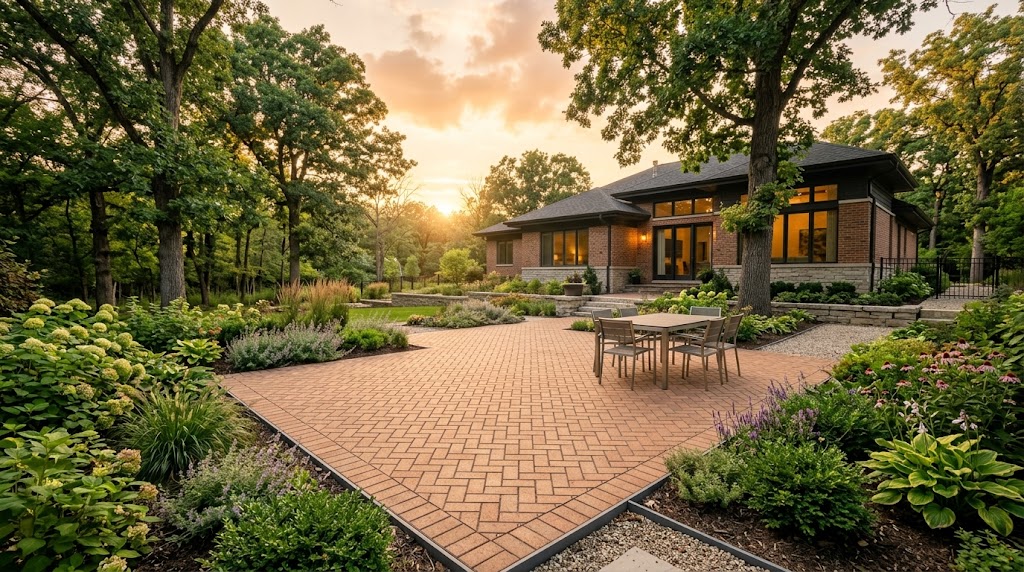
Homeowners underestimate paver selection. By the time two pallets show up from Unilock’s Aurora yard, or Belgard, or Techo-Bloc, the decision is locked in for the next twenty years. We get calls every spring from homeowners off Rand Road and the Oakton Street corridor wanting to reverse a color that looked fine under showroom halogens and wrong against their brick fascia. This guide to brick paver installation in Des Plaines is the conversation we have at the kitchen table before that happens. We have specified pavers in Cook County for more than twenty years.
TL;DR
- Clay pavers carry through-body color and suit older homes; concrete offers more shapes at lower cost.
- Use a three-color blend pulled from your house brick or siding to avoid a parking-lot look.
- Tumbled textures fit pre-war Des Plaines homes; smooth pavers suit newer contemporary builds.
- Sealing is optional; use a penetrating silane on concrete after the first full year.
- Polymeric joint sand resists weeds, ants, and washout, saving years of maintenance.
Des Plaines housing runs the gamut. You’ve got 1920s bungalows and Tudors near the downtown corridor and the river, then 1990s-and-newer builds out by O’Hare and the Cumberland Metra area. The right paver for a brick Tudor on a tree-lined block near Maine East is not the right paver for a beige-sided 2002 ranch out toward Golf Road. Material, texture, color blend, unit size, all of it matters. We’ll walk through clay versus concrete, color blending, surface texture, sealing, and joint sand.
Clay Brick Pavers vs. Concrete Pavers
Clay brick pavers are kiln-fired at roughly 2000 degrees Fahrenheit, the same way the brick on your house was made. Manufacturers like Pine Hall Brick, Glen-Gery, and Belden bake the color through the unit because it comes from the clay body and kiln temperature, not surface pigment. That matters here. USDA Zone 5b/6a freeze-thaw cycles, 40 to 60 per winter, will eventually chip any paver face. On clay, the chip exposes more of the same color underneath. Most clay pavers meet ASTM C902 Class SX for severe weathering, which is the spec you want north of I-80.
Concrete pavers are different. They’re pressed and cured with iron oxide pigments mixed into the top three-eighths of an inch. They run 15 to 30 percent less per square foot, come in dozens of shapes, and allow large-format patios that mimic bluestone or flagstone (Unilock’s Umbriano, Techo-Bloc’s Blu 60, etc.). The trade-off is fade. Pigment lightens with UV and accelerates with chloride from snowmelt. A chip reveals the gray Portland-aggregate matrix underneath.
For a historic or vintage Des Plaines home, clay almost always wins on appearance. For a contemporary build wanting a 12-by-24 plank-style paver in warm gray, concrete is the only option. Most Des Plaines projects we install land in concrete for range and cost. Homes that get clay rarely regret it.
Color Blending: Why One Color Almost Never Works
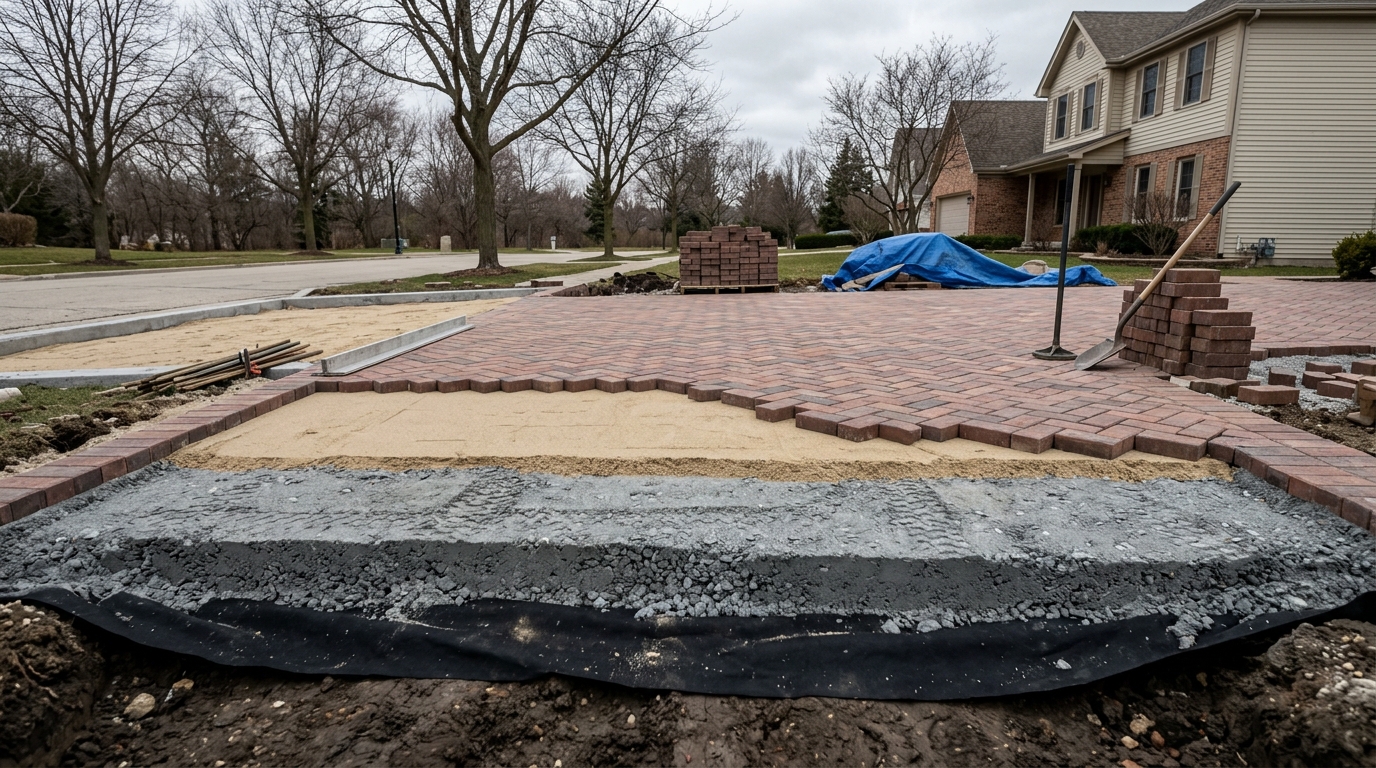
A single-color paver field looks like a parking lot. Solid red, solid charcoal, solid tan, none of them read as natural under the overcast Midwest light Des Plaines gets from November through March.
A three-color blend is the baseline we recommend. Manufacturers package these with names like Sierra, Heritage Brown, or Granite City, pre-mixed on the pallet in roughly 50/30/20 proportion. The installer pulls from at least three pallets at once, working off the top course of each, so no section ends up with a cluster of the same shade. Skip that step and you get a five-foot patch of red sitting in one corner like a stain.
The blend should pull from your house. If your brick is warm red Chicago common with cream tuckpointed mortar (you see this on the older blocks east of River Road), a blend of red, buff, and a touch of charcoal ties the patio to the building. If your siding is gray Hardie plank with white trim, a charcoal and silver blend with a warm undertone keeps the patio from feeling cold. Hold sample pavers against the actual house wall in daylight, at 10 a.m. and 4 p.m., since the color cast shifts. Showroom lighting lies.
Surface Texture: Smooth, Tumbled, or Weathered
Surface texture controls how old the patio looks the day it’s installed. A smooth-faced paver with crisp 90-degree edges, like Unilock’s Il Campo or Techo-Bloc’s Industria smooth, reads modern. It works well on newer homes, around pool coping, and on geometric layouts with sailor or soldier courses. It also shows every scuff from a dragged Weber kettle or a steel snow shovel.
Tumbled pavers run through a rotating drum that knocks the edges and rounds the corners. The result is an older look, reminiscent of reclaimed street brick. Weathered lines like Unilock Courtstone or Belgard Mega-Arbel add intentional surface variation and chamfered profiles. For a Des Plaines bungalow in the older neighborhoods near Lake Opeka, or any home built before 1960, tumbled is almost always the right call. The irregular edges hide minor settling and forgive the eye when joints widen after a hard winter and heave cycle.
Sealing Choices for Brick Paver Installation in Des Plaines
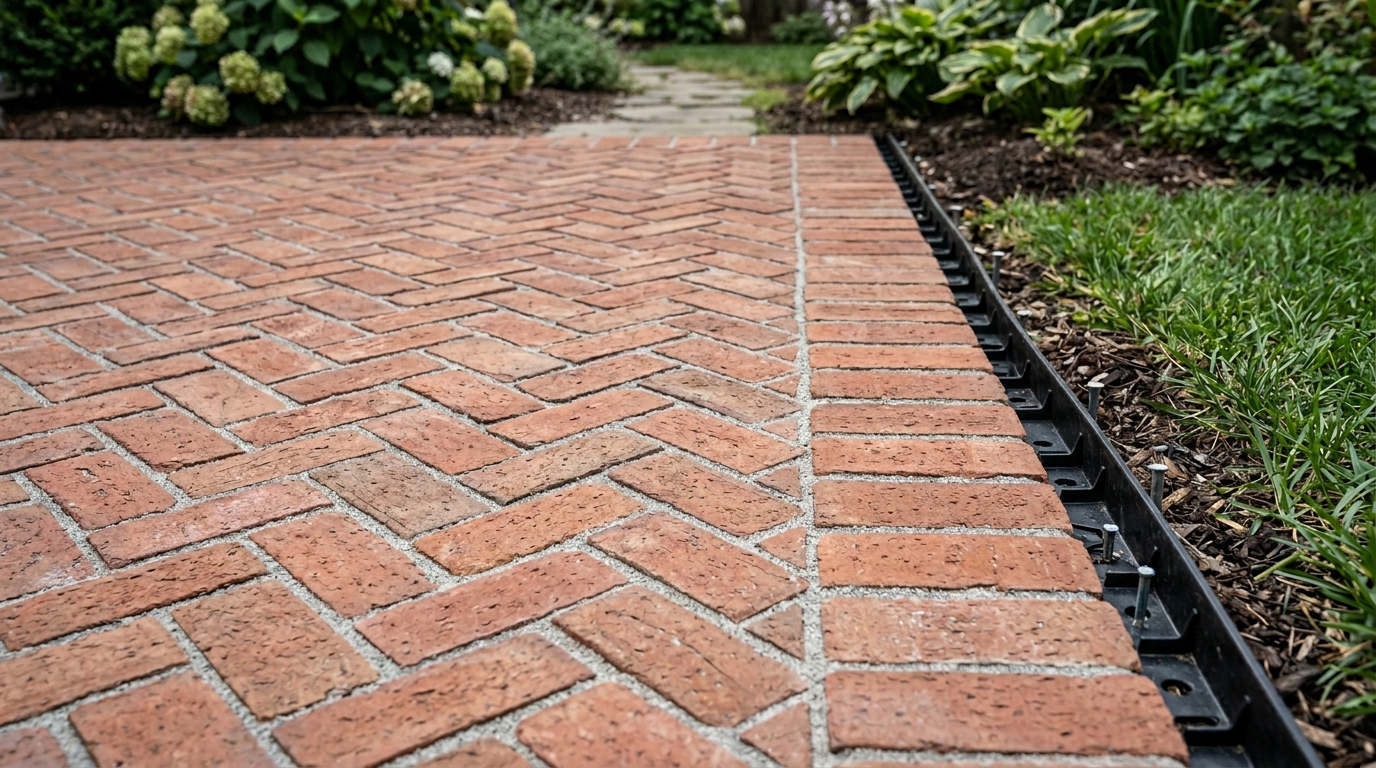
Sealing a paver patio is not required. A properly installed field on a compacted CA-6 base with bedding sand will perform for decades unsealed. What sealing does do: slow color fade on concrete, deepen wet-look richness, lock joint sand in place, and make red wine and grease stains easier to clean.
There are two families of sealer. Film-forming acrylic sealers (Techniseal, SureBond) sit on top, create a glossy or satin sheen, and lock everything down hard. They look great for two or three years. Then they peel and white-blush under the road salt and snowmelt tracked off Mannheim and Touhy. Penetrating silane or siloxane sealers soak into the paver, leave the surface matte, and do not peel, but they need reapplication every three to five years.
For clay pavers, sealing is almost always cosmetic. For concrete pavers near a driveway apron, or anywhere chloride deicers track in, especially on lots facing the heavily salted approaches to I-294, a penetrating sealer is worth the money. Do not seal a patio in its first season. The pavers need time to release efflorescence, which is the calcium hydroxide bloom from the curing cement matrix, and that takes a full year of weather.
Joint Sand: The Most Overlooked Decision
The sand between your pavers does more work than most homeowners realize. It locks units together through aggregate interlock, transfers vertical load horizontally across the field, and keeps water from sluicing down to wash out the bedding course.
Standard masonry sand is cheap, easy to sweep in, and fine for low-traffic surfaces with tight one-eighth-inch joints. It also washes out in heavy rain. Pavement ants tunnel through it within a season. Dandelion and crabgrass seed colonize the gaps. On the clay-heavy soils common across this part of Cook County, washout pulls fines down into the base and accelerates the problem.
Polymeric joint sand (Techniseal NextGel, Alliance Gator, SEK-SureBond) is graded sand mixed with a polymer binder that activates when wet. Sweep it in dry, blow the surface clean with a leaf blower, mist it in two or three passes with a shower-head nozzle, and it hardens into a flexible joint that resists weeds, ants, and washout. It costs two to three times more per bag, and it has to go down on a bone-dry surface or it leaves a haze that’s a pain to remove. For any patio we install in Des Plaines, polymeric is the default. The labor saved over a decade more than covers the up-front difference.
Pairing Pavers with Vintage and Historic Des Plaines Homes
Des Plaines has a deep inventory of pre-war homes, especially near the river and the older platted sections around Maine West and the original downtown grid. These houses were built when brick was the primary exterior and masonry detail, corbeled cornices, soldier courses over windows, was assumed. A poured concrete patio with a single-color soldier-course border fights the architecture of a 1925 brick Tudor every time.
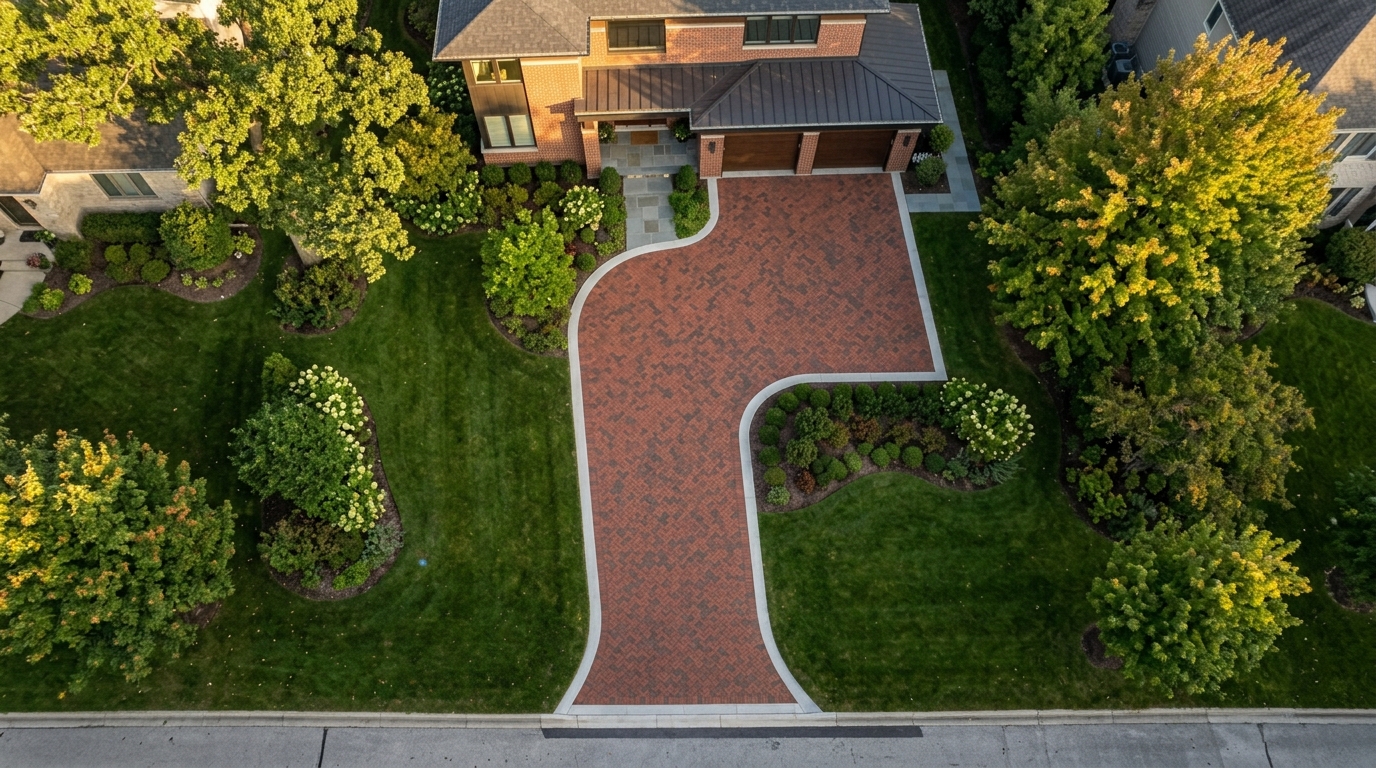
For these homes, we lean toward clay pavers in a tumbled finish, in a three-tone blend picking up colors already in the house brick and soffit trim. A 45-degree herringbone or running-bond pattern reads period-appropriate. Those patterns dominated Chicagoland alley brick in the 1920s and 1930s. Avoid oversized 12-by-24 plank pavers. They were not a thing in 1925 and look transplanted from a Lincoln Park rooftop.
For homes built since the late 1990s, particularly the subdivisions south of Oakton, the rules loosen. Large-format concrete pavers in cool grays, soldier courses in contrasting charcoal, and 90-degree stack-bond layouts work well with the LP SmartSide and Hardie plank siding and white trim packages common over the last twenty years. The job of the material is to look like it belongs to the house, not fight it. If you’re weighing options for your own lot, our patio design page walks through the layout side of that decision.
How Long Does a Brick Paver Installation Take in Des Plaines?
Most 400-500 square foot paver patios take us 4-6 working days. Smaller patios around 200 square feet wrap in 2-3 days. Driveways, larger patios, and natural stone work stretch into a second week. Heavy rain pauses the install (compaction requires dry base conditions) so the schedule includes a weather buffer.
Do I Need a Permit for Brick Paver Installation in Des Plaines?
Patios over 200 square feet or those built within five feet of a property line typically need a permit. Smaller paver projects and walkways usually skip it. We assess during the site walk and pull the permit when one's needed, as part of the install schedule.
Can Brick Pavers Be Installed Over an Existing Concrete Slab?
Sometimes. A sound, level, well-draining slab can take a paver overlay with thin bedding sand and a clean edge detail. A cracked, settling, or pooling slab has to come out before pavers go in. We tell you which category your slab falls into during the site walk.
How Often Does a Paver Patio Need Maintenance?
Polymeric joint sand re-application every 8-12 years, occasional power washing and reseating of any individual paver that has shifted. Sweeping and rinsing handle the in-between maintenance. The maintenance load is light compared to a wood deck or a stamped concrete slab.
What Pavers Should I Pick for a Chicago Climate?
Concrete pavers from Unilock, Belgard, and Techo-Bloc are what we install most often: dimensionally stable, color-through (chips don't show), freeze-thaw rated. Tumbled-edge pavers in the cheaper bracket usually chip and fade faster. We walk you through the tradeoffs during design selection.
Will the Install Crew Tear Up My Existing Lawn?
Some disturbance happens around excavation and material staging. Plywood paths, planned routes, and protected plantings minimize it. Disturbed lawn gets restored with fresh sod or seed before we leave. The patio itself sits where it sits. Surrounding turf comes back.
Schedule a design consultation with Amliv Land Designs at (847) 485-9619 or email amlivlanddesigns@gmail.com. Vilma works with homeowners across Des Plaines and the northern Chicago suburbs on residential landscape design, installation, and lighting.