
Landscape Lighting Design in Des Plaines: Photometric Planning and Fixture Specification
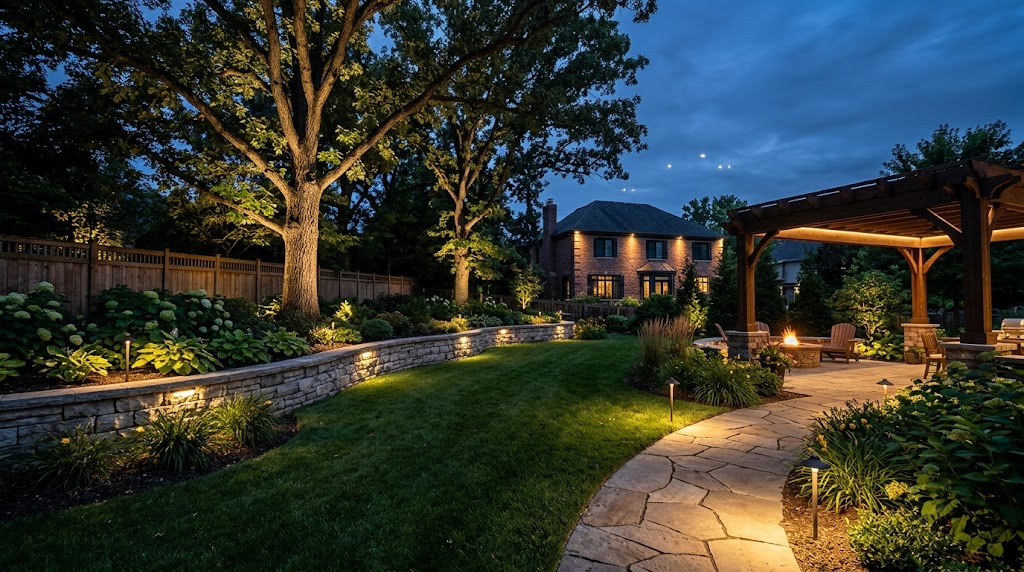
Landscape lighting design in Des Plaines is the planning step that decides whether your finished lighting reads as cinematic outdoor architecture or a row of fixtures pointed at random. Before any trenching, any low-voltage wire, any transformer goes in, the design phase is where every fixture gets its purpose, its beam angle, its lumen output, and its place on a layered plan.
TLDR
- Lighting design is the photometric plan, not the install. Fixture placement, wattages, and wire runs documented before anything goes in the ground.
- Every plan layers four kinds of light: path, accent, ambient, and security.
- Fixtures get specified by brand, model, beam angle, lumen output, and color temperature.
- We size transformers with 25-30 percent headroom so the system has room to grow.
- Plan fee is discussed up front and credits toward install when we handle both phases.
We’re Amliv Land Designs. Family-run, twenty-plus years designing residential landscape lighting across Cook and DuPage Counties. Our designs are built around the photometric reality of what the fixtures can actually do, not just where they look pretty on a rendering. Beam angles, lumen output, color temperature consistency, and dark-sky compliance all factor into every plan we draw.
Below: how the lighting design phase actually works on our projects, the failure modes that show up when designs get skipped or shortcut, what we specify that off-the-shelf fixture catalogs leave out, and honest answers about cost, timeline, and what gets handed off to whoever installs the system.
Lighting design ends where install begins. Once the plan is final, the trenching, transformer mounting, and fixture placement becomes its own phase handled by the install crew. The plan itself is usually one piece of a larger outdoor scope that includes the rooms the lighting is designed to serve, and the question of whether you need a full design phase at all gets answered during the first onsite walk-through.
What This Phase Actually Covers
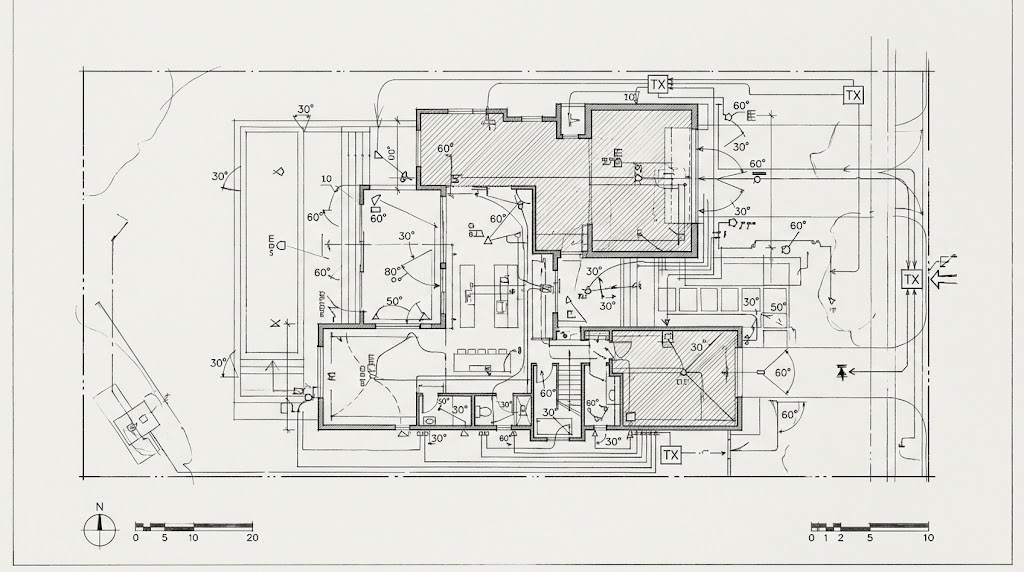
Every landscape lighting plan we deliver runs the same sequence: site walk during the day to catalog architectural features, plant material, hardscape, and sight lines; site walk at dusk to confirm what actually needs lighting and what doesn’t; photometric layout sizing fixture count and spacing to the surfaces being lit; layered plan separating path, accent, ambient, and security intents; fixture specification with brand, model, beam angle, lumen output, color temperature, and warranty; transformer and wire-run schematic so the install crew has a complete build document; coordination with whatever else is going into the yard so trenches don’t conflict. The plan is what gets handed to install. The install team builds to the plan.
What 20 Years of Lighting Design Work Taught Us
Twenty years of drawing landscape lighting plans gives you a list of patterns that don’t show up in fixture catalogs.
First pattern is the over-lit yard. Homeowner sees a few impressive examples on social media and asks for that look across the entire property. The result is a yard that reads flat at night because nothing has visual hierarchy. Good lighting design is as much about what you don’t light as what you do.
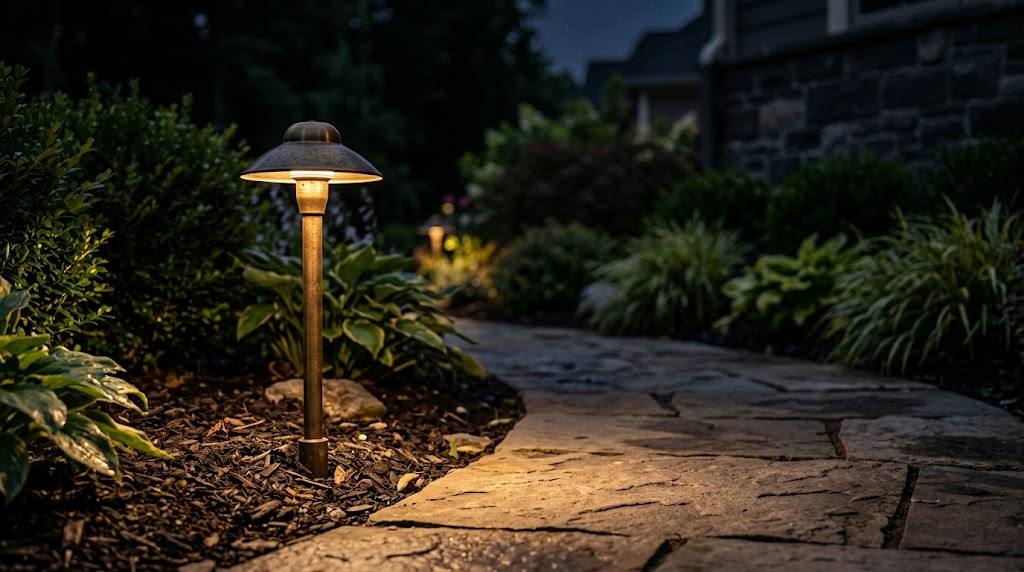
Second pattern is the wrong color temperature. A lot of off-the-shelf LED packages ship at 4000 Kelvin or warmer-cool mix, which makes every plant in the bed look gray-green at night. We spec 2700K consistently across an entire plan because plant color holds up at that temperature.
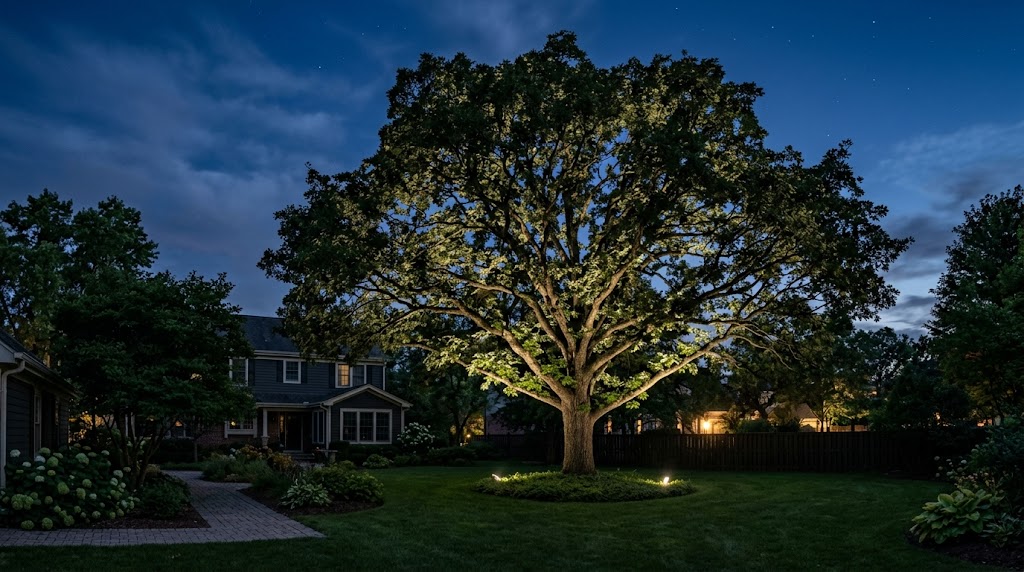
Third pattern is the upward beam-angle mistake. People love uplighting on tree canopies. Done with the wrong beam angle, that fixture also illuminates the second-floor windows of the neighbor’s house and your own. Beam angle math matters, and dark-sky compliance isn’t a nice-to-have.
Fourth pattern is the under-spec’d transformer. The plan calls for 800 watts of fixtures and the installer sticks a 900-watt transformer on it. Three years later when the homeowner adds two more uplights at a tree the kids climbed, the transformer can’t carry the load. We size transformers with 25-30 percent headroom built in so the system has room to grow.
Lighting design is mostly about decisions made on paper that the homeowner never sees. They see the finished result. Our job is to make sure what they see was the result of decisions, not accidents.
Beyond our specs, the DarkSky lighting principles cover the same beam-angle and shielding logic at an industry-association level.
When Does a Lighting Plan Pay Off Versus Just Hiring an Installer Direct?
Not every yard needs a separate lighting design phase. The answer comes down to scope and complexity.
If you have a small property, want path lighting along one walkway, and have a clear idea of which fixture model you want from a contractor’s catalog, hiring a low-voltage installer directly probably gets you there. The install itself is straightforward enough that a competent installer can lay it out onsite.
Where the math flips is bigger or more architectural projects. If you’re lighting multiple zones — path, accent on plant material, uplighting on architectural features, security at perimeters — and especially if you want a layered look that reads as designed rather than scattered, a separate plan saves money over the lifetime of the system.
Other signals that you need a plan first: you’re coordinating lighting with new hardscape going in (so trenches don’t conflict), you have specific dark-sky compliance concerns from neighbors or HOA, you want fixture spec’d to a brand and model that survives the install crew swapping in cheaper substitutes, or you’re building the project in phases and want infrastructure stubbed in correctly the first time.
Where the plan doesn’t pay off: small projects under 20 fixtures, all on one zone, on a flat property where layout decisions are obvious. Save the design fee, hire a good installer, walk the install with them onsite to make placement calls during the work.
Cost vs Value: What a Real Lighting Plan Actually Saves Long-Term
The plan fee feels like the optional part of a lighting project until you sit down with the numbers. A good plan saves money in three ways that aren’t obvious until later.
First, it stops over-fixturing. Without a photometric plan, installers often pad the fixture count by 30-40 percent to make sure no zone reads dim. Real photometric calculations cut that fat. We’ve seen plans drop fixture counts from 48 down to 32 with no loss in coverage, just by sizing beam angles correctly. That alone usually exceeds the design fee in fixture savings.
Second, it stops the rework call. Without a wire-run plan, installers often run lines the wrong way, find out at energization that the transformer is too far from the load center, and end up either trenching twice or living with voltage drop that dims the far fixtures. Plans set wire gauge and run length up front. Voltage shows up correct on the first pull.
Third, it preserves the design intent on installer turnover. The original installer might be perfect. The crew that comes back five years later to add fixtures around a new patio might not know the original plan existed. With a plan documented, the new work matches the old. Without one, the additions read as bolted-on.
Frequently Asked Questions
What Does Landscape Lighting Design Cost in Des Plaines?
Pricing is discussed during the consultation since the right plan size depends on yard square footage, fixture count, architectural lighting complexity, and whether you’re coordinating with new hardscape. The plan fee credits toward installation when we handle both phases of the project.
What Do You Get With a Landscape Lighting Design Plan?
Photometric layout, fixture specification with brand and model, transformer and wire-run schematic, layered intent (path, accent, ambient, security), and coordination notes with any other landscape work happening on the property. The plan is a complete build document, not a sketch.
What's the Difference Between Landscape Lighting Design and Installation?
Design is the planning artifact: photometric math, layered fixture intent, and the build documents an installer follows. Installation is the physical work of trenching, wire pulls, transformer mounting, and fixture placement. We do both, but they're priced and scheduled separately.
Can I Take the Landscape Lighting Plan to Another Installer?
Yes, our plans are written so any qualified low-voltage contractor can build to them. Brand, model, wire gauge, transformer sizing, and run lengths are all specified. We don't tie the plan to a specific installer.
Do You Coordinate Outdoor Lighting With Other Landscape Work in Des Plaines?
Yes, we coordinate fixture placement and trenching paths with whatever hardscape, planting, or irrigation is happening on the property. Catching a conflict on paper costs nothing; catching it after a paver patio is in costs real money.
How Long Does Landscape Lighting Design Take in Des Plaines?
Most plans wrap in 2-3 weeks from the site walk to the final document. Larger properties or projects with significant architectural lighting can run 4-6 weeks. We schedule a dusk site walk during that window because half the design decisions can't be made in daylight.
Ready To Get Started?
Looking for landscape lighting design in Des Plaines? Schedule with Amliv Land Designs. Family-run, twenty-plus years across Cook and DuPage Counties. Call us at (847) 485-9619 to get your outdoor lighting project started today!