
3D Landscape Renderings in Des Plaines, IL
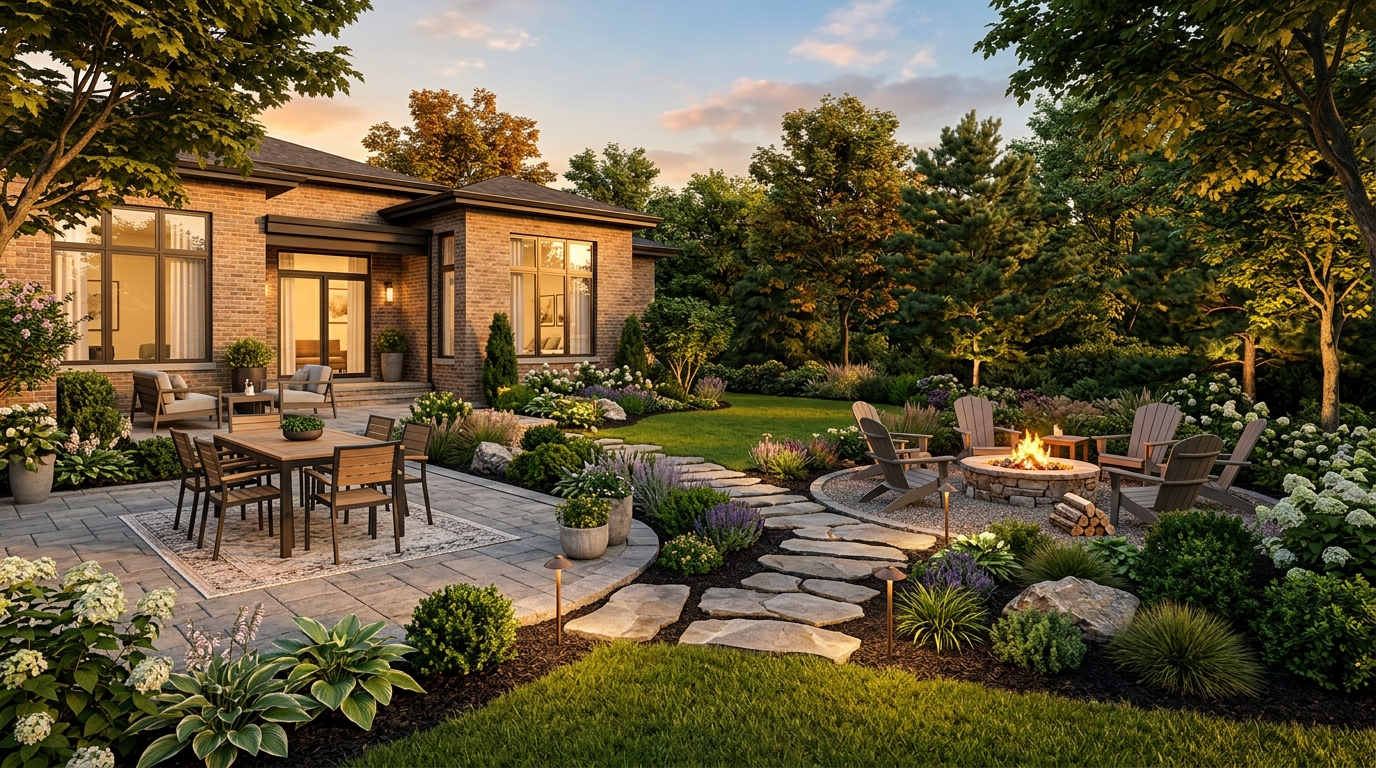
3D landscape renderings in Des Plaines turn a flat 2D site plan into a walkthrough you can actually picture before any contractor breaks ground. The patio, the planting, the lighting, the materials, the sight lines from inside the house, the way the morning sun hits the kitchen window in June: all of it gets visualized at scale so the homeowner sees what is going to be built, not what an installer guessed they meant.
TLDR
- 3D rendering turns a 2D landscape plan into a photorealistic visualization before construction.
- You see materials, plant maturity, sight lines, and lighting at scale instead of guessing from a flat sketch.
- Catching a layout problem in 3D costs nothing. Catching it after concrete is poured costs real money.
- Renderings are part of the design phase, not an upsell.
- Multiple view angles get rendered so you see the space the way the family will actually use it.
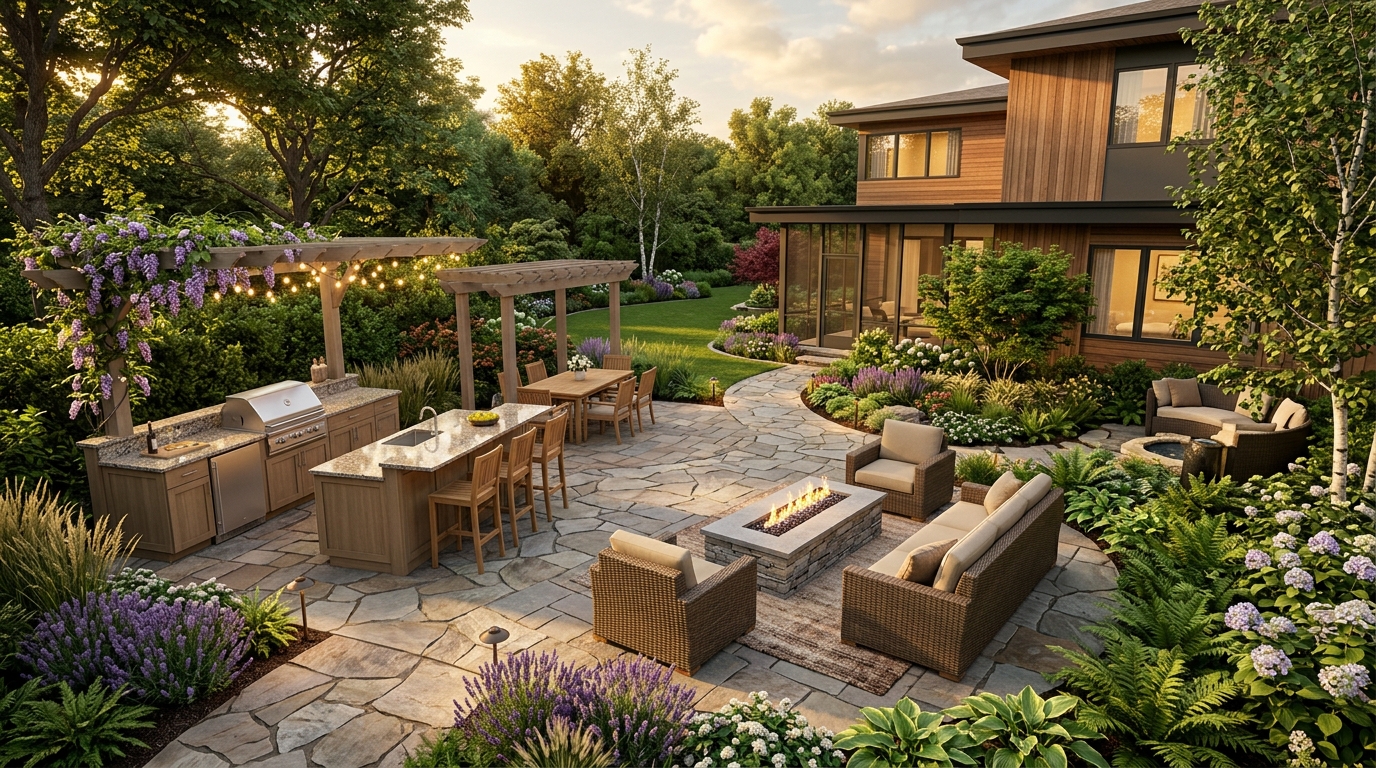
We are Amliv Land Designs. Family-run, twenty-plus years rendering residential landscape projects across Cook and DuPage Counties. Our renderings show the project at material specification fidelity. The pavers are the actual pavers we will install. The plants are at their three-year maturity, not the day-one nursery size that lies about how the bed reads. The lighting respects beam angle and color temperature. What you see on screen is what we build, not a glossed-up sales tool.
Below: how 3D renderings actually fit into our design process, what they cover and what they do not, the failure modes we see when renderings get skipped or done at the wrong fidelity, and customer-intent answers about scope, format, and what to expect from rendering as a deliverable.
Renderings live alongside the rest of the design phase. Most rendering sets we deliver tie into a master plan for the whole outdoor space, show the layered photometric lighting plan the homeowner is buying, and get scoped during the first onsite walk.
What 3D Landscape Renderings in Des Plaines Actually Show You
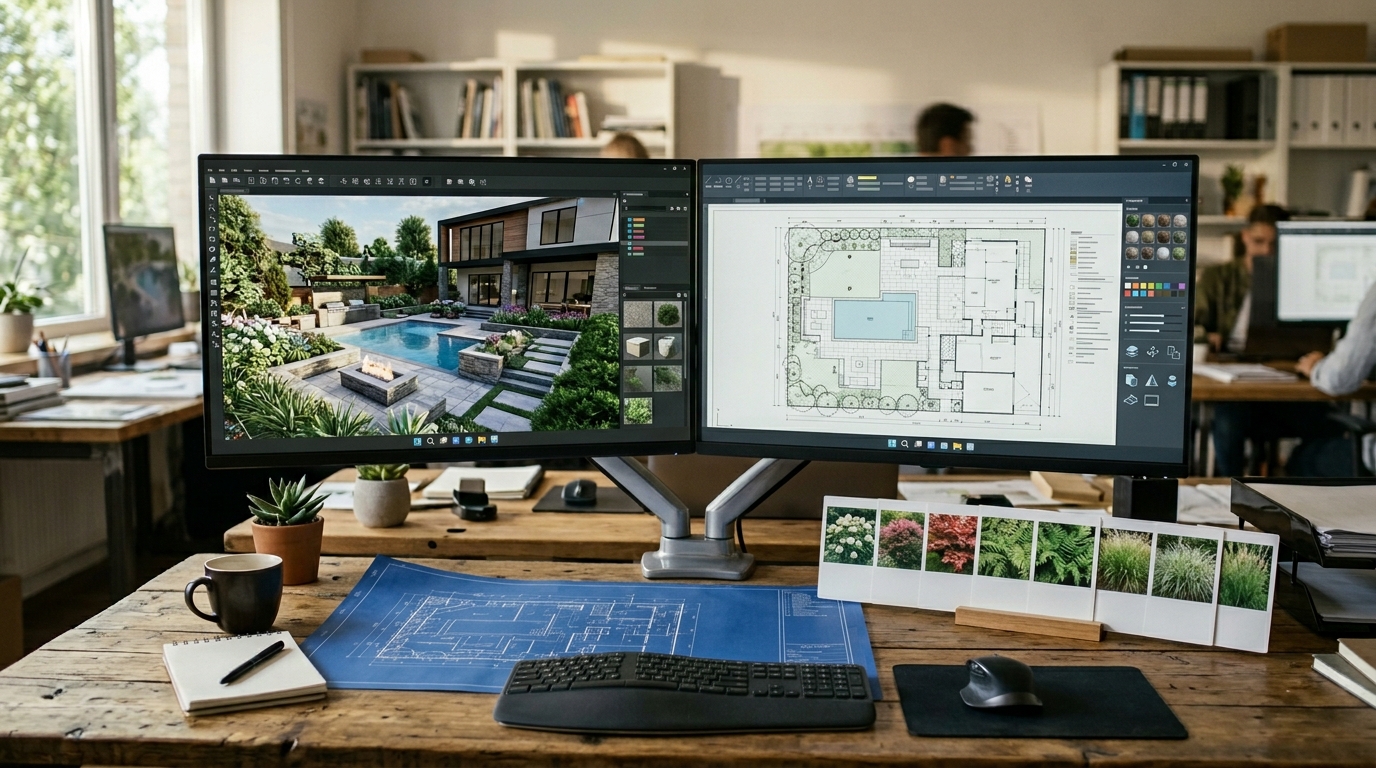
Every rendering we deliver runs the same sequence: 2D site plan finalized first so the rendering builds against a real layout; site photographs taken at multiple angles to anchor the rendering against the actual property; 3D model built with hardscape geometry, plant specifications at three-year maturity, lighting fixtures at correct beam angles, and elevation accuracy from the survey; multiple view angles rendered (typically the back-door view, the patio-level view, an aerial bird’s eye, plus any specific sight lines the homeowner asked us to verify); revision cycle if the rendering surfaces a layout question we missed in 2D; final renderings delivered at print-quality resolution alongside the 2D plan. Renderings are part of the design package. They are not a separate purchase.
What 20 Years of Renderings Taught Us
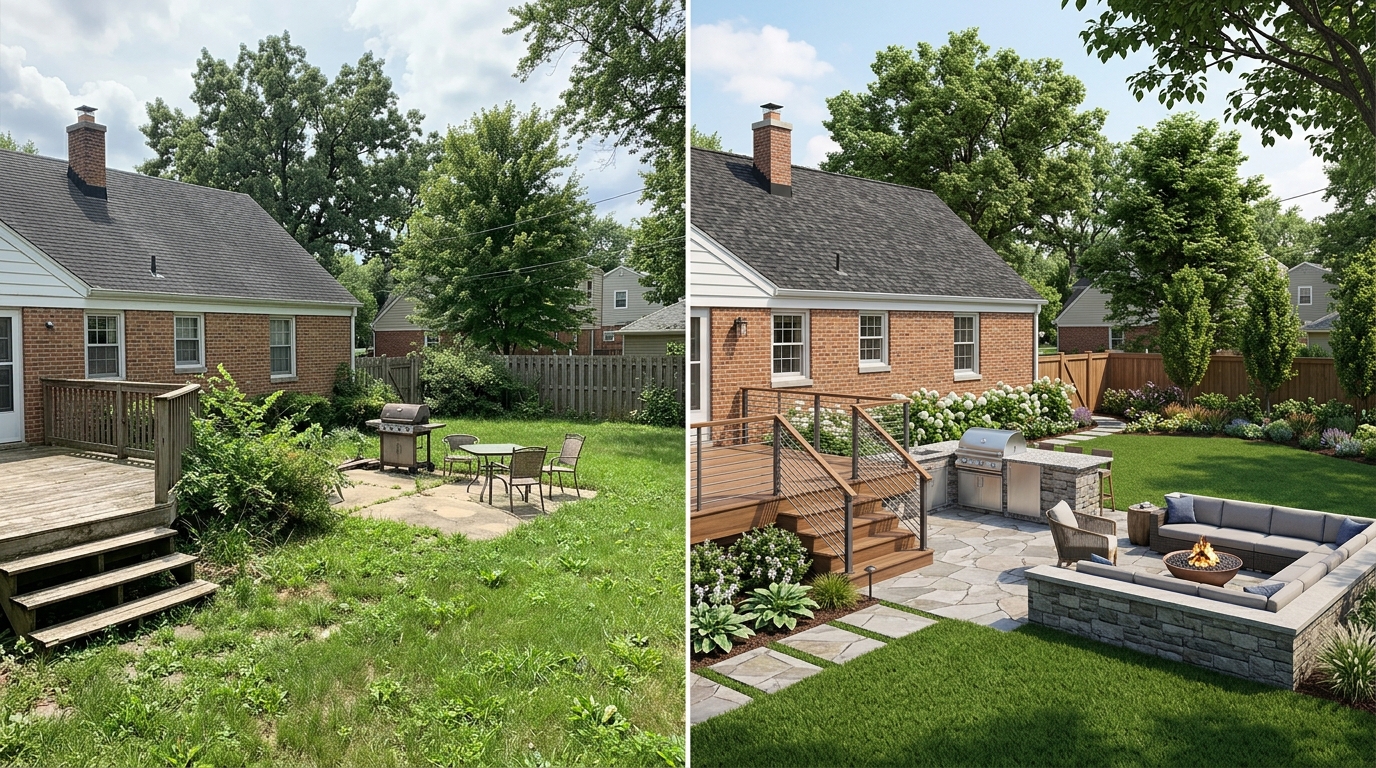
Twenty years of rendering residential landscape projects gives you a list of patterns that explain why some renderings hold up and others mislead.
First mistake we see in other firms’ renderings: plants shown at day-one nursery size. The bed looks sparse and underplanted because that is what 5-gallon shrubs look like when they go in. The homeowner approves the design assuming year-three growth, then walks out to a half-finished-looking bed for two summers. Our renderings show three-year maturity so the visual matches what the bed will actually become.
Second mistake: hardscape rendered with generic textures. Pavers all look like the same generic warm grey. The homeowner picks materials at the showroom and gets a different read in real life. Our renderings load the actual paver swatches the homeowner picks, so the screen and the showroom and the finished build all match.
Third mistake: lighting rendered with default brightness. Every fixture glows the same. Real outdoor lighting has beam angles, color temperatures, and intent (path versus accent versus ambient). Our renderings respect the photometric plan, so the homeowner sees the lighting design they are actually buying.
Fourth mistake: renderings done at the end as a sales tool. By that point the design is locked, and the rendering just confirms what was already drawn. We render mid-process so the rendering can surface layout questions while there is still time to redraw. That is how renderings actually help the design get better, not just sell harder.
Renderings are a working tool, not a finishing varnish. Used right, they save mistakes that cost real money to fix.
What Chicago-Latitude Renderings Have to Account For
Renderings for Des Plaines projects have to account for two regional realities most rendering software ignores by default.
First: the angle of the sun in Chicago latitude. Summer sun rises in the northeast and sets in the northwest. Winter sun stays low across the south. Patios sized for shade in July need to be checked against winter low-angle sun that pours through the gap between the pergola slats. Renderings that just use a generic noon-sun light position miss this.
Second: dormant-season visibility. Half the year, mature trees have no leaves. The screening that shields a sight line in July disappears in November. We render at least one frame in dormant-season conditions so the homeowner sees what the lot looks like with bare branches, not just leaf-cover summer.
Both of those affect real design decisions. Both get baked into the rendering set we deliver.
The American Society of Landscape Architects covers the same visualization standards in their sustainable design guidance if you want to read further on how renderings should support real design decisions.
How to Get the Most Out of a Rendering Set
Renderings only help the design get better when the homeowner uses them as a working tool. Here is how to get real value out of the rendering set we hand over.
Step one is viewing the rendering at full size. Phone screens hide layout issues that pop out the second you look on a 27-inch monitor. Open the file on a laptop, or print the set at 11×17, and walk through each view at real resolution. The questions that surface at full size never come out on a thumbnail.
Second, walk the rendered space against the actual yard. Stand where the rendered patio sits, look toward the house, and compare what the rendering shows against what you actually see. The mismatches are where the design has to adjust.
Step three is checking the rendering at the time of day you actually use the space. If the view from the family room window matters most, look at the rendered version at that same time of day. Morning light, midday glare, and evening shadow all hit the rendering differently, and the rendering set should hold up across all three.
Fourth, ask about what the rendering does not show. Wind direction. Smoke routing from grills. Snow piling spots. Drainage on the rendered patio surface. None of those are obvious in a still rendering, but they all affect whether the finished space works in real life.
Renderings are not a finishing flourish on the design. Used right, they catch the layout problems that 2D plans miss, and they save the cost of fixing those problems after construction. That is the whole point.
When 3D Landscape Renderings in Des Plaines Save Real Money
Renderings earn their keep on projects where layout decisions are easier to fix on screen than after construction. Three real scenarios show up the most.
Scenario one: a homeowner plans an outdoor kitchen and pictures it at the back corner of the lot for the view. The 2D plan agrees. But once the rendering puts the homeowner inside the rendered yard at human eye level, they realize the kitchen is a hundred feet from the back door, the hose bib is on the wrong side, and nobody is going to walk that far to grab a beer mid-cookout. The kitchen moves twenty feet closer to the house in the next revision. Catching that on screen costs nothing. Catching it after concrete is poured costs five figures.
Scenario two: the homeowner approves a planting plan based on day-one nursery sizes shown in a typical contractor bid drawing. The bed reads sparse on day one because the shrubs are six gallons each. By year three the same shrubs are pushing the windows and blocking the kitchen view of the patio. A rendering at three-year maturity exposes the over-planting before any plant goes in the ground. Adjusting density on screen avoids ripping out half the bed two summers in.
Scenario three: the lighting plan looks reasonable in 2D, but the rendering at night shows a tree uplight pouring directly into the upstairs bedroom window of the neighboring house. Beam angle on the offending fixture gets revised before the order is placed. Without the rendering, that fixture goes in, the neighbor calls in March about the light spill, and the homeowner pays to have the fixture pulled and respec’d.
These three scenarios alone usually cover the cost of the rendering set several times over. The math works because rework after construction always costs more than revision before construction. Renderings just make the revisions visible.
Beyond cost: renderings build alignment between homeowner, designer, and installer before any deposit gets paid. Misalignment is the single most common cause of post-build disputes. The rendering set keeps everyone working from the same picture.
Frequently Asked Questions
What Does a 3D Landscape Rendering Actually Show?
Hardscape geometry, plants at three-year maturity, materials at actual swatch fidelity, lighting at correct beam angles, sight lines from inside the house, and multiple view angles of the same space. The rendering matches what the build crew is going to deliver.
Are 3D Renderings Included With the Design or Charged Separately?
Renderings are part of the design phase deliverable on every master plan we run. They are not an upsell or a separate purchase. The design fee covers the 2D plan plus the rendering set.
How Many View Angles Will I See in My Rendering Set?
Typically the back-door view, the patio-level view, and an aerial bird's eye. Additional view angles get added if the project has specific sight lines the homeowner needs to verify, like the kitchen-window view of the outdoor cooking zone.
Can I Make Changes After Seeing the Renderings?
Yes, the revision cycle exists for exactly that reason. Renderings often surface questions about layout, plant placement, or material choice that did not come up in 2D. Catching those questions before construction is the whole point.
Do You Render Plant Material at Real Maturity?
Yes, three-year maturity is the standard. Day-one nursery size makes the bed look sparse and underplants the design. The rendering should match what the bed becomes, not what it looks like the week after install.
Can the Rendering Be Used by Another Contractor?
Yes, the rendering set delivers alongside the 2D plan and gets handed to whichever installer builds the project. Most contractors appreciate having the rendering as a reference because it removes guesswork during construction.
Ready To Get Started?
Looking for 3D landscape renderings in Des Plaines? Schedule with Amliv Land Designs. Family-run, twenty-plus years across Cook and DuPage Counties. Call us at (847) 485-9619 to get your rendering set started today!