
Land Restoration Design in Des Plaines, IL
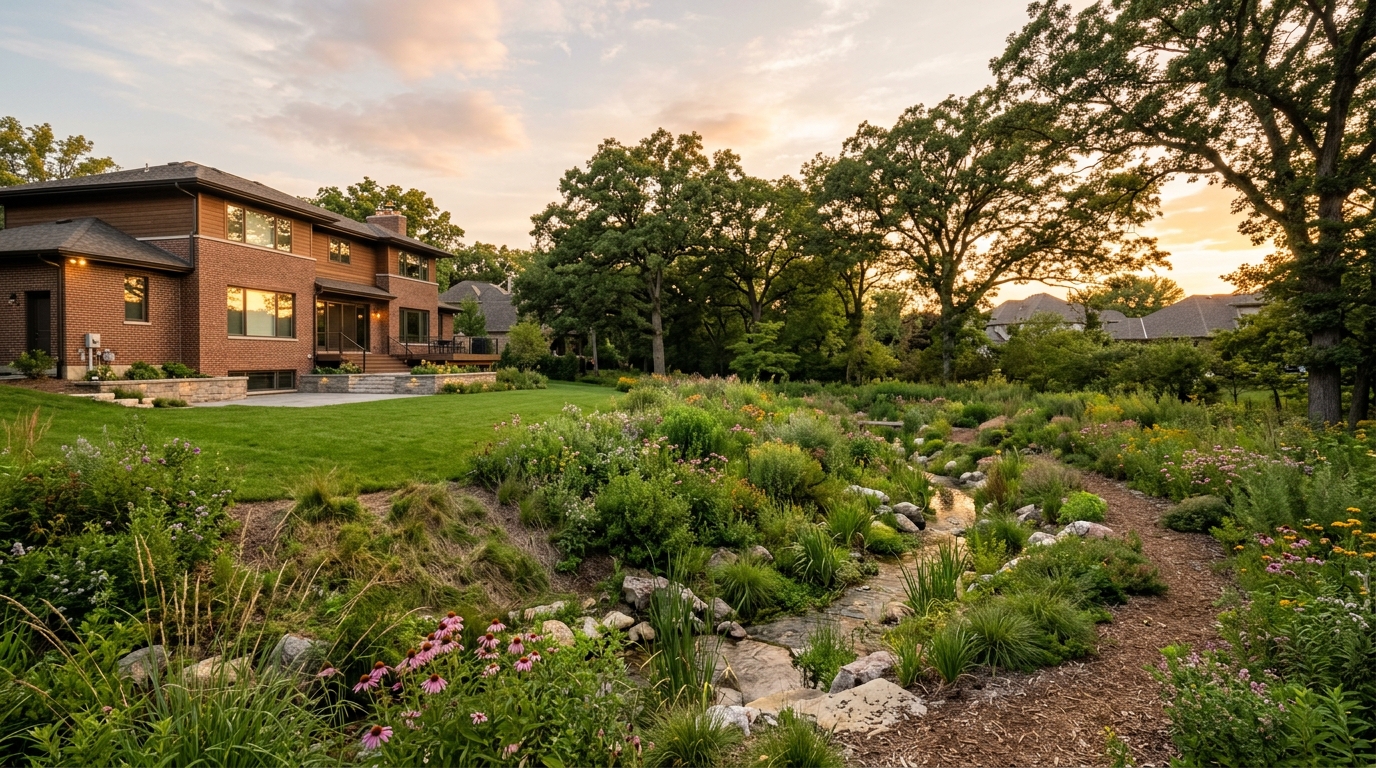
Land restoration design in Des Plaines is the recovery plan for properties that have lost ground (literally or visually) and need to come back. Erosion channels carved by years of untouched downspouts. Compacted bare patches where construction equipment killed the soil. Lawn that died and never came back. Drainage that flows the wrong way. Invasive overgrowth that pushed out everything that belonged. Restoration design assesses every piece of damage, diagnoses what caused it, and writes a phased plan that brings the property back instead of papering over the symptoms.
TLDR
- Restoration design is the recovery plan: regrading, drainage repair, native plantings, erosion control, turf restoration.
- We assess what damaged the property first, since the cause has to be addressed before the surface gets fixed.
- Erosion control fabric, compost-amended topsoil, and native plant plugs are the three workhorses on most plans.
- Phased work lets the property recover in stages without one giant project bill all at once.
- Done well, a restored yard outperforms a brand-new install because the underlying soil and drainage actually work.
Amliv Land Designs is a family-run shop with twenty-plus years restoring residential and small-commercial sites through Cook and DuPage Counties. The plans we draw treat a property as a working system, with soil, drainage, planting, and hardscape all evaluated together. Cosmetic-only fixes are how a yard ends up needing the same restoration done a second time five years later.
Below: how the land restoration design phase actually runs, the failure modes we see when restoration gets attempted as cosmetic-only work, why Chicago soil profiles make restoration different from any other region, and customer-intent answers about permits, scope, and what a real restoration plan delivers.
Restoration projects almost always pull in adjacent work. Most plans we draw coordinate with the grading and slope-rebuild design, with the drainage routing plan, and the turf and planting install crew that brings the surface back to life.
What Land Restoration Design in Des Plaines Actually Covers
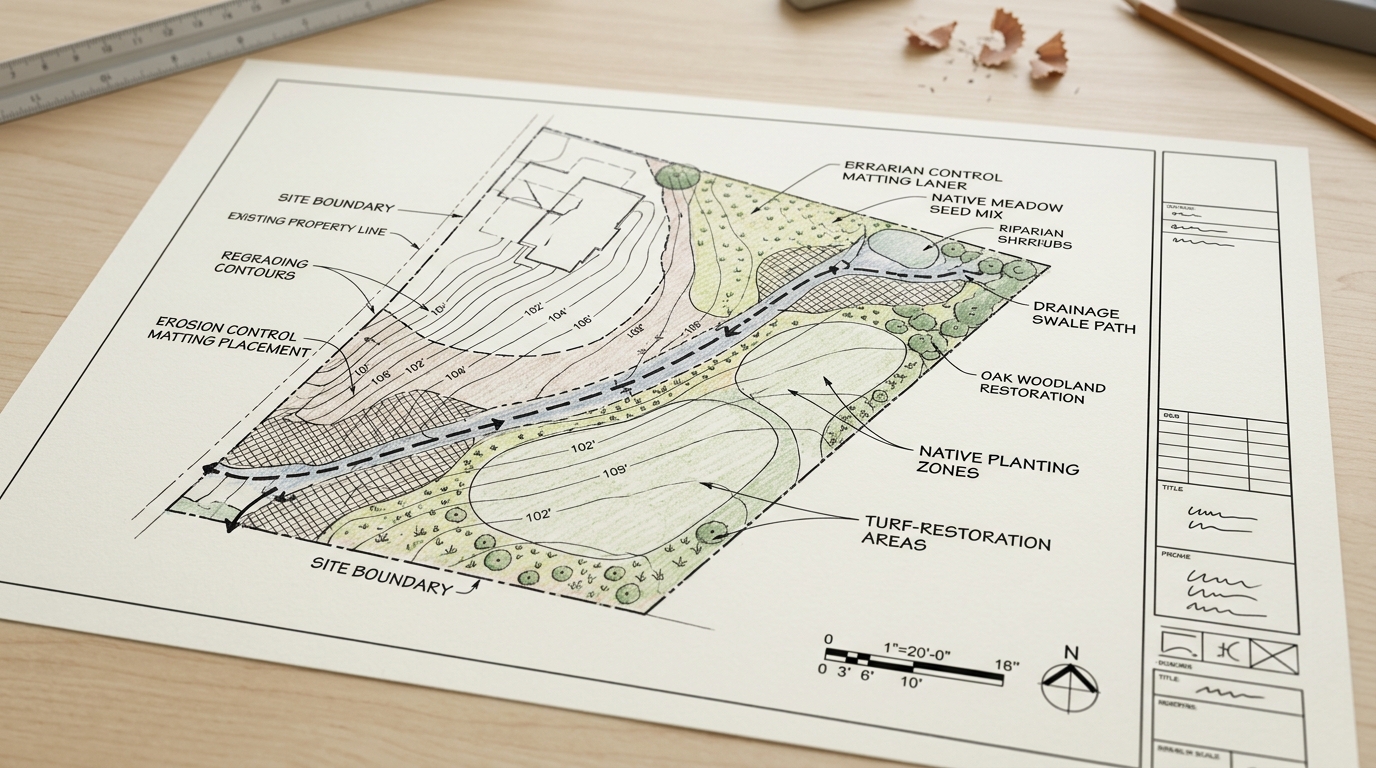
Restoration plans we deliver follow the same shape. We walk the property and document the damage: erosion channels, compacted areas, dead turf, invasive overgrowth, drainage failures, exposed root systems, soil compaction signatures. We figure out the cause for each (stormwater routing, foot traffic, mowing damage, construction compaction, deer or rabbit browse, herbicide overspray). The plan addresses the cause first, then the surface symptoms. Regrading where the slope sends water the wrong direction.
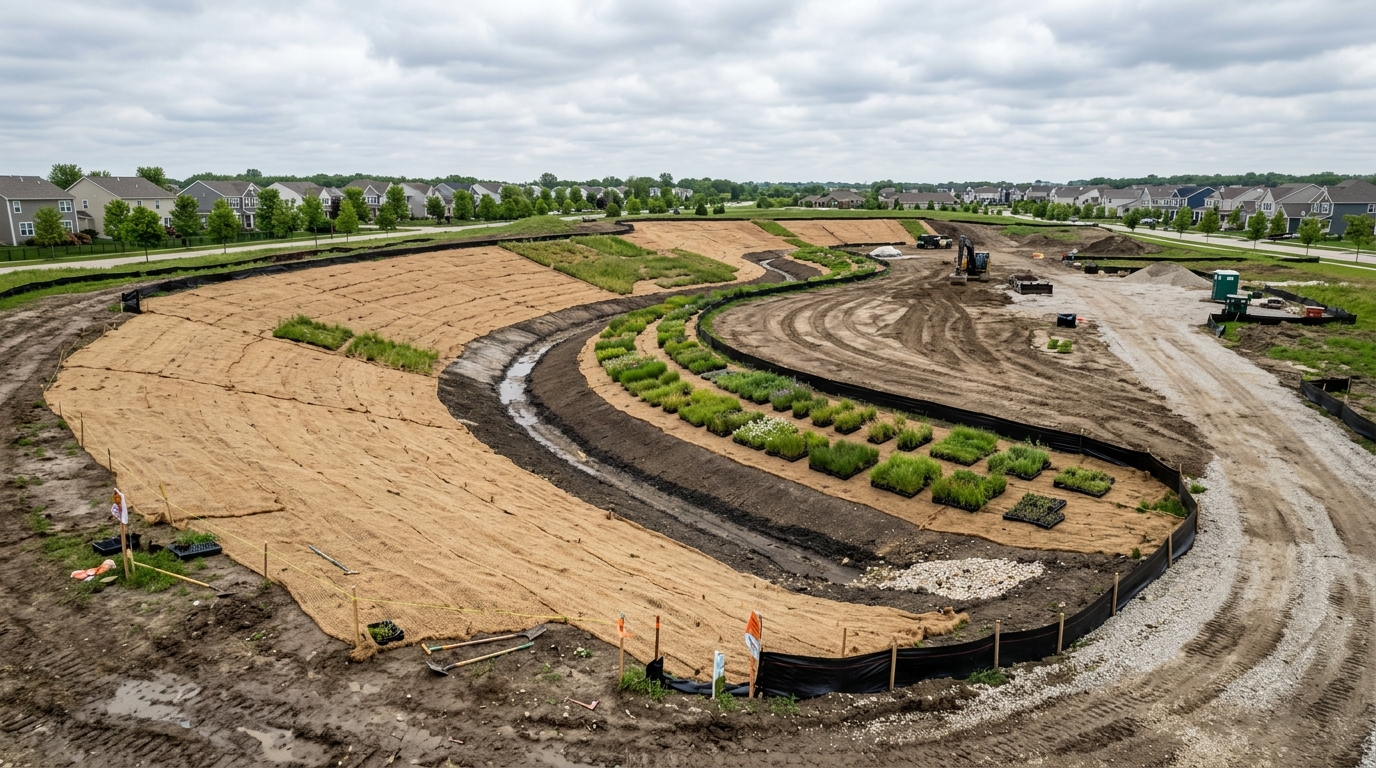
Drainage swales and catch basins where stormwater needs an actual path. Erosion control fabric where the slope is steep enough to lose seed. Compost-amended topsoil where the existing soil is dead. Native plant plugs where the project benefits from species that handle Chicago weather without irrigation. The plan phases the work over one to three seasons depending on scope, and ships with a monitoring checklist so the homeowner can track recovery against actual benchmarks.
What 20 Years of Restoration Work in Cook County Taught Us
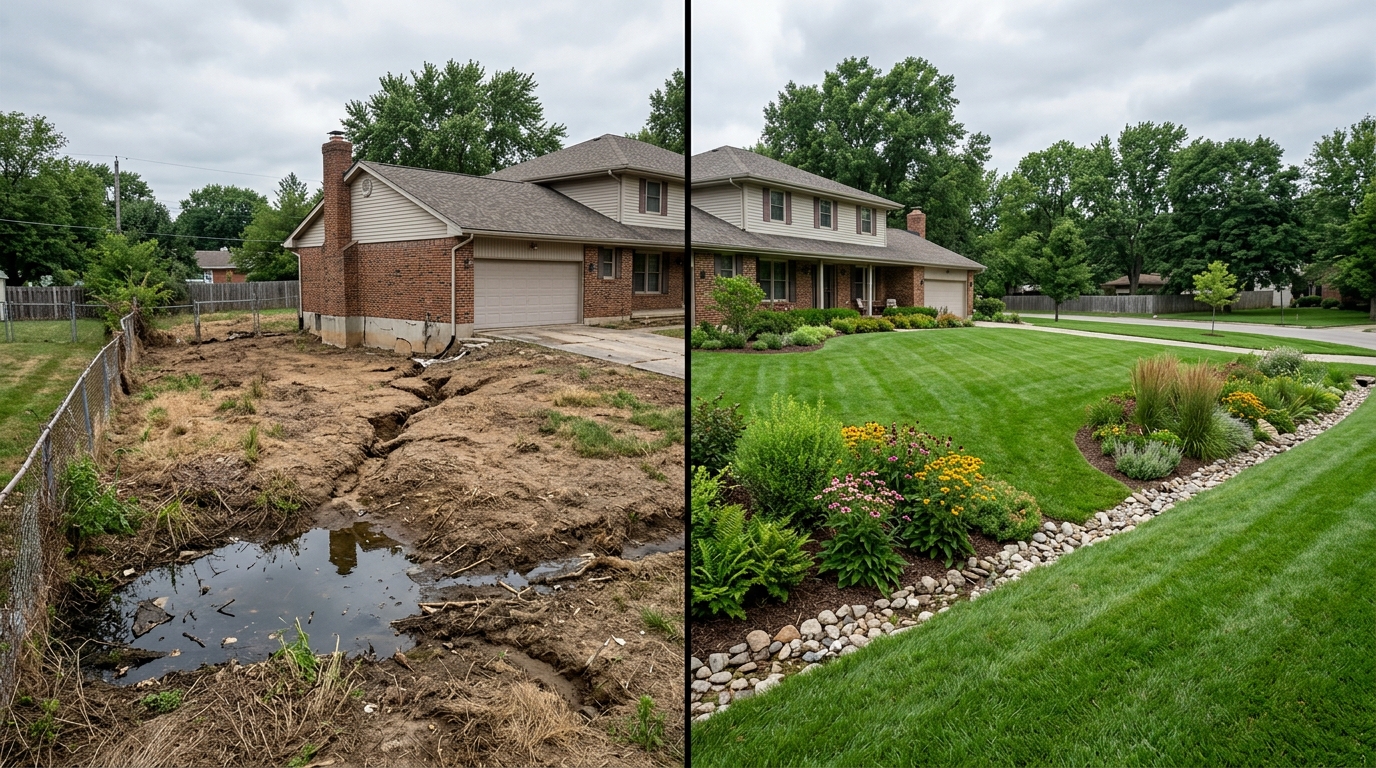
Twenty years of restoration work across Cook and DuPage Counties teaches you that most failed yards failed for reasons that weren’t visible until you walked the property carefully.
First pattern: erosion channels traced back to a downspout that nobody extended. Roof water has been concentrating at the same corner for ten years, the soil washed out, and the lawn died because grass roots couldn’t hold the surface. Fixing the surface without fixing the downspout means the channel reopens by next spring.
Second pattern: compacted soil from the construction era that the original builder never broke up before laying topsoil and turf. Sod survives a year or two on the topsoil layer, then runs out of root depth and dies. Restoration on a compacted lot has to start with physically breaking up the compaction zone eight to ten inches down before any new sod or seed touches the surface.
Pattern three is invasive overgrowth. Buckthorn, garlic mustard, creeping charlie pushed into a zone nobody was watching, displaced what used to live there, and now own the ground. Removing the invasives without restoring a native plant community is just clearing space for the next wave of invasives to colonize. Real restoration pulls them out AND replants something that holds the soil long-term.
Fourth pattern: properties where the previous owner sprayed herbicide on a problem spot and the herbicide killed the soil biology along with the weeds. Living soil is what holds plants. Soil that was sterilized has to be amended with compost and given time before anything will establish there.
Restoration is not landscaping with the volume turned up. It’s a different discipline that addresses what damaged the property before it tries to make the property look good again.
Why Chicago Soil Profiles Make Land Restoration Different
Chicago soil profiles make restoration work different from what restoration looks like in other regions. Most of the residential lots in the Des Plaines area sit on glacial clay over a layer of urban fill that was placed when the original subdivision went in fifty to seventy years ago. Construction compaction added another two to four feet of disturbed ground on top.
That history means every restoration site has at least three soil layers to consider. The top eight to twelve inches is whatever the homeowner has been working with. Below that is the construction-compaction zone that often refuses to let water through. Below that is the original clay subsoil. A restoration plan that ignores those layers and tries to fix everything at the surface fails by the second growing season.
Soil core tests run before specifying amendments, plant choices, or regrading depth on most projects. A native planting that thrives on a tested site can fail completely on a site nobody tested, even when the two properties sit two hundred feet apart in the same subdivision. Local soil reality drives the actual plan, not generic guidance from the regional planting maps.
When Land Restoration Design in Des Plaines Pays Off
Properties that get restored well outperform brand-new installs over a five to ten year timeline. The reason is structural: the underlying soil, drainage, and plant community all got addressed at once, so the system works as a system rather than a stack of separate features.
Cost-wise, restoration usually lands lower than a comparable tear-out-and-replace project because the existing trees, mature plantings, and hardscape stay in place. The work focuses on what failed, not on what was already working.
And resale matters. Real-estate appraisers look at the perceived condition of the yard. A restored lot reads as cared-for. A neglected lot reads as deferred maintenance the buyer will inherit. The math on a real restoration usually works out better than the math on cosmetic-only fixes.
For broader context on residential land recovery practices, the EPA stormwater and rain garden guidance aligns with the soil-and-drainage logic we apply on every restoration plan.
Frequently Asked Questions
What Does Land Restoration Design Cover?
The plan covers regrading, drainage repair, soil amendment, erosion control fabric placement, native plant or turf restoration, and invasive species removal. Each gets specified at zone level so the build crew knows exactly what goes where, in what order, and during which growing season.
Do I Need a Permit for Land Restoration in Des Plaines?
Sometimes. Major regrading, work near a floodplain or wetland, drainage routing that ties into municipal stormwater, or fence and retaining wall changes can all trigger permits. We assess during the site walk and pull permits as part of the design phase where they're needed.
Can Restoration Be Done in Phases Across Multiple Seasons?
Phasing is what makes most restoration projects work. Spring is for native seeding and soil amendment. Mid-fall is the right window for shrub installs. Summer handles hardscape and regrading. We sequence the plan to match those windows, which means the property rebuilds at the pace it actually wants to rebuild rather than fighting the calendar.
How Long Until a Restored Property Looks Established?
Most restoration projects look noticeably better by the end of the first growing season and look established by year two. Native plant zones take three full seasons to fill in completely. Turf-restoration areas usually look mature by the end of the first summer if the soil work was done right.
Can You Restore Property After Construction Damage?
Yes, post-construction restoration is a common project. We handle compaction breakup, soil amendment, regrading where the construction crew left the slope wrong, and re-establishing turf or native cover. Doing this within the first year after construction gives the best long-term result.
Will Restoration Work Disrupt the Mature Trees on My Property?
Tree protection is built into how we sequence the work. Crews avoid digging or compacting under canopy where the routing allows it, and where it doesn't, we switch tools (air spade, hand excavation, no heavy machinery near the trunk). Mature trees are an asset that gets preserved through restoration, not casualties of it.
Ready To Get Started?
Looking for land restoration design in Des Plaines? Schedule with Amliv Land Designs. Family-run, twenty-plus years across Cook and DuPage Counties. Call us at (847) 485-9619 to get your restoration project started today!