
Drainage Solution Design in Des Plaines, IL
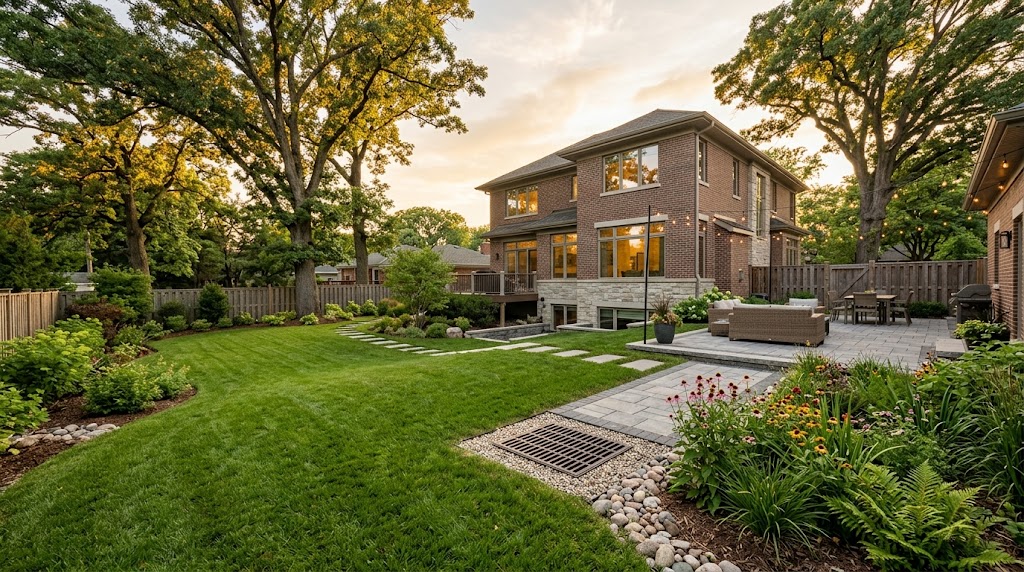
If your basement gets damp every spring or your back lawn turns into a swamp during heavy rain, the fix usually starts with a drainage solution design, not a bigger sump pump. Drainage solution design in Des Plaines is the engineered plan we draw before any trenching: surface grading targets, French drain routes with the right pipe and fabric, catch basin locations, downspout extensions that actually move water far enough from the foundation, rain garden infiltration zones where the soil allows. The plan addresses what is causing the water problem so the fix lasts twenty years instead of two.
TLDR
- Drainage design is the engineering plan we draw before any trenching to actually solve standing water.
- Chicago clay holds water at the surface. Drainage in this region has to assume zero infiltration.
- Surface grading, French drains, catch basins, rain gardens, and downspout routing all get specified together.
- A real drainage plan addresses the cause, not just the puddle you see today.
- Most of our drainage calls come from yards where someone fixed the symptom and the cause showed up next year somewhere else.
We are Amliv Land Designs. Family-run, twenty-plus years engineering residential drainage across Cook and DuPage Counties. Our drainage designs treat the property as one watershed: where the water comes from, where it currently sits, and where it needs to go for the design to actually work. Single-fix patches often push water onto the neighbor or into the basement by year three. Real designs route water out to daylight or to a sump outlet on a path that respects the slope, the soil, and the freeze-thaw cycle.
Below: how the drainage design phase actually runs on our projects, the failure modes we see when drainage fixes get done piecemeal, what Chicago clay does to drainage that sandy-soil regions never have to deal with, and customer-intent answers about permits, scope, and what a real drainage solution actually delivers.
Drainage rarely sits on its own. Most projects we run also coordinate with the trenching and pipe install phase, with the patio or retaining wall in the hardscape build, and with the broader site planning that happens during grading and resloping design. Coordinating these on paper before any trench gets dug saves rework on every project.
What a Drainage Solution Design in Des Plaines Phase Actually Covers
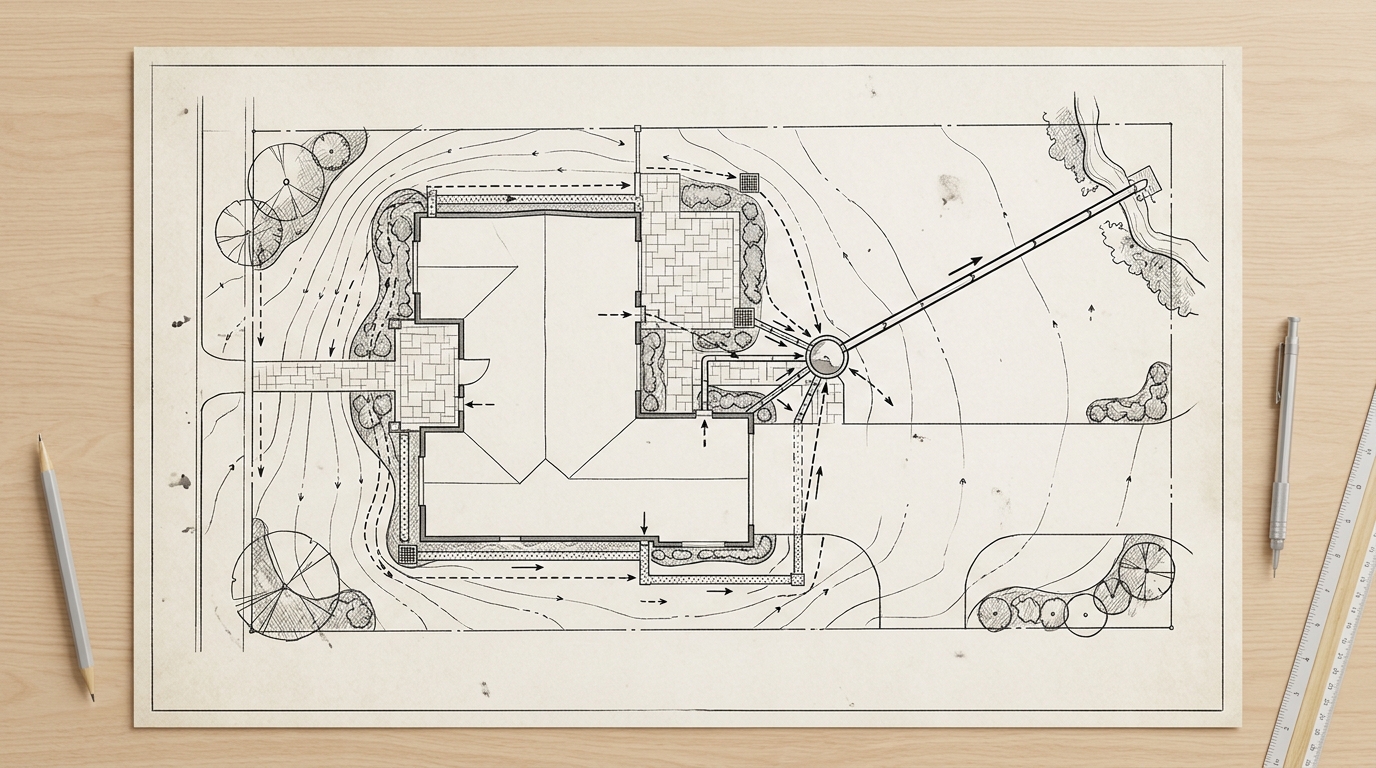
How we run a drainage plan: dry-day site walk first, mapping elevations and existing flow against the empty stage. Wet-weather walk second when the schedule allows, watching where water pools and where it routes itself under load. Drafting follows from those two walks. The scaled plan covers regrading targets, French drain runs sized for the catchment, catch basins, trench drains, sump or daylight outlet routing, and any rain gardens with infiltration test notes. Hardscape, planting, and utility paths get coordinated on the same drawing to avoid redundant trenching. We pull permits where village code triggers them. The finished plan is the deliverable the install crew builds from.
What 20 Years of Drainage Calls Taught Us
Twenty years of running drainage calls across Cook and DuPage Counties teaches you the failure modes that do not show up on the homeowner’s first call.
First mistake we see: somebody installed a French drain at the visible wet spot, and now the water is somewhere else. Drainage problems are watershed problems. The wet spot is the symptom, not the source. Plans we draw map the whole drainage path before we put any pipe in the ground.
Second on the list is the downspout that drops water ten feet from the foundation and calls it a day. Ten feet is not enough on Chicago clay. The water saturates the same patch of lawn for the entire season, the foundation footing wicks moisture through capillary action, and basement dampness shows up the following summer when nobody connects it to the original downspout layout.
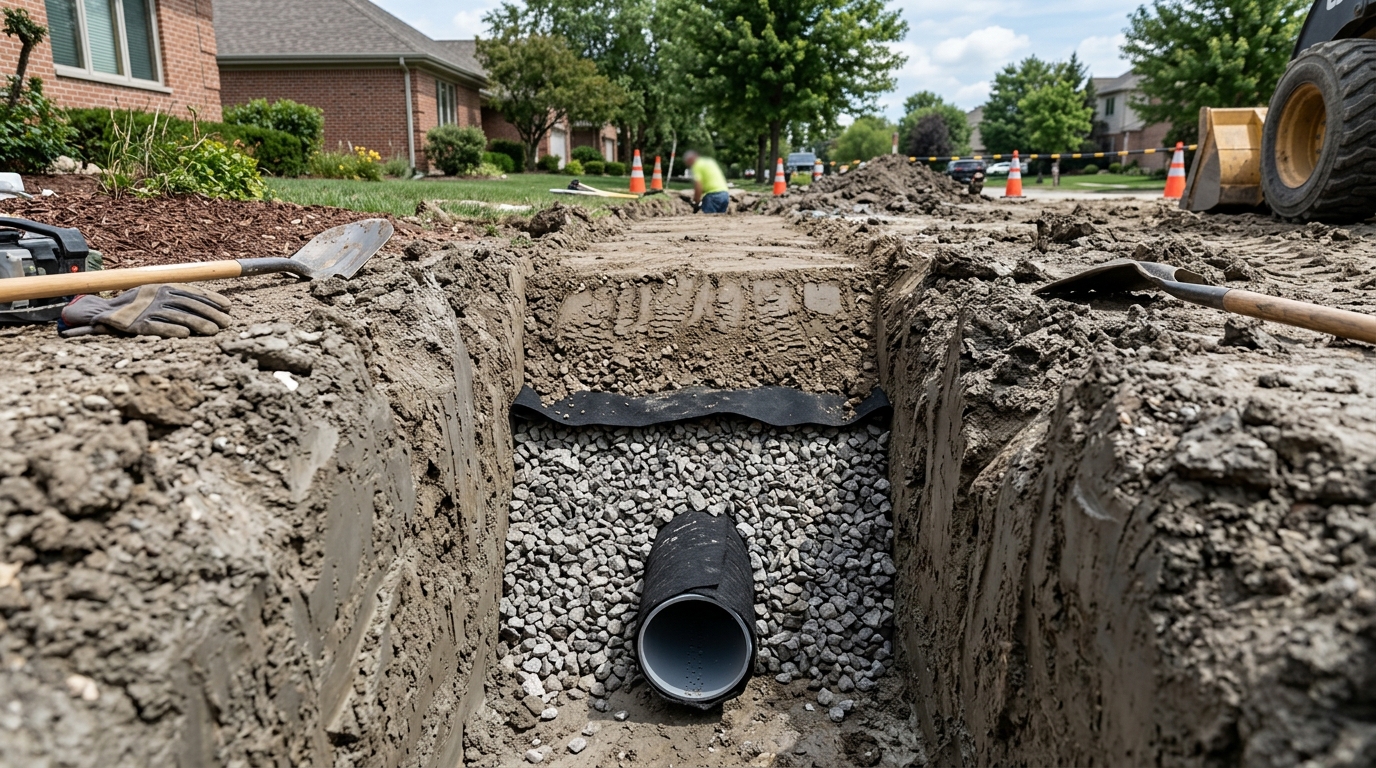
Third one is the wrong drainage fabric on a French drain. Cheap nonwoven felt geotextile clogs with clay particles in two seasons on Chicago soil. Once the fabric is clogged, the gravel column saturates, the pipe stops carrying flow, and the homeowner concludes the drain failed. We spec woven monofilament fabric instead, which keeps the gravel column open through twenty freeze-thaw cycles.
Fourth: rain gardens built without checking infiltration. Drop a rain garden into untreated Chicago clay and what you have built is a slow puddle that holds water for three weeks. We run a percolation test before specifying any rain garden, amend the soil if the numbers call for it, and route a piped overflow to a real outlet.
We do not chase symptoms. We design for the watershed, then build accordingly.
Why Chicago Clay Changes Drainage Engineering
Chicago-area clay changes the drainage math more than any other variable. Sandy or loamy soil drains down through the subgrade. Water that hits the surface percolates and disappears. Clay does not do that.
Clay holds water at the surface, swells when it gets saturated, and refuses to let surface water move down through it at any rate that matters for stormwater. That changes the math: a Des Plaines drainage plan has to assume zero infiltration. Every gallon of rain hitting the property has to leave by surface flow, by routed pipe, or through an engineered infiltration zone with amended soil. Anything else is a plan for next year’s standing water.
Freeze-thaw is the second piece. Saturated clay backfill freezes hard in a December cold snap, expands sideways and up, and pushes anything sitting on top of it. Drain pipe cracks. Catch basin grates lift away from the surrounding grade. Pavement at the edges of drain structures heaves. Plans drawn without freeze-thaw factored in usually start showing those failures by year four or five.
Plans built without these two considerations photograph well and start failing during the first wet spring. Plans built with them survive twenty Chicago winters.
The EPA and FHWA cover the same drainage logic at a regulatory and engineering standard level. see the EPA rain garden guidance if you want more on the infiltration side.
For broader context on residential stormwater best practices, the EPA rain garden guidance covers the same infiltration and runoff principles we apply to drainage plans on Chicago clay.
What Drainage Problems We Actually Solve
Most drainage calls fall into one of four buckets, and the right design is different for each.
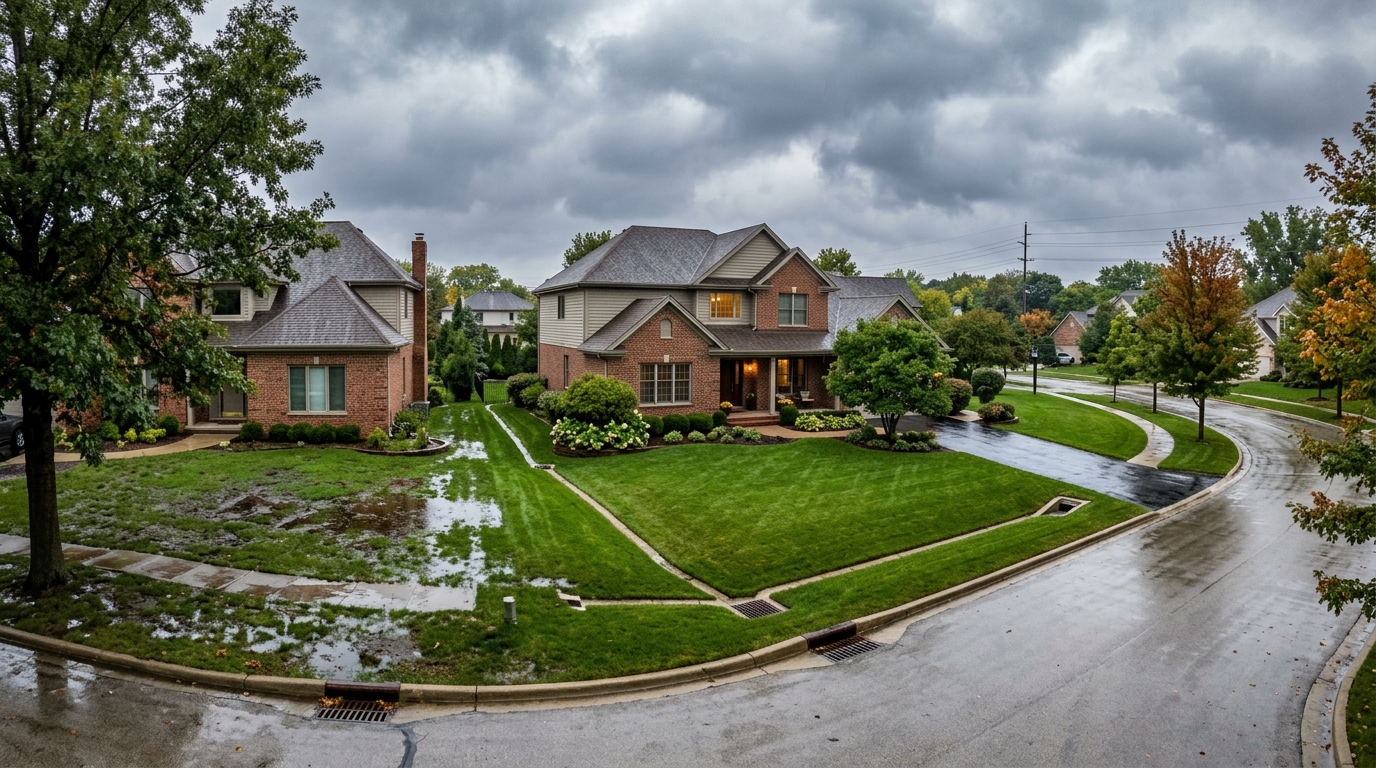
Bucket one is downspout flooding. Roof water concentrates at four corners of the house, dumps onto the foundation, and saturates the planting beds and lawn for a fifty-foot radius. The fix is not a bigger downspout, it is extending each downspout to a real outlet far enough from the house that the water actually leaves the property.
Another common one is mid-lawn ponding tied to bad rough-grading from when the house went up. Twenty-plus years of soil settlement leaves the slope sending water the wrong direction. Storms leave puddles in the middle of the lawn that take days to drain, the turf above suffocates, and a week of summer heat finishes off whatever grass survived. Regrading is the answer, often with a French drain catching the new low spot.
Patio and hardscape drainage problems show up on a different timeline. Pavers got installed without enough surface slope, polymeric joint sand washed out by year three, and now water pools across the surface or sneaks back toward the foundation. Once that water freezes and thaws a few cycles, the pavers themselves start lifting. Fixing this category needs both a drainage routing change and corrections to the hardscape spec itself.
Spring calls also bring the wall-with-no-drain category. The wall was built without perforated pipe behind it, the clay backfill traps water, the pressure pushes outward, and now the wall is leaning in a way it was not last year. Eroded channels appear above the wall where stormwater chose its own path. Solving this calls for going in behind the wall, putting in real perforated pipe, getting the outlet routed properly to daylight, and adding a swale up the hill if the contributing slope warrants it.
Knowing which bucket you are in determines what gets drawn on the plan. Solving the wrong bucket means coming back to redo the work in two years.
Frequently Asked Questions
What Does a Drainage Solution Design Cover?
The design covers surface grading, French drain or trench drain routing, catch basin placement, downspout extensions, rain garden infiltration zones, and the sump or daylight outlet path drawn to scale before construction. The plan becomes the build document the install crew works to.
Do I Need a Permit for Drainage Work in Des Plaines?
Sometimes, depending on the scope of work. Anything that crosses a property line, ties into municipal stormwater, or significantly regrades a lot usually triggers a permit in Des Plaines. We assess the project during the site walk and pull the permit as part of the design phase if one is needed.
Can a Drainage Plan Fix My Wet Basement?
Often yes, when the wet basement is caused by surface water and downspout routing rather than groundwater hydrostatic pressure. We assess where the water is actually coming from before specifying a fix, since interior waterproofing is a different category of work.
How Long Does a Drainage Solution Design Take?
Most plans wrap in 3-5 weeks from the dry-day site walk to the final document, longer if a wet-weather walk has to be scheduled separately. Larger lots or multi-property watershed issues run 6-8 weeks because of the additional grading and infiltration analysis.
Do You Coordinate Drainage With My Other Landscape Work?
Yes, drainage routing gets coordinated with any hardscape, planting, or irrigation already in scope. Catching a conflict on paper before trenches go in costs nothing. Catching it after a paver patio is set costs real money to fix.
Can I Take the Drainage Plan to a Different Contractor?
Yes, our plans are written so any qualified drainage installer can build to them. Pipe size, fabric type, gravel spec, slope percentages, and outlet routing are all documented. We do not tie the plan to a specific build crew.
Ready To Get Started?
Looking for drainage solution design in Des Plaines? Schedule with Amliv Land Designs. Family-run, twenty-plus years across Cook and DuPage Counties. Call us at (847) 485-9619 to get your drainage project started today!