
Outdoor Fire Pit Design in Des Plaines, IL
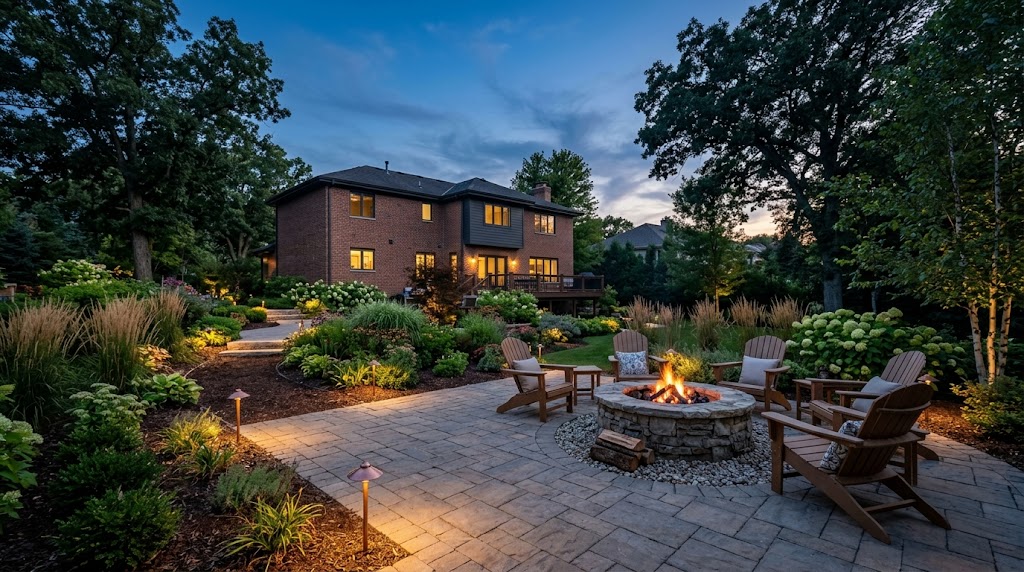
Outdoor fire pit design in Des Plaines is the first step in the process that decides where the fire pit sits, how big it is, what it burns, and how the smoke leaves the yard instead of the seating area. A fire pit dropped in the middle of a lawn looks fine in catalogs. The same fire pit placed without a wind check, a clearance plan, and a fuel-source decision becomes the part of the backyard nobody uses after summer one.
TLDR
- Fire pit design covers placement, sizing, fuel choice, clearances, and the wind check that decides where smoke goes.
- Wood-burning, natural gas, and propane each carry tradeoffs the design makes explicit.
- Distance from the house, from trees, and from outdoor furniture is set by code and by reality.
- Permanent stacked-stone construction outlasts kit-style metal rings by decades.
- Plans always check prevailing wind direction so the seating zone stays out of the smoke path.
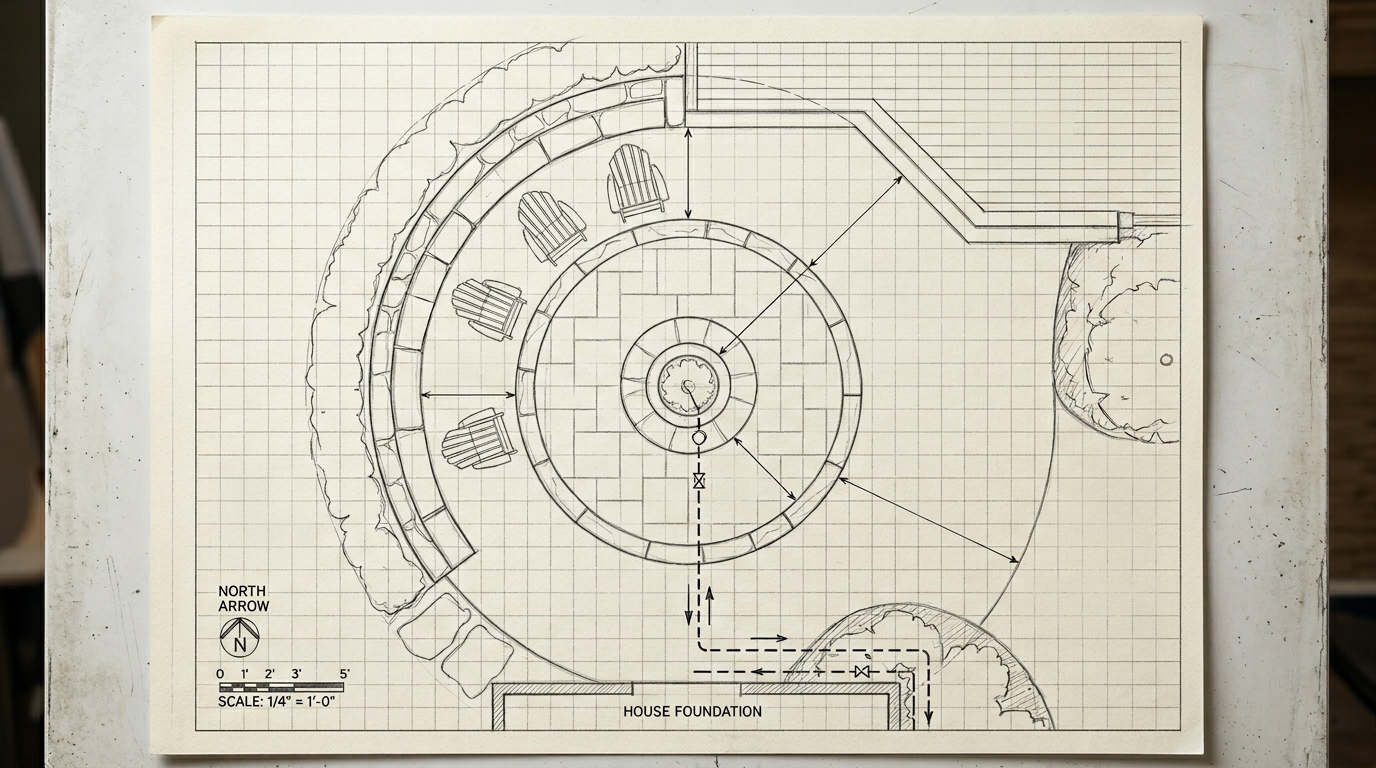
Amliv Land Designs is family-run with twenty-plus years building residential fire features through Cook and DuPage Counties. The plans we draw treat the fire pit as a structural element on the patio, not an aftermarket accessory. Footprint, foundation depth, fuel routing, and seating geometry all live on the same drawing the install crew works from.
Below: how a fire pit design phase actually runs, the failure modes we see when fire pits get placed without a real plan, why Chicago wind and cold change the fire pit math, and customer-intent answers about codes, fuel choice, and what the design phase actually delivers.
Fire pits rarely sit on their own. Most plans we run also coordinate with the broader outdoor room layout, tie into the patio surface that holds the seating zone, and get evaluated against the photometric lighting plan that makes the seating usable after dusk.
What Outdoor Fire Pit Design in Des Plaines Actually Covers
Fire pit plans run the same shape on every project. The site walk identifies candidate locations, measures the patio footprint, and watches the wind direction during multiple visits. Fuel choice gets discussed with the homeowner up front: wood-burning, natural gas, propane, or a smokeless stainless insert.
From there, sizing matches the number of people who will actually use the pit at once. Clearance verification confirms minimum distances from the house, trees, and furniture, against the actual property survey. Foundation spec and structural wall material live on the same drawing as the gas line routing if the design runs on natural gas. The plan ships as a build document the install crew works from.
What 20 Years of Fire Pit Builds in Cook County Taught Us
Twenty years of fire pit projects in this corridor reveals patterns the average homeowner never anticipates.
First mistake we see often: fire pit located where the prevailing wind blows smoke directly into the seating zone. The smoke goes wherever the wind takes it. We watch wind patterns during the site walk across multiple visits and place the pit so smoke leaves the property, not the conversation.
Second mistake: fire pit too close to the house, the eaves, or a low overhanging tree branch. Most municipalities require ten feet of clearance from any structure. Our plans verify the clearance against the actual property survey, not against rough estimates.
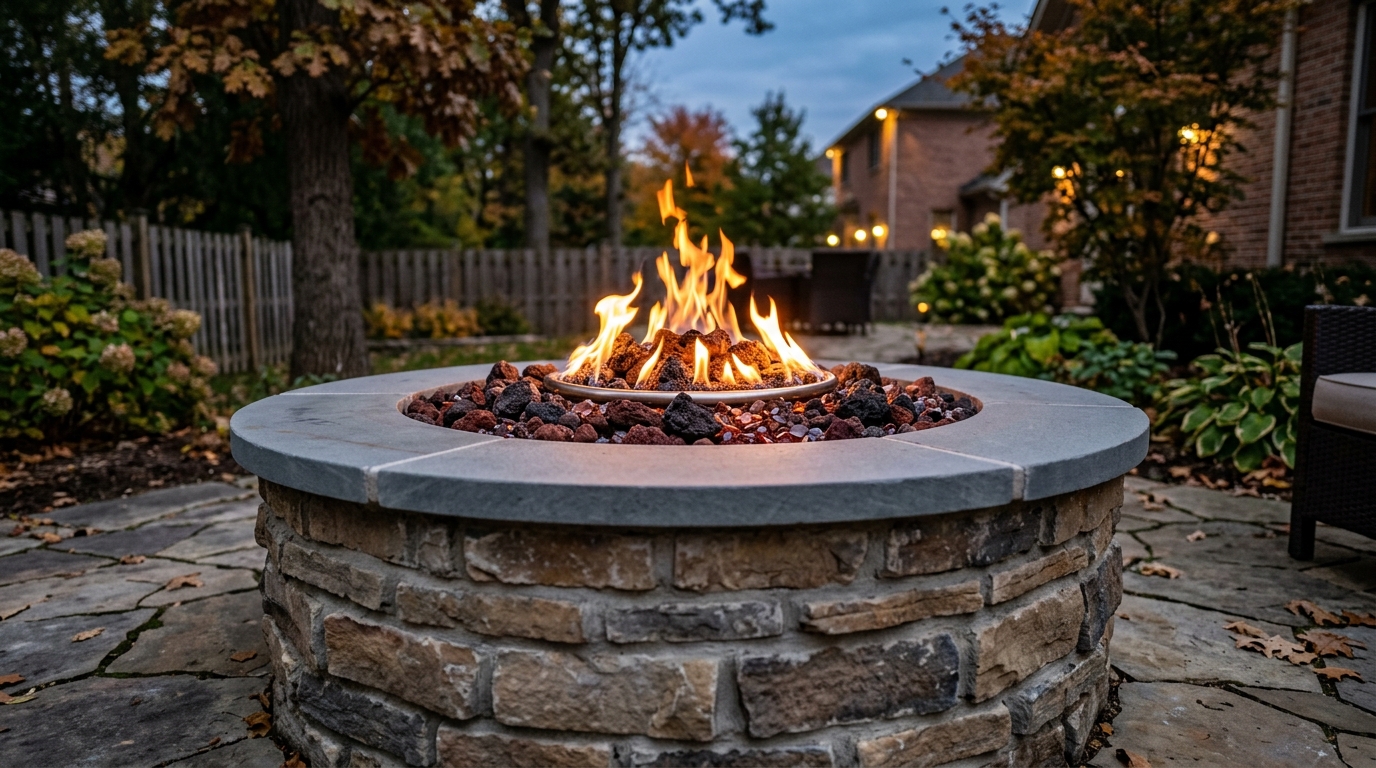
Third mistake: kit-style metal fire ring used as the structural wall. The thin metal warps after a few seasons of high heat, the surrounding pavers heave, and the whole installation looks tired by year three. Permanent stacked stone or concrete block holds up for decades.
Fourth mistake: gas-fed fire pit with the gas line run as an afterthought. The pit gets installed, then somebody trenches across a finished patio to run the line. We route gas during the original design so the trench gets dug once.
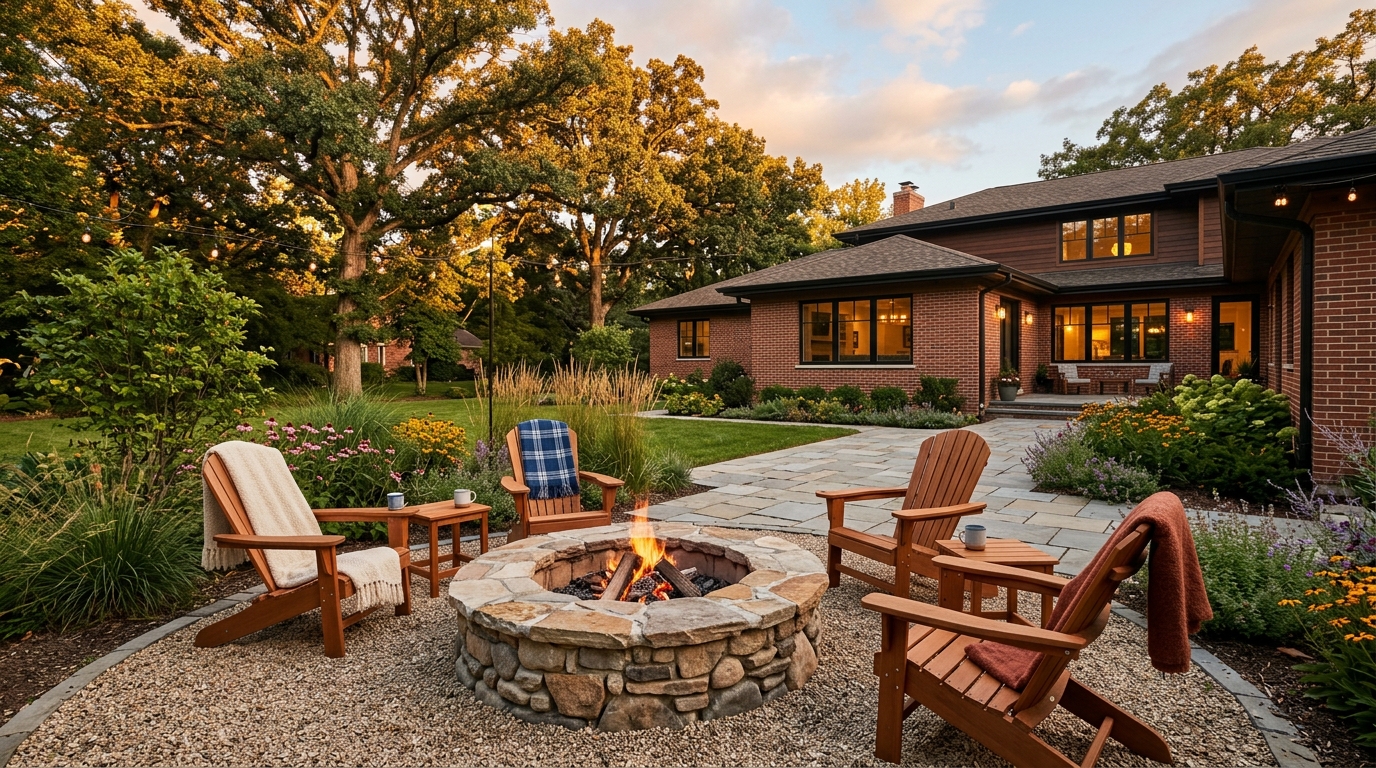
Fifth mistake: no thought given to where the seating actually sits. A fire pit without a real seating zone around it looks like a hole in the ground. We size the seating arc against actual chairs and actual people during the design phase.
Each of these comes back to the same root: fire pits succeed when the plan is real, not when it’s a vague idea about a fire feature.
How Chicago Wind and Cold Shape a Fire Pit Plan
Chicago wind shapes fire pit design in a way most regional guides never address.
The dominant wind comes out of the southwest most of the year, then shifts to the northwest in winter. A fire pit placed without that knowledge sends smoke at the patio in summer and at the house in winter.
Cold matters too. The pit gets used roughly six months a year in Des Plaines, mostly evenings during shoulder seasons. We size the firebox for that real use case, not for a fictional year-round Florida usage pattern.
Material selection respects the freeze-thaw cycle. Concrete block firewalls crack at the joints when water gets in and freezes. Real stacked stone with proper mortar formulation handles the cold without spalling.
The cumulative effect of those choices is a fire pit that still looks intentional five years in, instead of one that needed a rebuild after the first hard winter.
When Outdoor Fire Pit Design in Des Plaines Pays Off Long-Term
A fire pit designed correctly earns its keep over a decade in three measurable ways.
First, use frequency. A pit placed where smoke clears, where the seating works, and where the fuel source is convenient gets used most weekends. A pit dropped at random gets used twice a summer and then forgotten.
Second, longevity. Permanent stacked stone construction lasts decades. Kit-style metal rings warp inside three or four years and force a rebuild.
Third, property value. A real fire feature shows up positively in appraisals and listings. A failing fire pit shows up as deferred maintenance the buyer will inherit.
The plan is what makes those three outcomes happen at the same time, instead of one or two of them by luck.
Resale impact follows the same pattern as the use frequency. A real fire feature shows up positively in appraisals and listing photos. A worn-out kit-grade fire pit shows up as deferred maintenance, and prospective buyers price that into their offer.
Insurance considerations matter on a permanent fire pit. Most homeowner policies cover masonry fire features as part of the dwelling structure, but coverage gets cleaner when the install meets local code and permit requirements. Designs we draw default to the local clearance and chimney rules so insurance never becomes a problem after a claim.
The right plan turns a backyard fire pit into the part of the property the family actually uses through six months of the year. Skip the planning step and you build a feature that looks fine in catalog photos and disappoints in real life. The math on a real design pays back in use frequency, longevity, and resale every time we run it on a Cook County lot.
What Fire Pit Materials Hold Up in a Chicago Backyard
Material choice is the second-biggest decision after placement. Stone, brick, concrete block, and steel each behave differently across twenty winters.
Stacked dimensional stone wins on durability for permanent fire pits in Chicago. Real masonry stone bonded with quality mortar resists freeze-thaw spalling, and the structure ages well visually instead of looking worn. Up-front cost is higher than block alternatives, and the long-term math comes out ahead.
Concrete block with a stone veneer is the budget alternative. The block provides the structure, the veneer provides the look. The risk is veneer delamination during freeze-thaw if water gets behind the stones. Quality of the bond and the mortar are what determine whether the veneer holds.
Steel fire pits at the kit level are the cheapest entry point and the shortest-lived option. The thin metal walls warp from heat exposure inside a few seasons, the surrounding pavers shift, and the installation looks tired by year three. We do not specify steel fire pits for permanent installations.
Cap stones get their own specification. The cap is what people sit against, and it is what takes the heat radiation from the firebox. We spec dimensional stone caps that resist staining, hold their shape, and survive temperature cycling without cracking. Cheap pavers used as caps fail at the worst possible moment.
Mortar choice matters as much as the stone choice. Cement-rich mortars crack when water enters the joint and freezes. We spec freeze-thaw rated lime-blended mortars that flex enough to handle Chicago winters without separation.
The base under the fire pit deserves attention too. A fire pit set on bare clay subgrade settles unevenly within a few seasons. We pour a real footing or set the pit on six inches of compacted aggregate with proper drainage routing underneath.
Heat-rated firebrick lines the inside of any wood-burning pit we design. Cheap concrete blocks crack from repeated thermal cycling, while firebrick handles the heat for decades without showing fatigue. The lining gets specified separately from the structural wall.
For broader context on outdoor fire safety, the National Fire Protection Association outdoor fire pit guidance covers the same clearance and operation principles we apply when siting a permanent fire feature.
Frequently Asked Questions
What Does an Outdoor Fire Pit Design Phase Cover?
The design covers placement, sizing, fuel choice, clearance distances from structures and trees, foundation spec, structural wall material, cap stone selection, and gas line routing if the pit is gas-fed. Everything goes on a scaled plan the install crew builds against.
Do I Need a Permit for an Outdoor Fire Pit in Des Plaines?
Most permanent fire pits in Des Plaines need a building permit, especially gas-fed installations and any pit within ten feet of a structure. Portable propane pits without a fixed footprint usually skip the permit, and we tell you which category your project falls into.
Should I Pick Wood-Burning, Natural Gas, or Propane?
Natural gas is the cleanest option when the line can reach the pit without major trenching, since there is no smoke, no fuel storage, and no ash management. Wood-burning brings the smell and crackle but demands smoke awareness and ash cleanup.
How Far From the House Does the Fire Pit Need to Be?
Most Cook County villages require ten feet of clearance from any structure, low overhanging tree branches, and combustible surfaces, with some sites needing more depending on prevailing wind. We verify clearance against the actual property survey during the design phase.
How Long Does Outdoor Fire Pit Design Take?
Most fire pit design plans wrap in 2-3 weeks from the site walk to the final document. Larger projects with custom-cut stone, integrated seating, or gas line routing can run 4-5 weeks because each detail needs its own specification.
Can I Take the Fire Pit Plan to a Different Installer?
Yes, plans are written so any qualified mason or hardscape contractor can build to them. Foundation depth, wall material, cap stone, fuel routing, and clearances are all documented in the plan.
Ready To Get Started?
Looking for outdoor fire pit design in Des Plaines? Schedule with Amliv Land Designs. Family-run, twenty-plus years across Cook and DuPage Counties. Call us at (847) 485-9619 to get your fire pit project started today!