
Outdoor Fire Pit Contractors in Des Plaines, IL
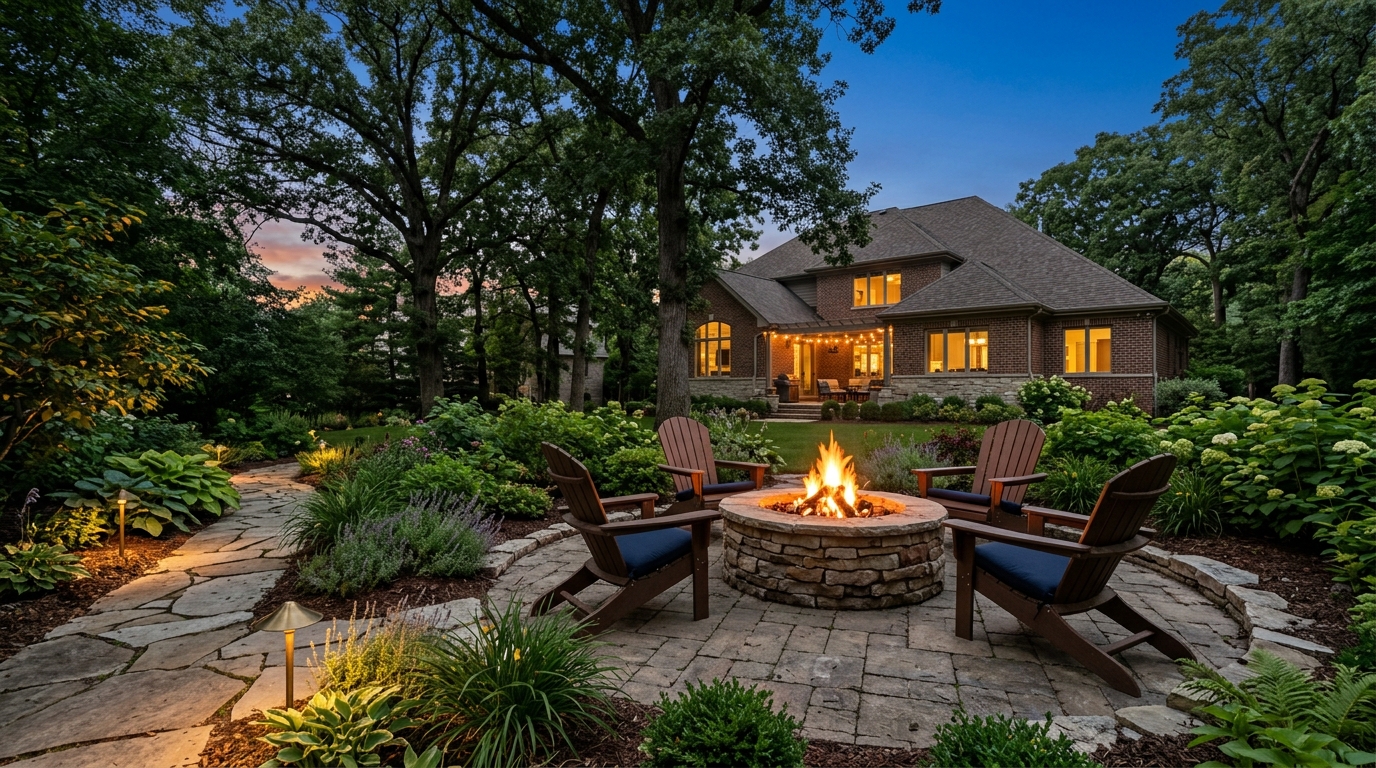
Outdoor fire pit contractors in Des Plaines almost always coordinate gas line work, masonry construction, and clearance verification on the same job. Hiring a landscaper who farms out the gas line to an unlicensed sub means the warranty paperwork falls apart the first time something goes wrong. Hiring a mason who skips the wind check during siting means the smoke ends up in the seating every Friday night.
TLDR
- Fire pit contractor work covers footing, masonry build, gas line install if applicable, clearance verification, and final inspection.
- Gas line work needs a licensed gas technician on the crew, not a subcontractor pulled in last minute.
- Permanent stacked stone construction outlasts kit-style metal rings by decades on Chicago freeze-thaw lots.
- Wind direction gets verified during the site walk before placement is finalized.
- Most permanent fire pits in Des Plaines need a building permit; we pull it as part of the project.
Amliv Land Designs is family-run with twenty-plus years building residential fire features across Cook and DuPage Counties. Our crews carry the masonry and gas-licensed talent on staff rather than subcontracting it out. The plan that comes from the design phase becomes the build document the same team executes, which removes the trade-coordination handoff where most fire pit projects lose quality. The crew works as part of the broader hardscaping contractor team that handles the broader hardscape on the property.
Below: how a fire pit build actually runs end-to-end, the patterns that separate a 25-year fire pit from a four-year one, why Chicago wind and cold change the build sequence, and the customer-intent answers homeowners need before hiring.
What Outdoor Fire Pit Contractors in Des Plaines Actually Build
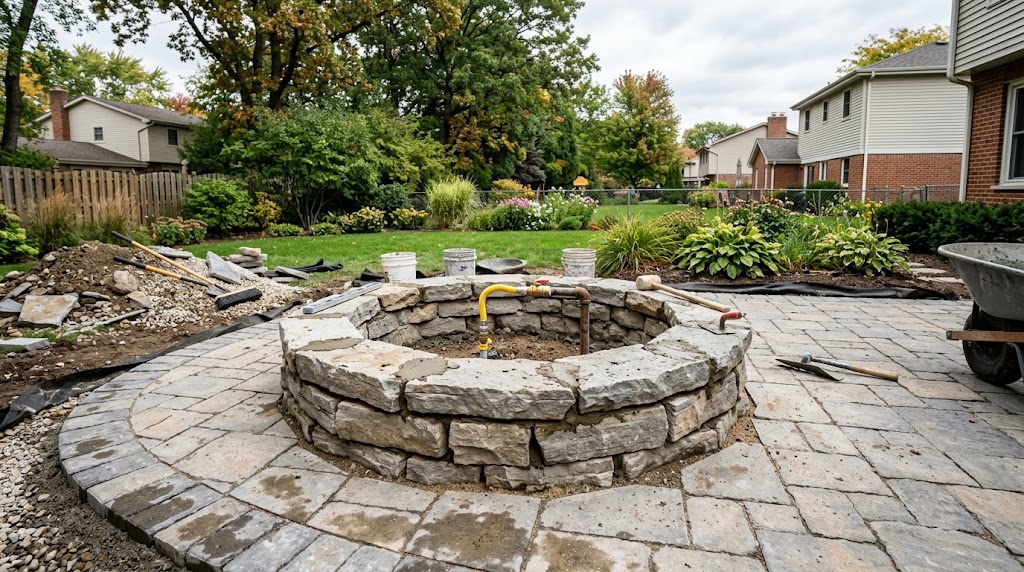
Every fire pit build follows the same physical sequence. Foundation pour or compacted aggregate base depending on whether the pit sits on the patio or off it. Footing depth runs below the frost line for permanent installations.
Masonry build comes next: stacked dimensional stone or concrete block depending on the spec from the design phase, with weather-rated mortar suited to Chicago freeze-thaw cycles. Gas line routing happens during the build for gas-fed pits, with the licensed gas technician on the crew handling the connection and pressure test.
Final inspection covers clearance verification against the actual property survey, gas pressure test sign-off, and a hands-on walkthrough with the homeowner showing operation, ash management for wood-burning pits, and seasonal shutdown procedures. Plans coming from the fire pit design phase feed directly into the build sequence we follow.
What 20 Years of Fire Pit Builds in Cook County Taught Us
Twenty years of building fire pits across Cook and DuPage Counties surfaces patterns nobody warns the homeowner about during the sales pitch.
First pattern is the gas-line subcontractor problem. Landscaping crew installs the masonry, then a separate gas tech shows up two weeks later to run the line. The two never coordinate. The line ends up taking the longest path around something that should have been planned around. We keep gas-licensed talent in-house specifically to avoid this.
Second pattern is wind direction ignored during placement. The homeowner wanted the fire pit at the back corner because it looked balanced in the landscape plan. The dominant southwest summer wind sends smoke directly at the patio every cookout. We watch the wind during multiple visits and override the visual placement when smoke routing demands it.
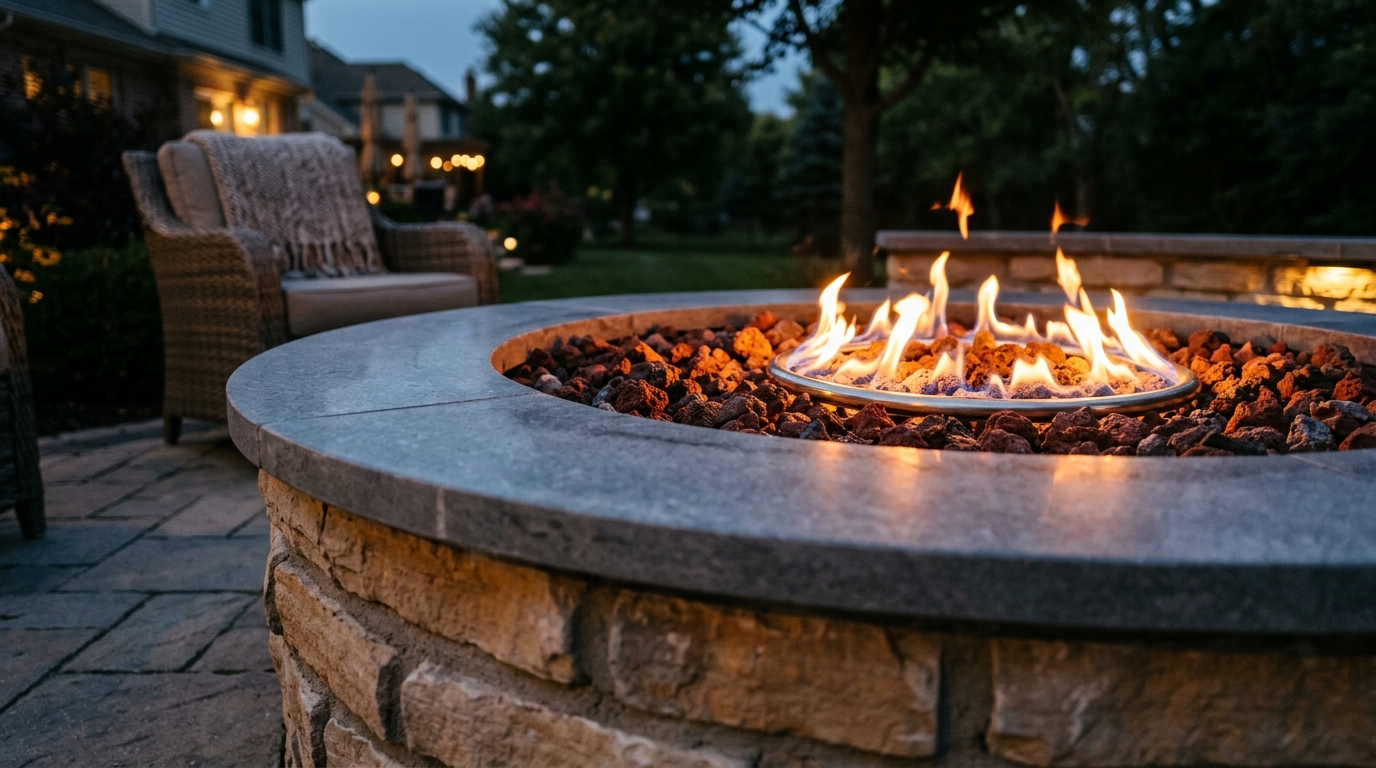
Third pattern is footing depth shortcut. Fire pit footings poured at four feet square and ten inches deep heave with the freeze cycle and lift the masonry by spring. Real footings extend below the Cook County frost line of 42 inches across the full footprint of the structure.
Fourth pattern is mortar formulation cheaped out. Cement-rich mortars crack at the joints when water enters and freezes. Lime-blended freeze-thaw rated mortars handle the cycle without separation, and the cost difference per pit is small compared to a rebuild call in year four.
Fifth pattern is the clearance shortcut. Some installers eyeball the ten-foot clearance from house and trees instead of measuring against the actual property survey. Insurance coverage gets murky when an inspector finds the clearance is short, and we won’t sign off on a build that fails verification. The same coordination logic applies to the patio contractor crew that handles the surrounding hardscape.
How Chicago Wind and Cold Shape a Fire Pit Build
Chicago wind and cold shape fire pit builds in ways most regional guides skip past.
The dominant summer wind comes out of the southwest most of the season, then shifts to the northwest in winter. A fire pit placed without that knowledge sends smoke at the patio in summer and at the house in winter. Real builds verify wind direction during multiple site visits before the masonry goes up.
Cold matters too. The pit gets used about six months a year in Des Plaines, mostly evenings during shoulder seasons. We size the firebox for that real use case, not for fictional Florida year-round usage. Material selection respects freeze-thaw cycling, with stacked dimensional stone and lime-blended mortar handling Chicago winters that crack cement-rich block constructions.
Permit awareness rounds out the regional picture. Most permanent fire pits in Des Plaines trigger a building permit, especially gas-fed installations and any pit within ten feet of a structure. We pull the permit as part of the project rather than treating it as the homeowner’s responsibility.
What Outdoor Fire Pit Contractors in Des Plaines Should Be Able to Show You
A fire pit contractor worth hiring should be able to show you four things before signing the contract.
First, a portfolio of completed fire pits at least two years old. Anyone can show photos from yesterday. The question is whether the work still looks intentional after surviving two Chicago winters. Crew that hesitates on this one often does not have the inventory to share.
Third, the gas-line work licensing for the project. Cook County requires gas licensure for outdoor low-pressure lines on permanent installations, and the licensed individual either works for the contractor directly or appears as a documented subcontractor with proof of licensing on file from day one of the project.
Third, the licenses for any gas-line work the project requires. Not every state requires gas licensure for low-pressure outdoor lines, but Des Plaines does, and the licensed individual either works for the contractor directly or shows up as a documented subcontractor with proof of licensing on file.
Fourth, a written workmanship warranty covering the masonry build, the joint integrity, and any gas line work. The warranty should run at minimum five years and cover settling, mortar separation, and gas line pressure failures caused by install errors.
What to Verify Before Signing With Outdoor Fire Pit Contractors in Des Plaines
Five concrete checks belong on the homeowner’s list before any deposit changes hands. Same logic as hiring any contractor; specific to fire pit work.
First: certificate of insurance current within the last 90 days. The certificate covers general liability and workers’ compensation. If the contractor cannot produce one immediately, the project is not ready to start.
Second: gas-line licensing on the crew or under documented subcontract. Cook County treats permanent outdoor gas-fed installations as licensed work, and the licensed individual needs to be present from the trenching stage forward.
Third: portfolio of fire pits at least three winters old. Photos from yesterday tell you nothing about freeze-thaw durability. Photos from 2022 with the structure still standing straight tell you everything.
Fourth: written clearance verification process against the actual property survey. The ten-foot horizontal clearance from structures and combustibles needs to be measured, not eyeballed, and the measurement should appear on the build documents.
Fifth: workmanship warranty terms in writing. Length of coverage, what specifically gets covered (settling, mortar separation, gas line integrity), and what voids it. The warranty should run at minimum five years.
These five checks rule out about 80 percent of the contractor-quality risk on a fire pit project. The remaining 20 percent comes from how the crew actually shows up onsite, which the homeowner only gets to see once the work begins.
A contractor who clears all five checks is also one who tends to communicate well during the build. The two qualities tend to travel together, because the same operational discipline that produces clean paperwork also produces clean job sites and on-time milestones.
Worth one more note: a contractor who pushes back on any of these requests is signaling something. The reasonable response is not to bend on the request, but to ask why a legitimate operator would resist documenting work they say they do well.
Each of the five checks above takes the homeowner under thirty minutes to run, and the time pays back across the lifetime of the project. The five-minute conversation that confirms gas-licensure documentation upfront prevents the months-long resolution conversation that comes later when something breaks under warranty.
For broader context on outdoor fire safety and clearances, the U.S. Fire Administration outdoor fire safety guidance covers the same clearance and operation principles we apply on every fire pit build.
What Separates a Fire Pit That Works From One That Smokes Out the Patio in Des Plaines
A fire pit that works in a Des Plaines backyard draws air the right way, vents smoke up and clear of the seating area, and meets the city’s clearance requirements without compromise. Three build details decide whether the fire pit becomes the gathering spot or the thing nobody sits near:
- Minimum ten feet of clearance from the house, deck, fence, or any combustible structure
- Proper air-intake spacing in the base course so the fire draws upward instead of smoldering
- Fire brick or refractory mortar in the inner wall, never standard pavers in direct heat contact
Most of the fire pit work we do is on Des Plaines lots along the Northwest Highway residential pocket and the Touhy Avenue corridor, where mature trees and tight lot lines push clearance and venting decisions to the front of the design conversation. Des Plaines fire code requires a minimum ten-foot clearance from any combustible structure under the city’s open-burn ordinance, and we verify the lot geometry before we quote the build.
Frequently Asked Questions
How Long Has the Fire Pit Contractor Been in Business?
We have been building residential fire features across Cook and DuPage Counties for twenty-plus years as a family-run operation. Length of time in business is one of the better signals that a contractor will be around to honor a workmanship warranty several years out.
Are You Licensed for the Gas Line Work?
Yes, we carry the licensed gas technician talent on staff rather than subcontracting it out. The same crew that builds the masonry handles the gas line install and pressure testing, which means the project does not lose continuity at the trade handoff.
Who Pulls the Permit for a Fire Pit Build in Des Plaines?
We pull the permit when one is required, since most permanent fire pits in Des Plaines need a building permit (especially gas-fed installations and any pit within ten feet of a structure). Permit submission is part of the project schedule.
What Workmanship Warranty Comes With the Build?
Workmanship warranty terms for the masonry build, mortar joints, and any gas line work are discussed during the consultation and written into the project contract. Warranty length and exact terms come in writing before any contract gets signed.
How Long Does Fire Pit Installation Take?
Most permanent fire pit builds wrap in 3-7 working days depending on whether gas line routing is part of the scope and whether the foundation pour requires additional cure time. Simpler builds on existing patios run on the shorter end of that window.
Will the Build Crew Verify Clearance From My House and Trees?
Yes, clearance verification against the actual property survey is part of every build, since most Cook County villages require ten feet of horizontal clearance from any structure, low overhanging tree branches, and combustible surfaces. We measure rather than eyeball.
Ready To Get Started?
Looking for outdoor fire pit contractors in Des Plaines? Schedule with Amliv Land Designs. Family-run, twenty-plus years across Cook and DuPage Counties. Call us at (847) 485-9619 to get your fire pit project started today!