
Pergola Design in Des Plaines, IL
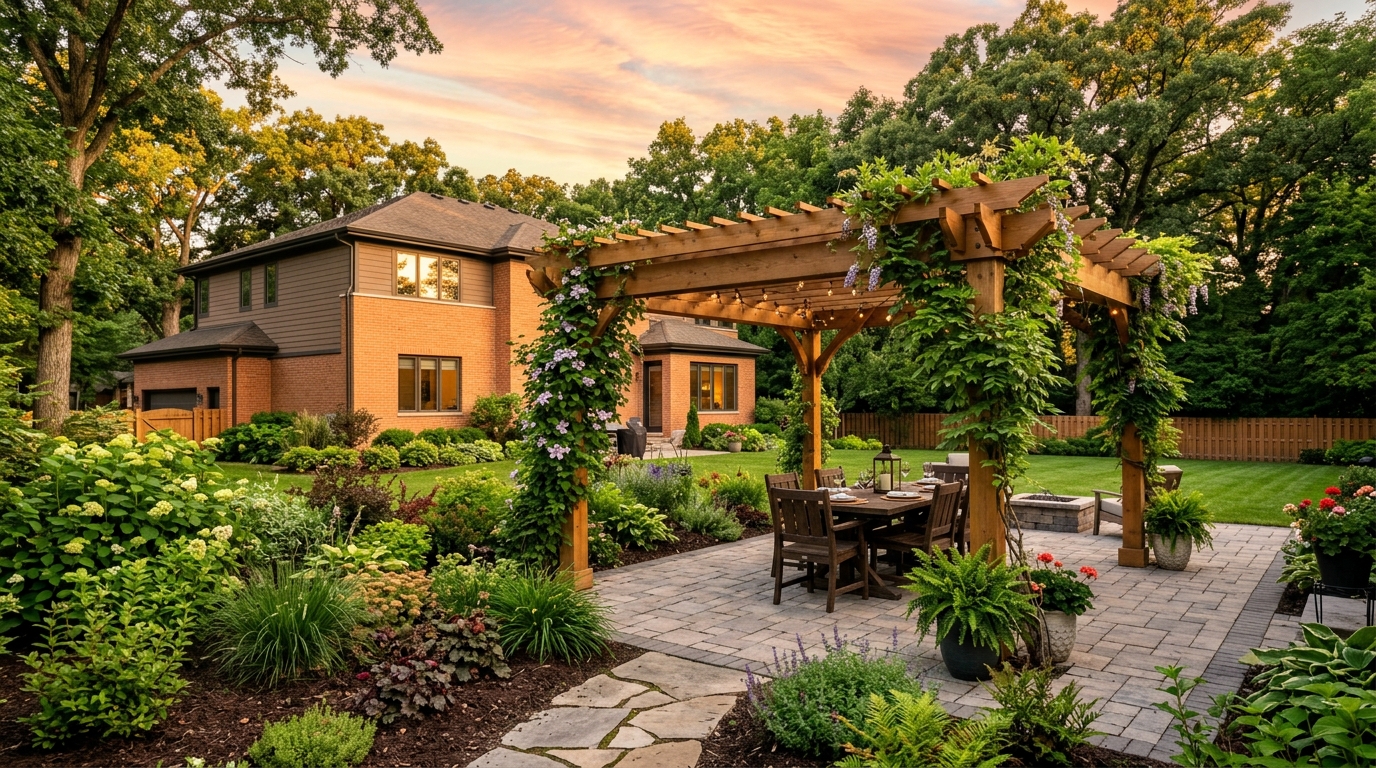
Pergola design in Des Plaines is the phase that determines whether the structure actually delivers the shade, definition, and outdoor-room feel the homeowner pictured, or becomes a costly arbor that nobody sits under. Post locations, beam dimensions, rafter spacing, sun-angle orientation, attachment to the house or freestanding footing, and material choice all get drawn before any post hole gets dug.
TLDR
- Pergola design covers post placement, beam sizing, rafter spacing, sun-angle orientation, and footing spec.
- Cedar holds up best for long-term outdoor exposure. Pressure-treated pine is the budget alternative.
- Sun-angle math drives rafter spacing, too tight and you have a roof, too loose and there is no shade.
- Snow load matters in Chicago, beams and rafters need to carry winter weight without sagging.
- Attached pergolas tie into the house. Freestanding pergolas anchor on independent footings.
We are Amliv Land Designs. Family-run, twenty-plus years designing residential pergolas across Cook and DuPage Counties. Plans we draw account for sun angles in summer and winter, for snow load that pergolas in milder climates never face, and for the moisture cycle that decides whether the structure looks weathered or rotting at year ten.
Below: how a pergola design phase actually runs, the failure modes we see when pergolas get ordered from a kit instead of designed for the site, how Chicago weather changes the spec, and customer-intent answers about scope, materials, and what gets handed off to the build team.
Pergolas usually anchor a larger outdoor scope. Most projects we run also include the master plan for the outdoor rooms underneath, share the patio with the patio design phase, and integrate the lighting plan threaded through the rafters.
What Pergola Design in Des Plaines Actually Covers
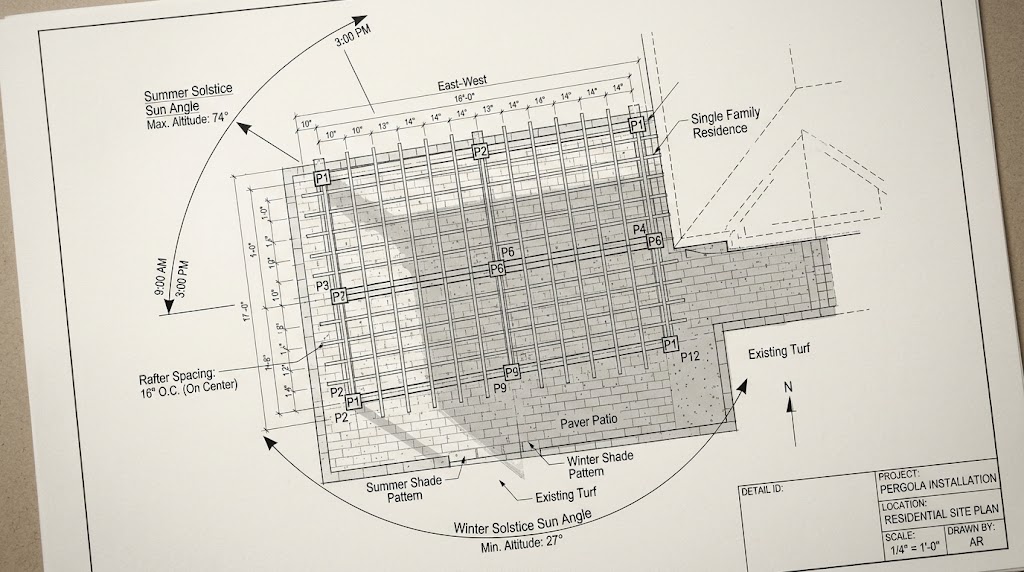
Pergola plans follow a fixed sequence. We site walk to identify the footprint, measure the patio underneath, and check sun angles across multiple visits. The attached vs freestanding decision gets settled against the relationship between the pergola location and the house framing.
Post and beam sizing comes next, calculated against the span and the Chicago snow load. Rafter spacing gets tuned to whichever sun angle the homeowner cares about most: afternoon shade for west-facing patios, morning shade for east. Footings, hardware, and material spec round out the plan. The final scaled drawing hands off to the build crew.
What 20 Years of Pergola Builds in Cook County Taught Us
Twenty years of pergola design across Cook and DuPage Counties teaches you the patterns nobody warns the homeowner about.
First mistake: pergola ordered as a kit and dropped on the patio without site checks. The kit is the same dimensions whether it sits in San Diego or Des Plaines. Snow load, frost heave, and sun-angle issues hit the same kit differently in each location.
Issue two is rafter spacing too wide. The kit ships with rafters at 24 inches on center because that is the cheap default. Done right, the spacing matches the sun angle and the desired shade percentage, which usually means tighter than 24 inches in our latitude.
Third mistake: footings poured at the wrong depth. Frost line in Cook County is around 42 inches. Footings shallower than that heave during winter, the pergola goes out of plumb by spring, and the structure starts pulling itself apart at the joints.
Mistake five sits at the post-to-paver junction. Posts pressed straight against pavers wick splash and ground moisture into the post base, the wood rots from the bottom up, and the structure fails at the most expensive component to replace. Real designs leave a buffer between paver and post.
Fifth mistake: pergola posts set right against pavers without a buffer. Splash and ground moisture wick into the post base, the post rots from the bottom, and the structure fails at the most expensive part to fix.
Each of these is a design-phase decision, not a build-phase fix.
How Chicago Sun Angles and Snow Load Change Pergola Design
Chicago latitude and weather change pergola design more than catalogs admit.
Sun angle hits a pergola in Des Plaines very differently from a pergola in the Sunbelt. Summer sun rises in the northeast and crosses high. Winter sun stays low across the south. Rafter spacing tuned for southern latitudes leaves a Chicago patio fully sun-exposed for six months of the year.
Snow load is the second piece. Pergola beams and rafters in Chicago carry seasonal snow weight that pergolas in Florida never face. Sizing has to allow for the load. We design beams up one nominal size from what catalog kits ship with.
Frost heave decides footing depth. Cook County frost line sits around 42 inches. Footings poured shallower than that heave with the freeze cycle and pull the pergola out of plumb. Plans we draw spec footings that go below the frost line, period.
These three regional realities are why a pergola designed for Des Plaines costs slightly more in materials than a kit ordered from a national supplier, and why the Des Plaines version is still standing straight at year fifteen.
When Pergola Design in Des Plaines Earns Its Keep
Pergolas designed correctly pay back across the lifecycle, not just on day one.
Shade is the first payback line. A pergola designed with the right rafter spacing actually casts useful shade across a patio during the hours the homeowner cares about. Rafter spacing tuned wrong leaves the patio sun-exposed for half the day, and the pergola becomes decorative architecture rather than functional shelter.
Second is structural durability. Cedar posts in proper footings, beams sized for snow load, and rafters spaced for sun angle hold up for two decades. Kit-grade pine pergolas with shallow footings need a rebuild around year eight.
Third is the upgrade path. A designed pergola accepts retrofits gracefully: drop-down shades, integrated lighting, climbing plants, even a louvered top. Kit pergolas resist any change because the structure is sized to the kit instructions, not to the additions homeowners want later.
Resale impact rounds out the long-term math on a designed pergola. Real estate appraisers and buyers both treat a quality pergola as a covered outdoor living asset rather than a depreciating add-on. Kit-grade pergolas often show up in inspection reports as future replacements waiting to happen.
Insurance and code compliance deserve attention on attached pergolas. A pergola attached to the house counts as part of the dwelling structure for most insurance purposes, which means the build needs to follow the same code standards the house was built to. Permit-pulled pergolas keep coverage clean.
A pergola that gets designed against site reality holds plumb for two decades, casts the shade the homeowner actually wanted, and looks intentional from year one through year twenty. A pergola dropped in as a kit fails on at least two of those three measures. The design phase is where the difference gets locked in.
What to Know About Pergola Roofing Options
The rafter pattern is one option for shading a pergola. Three other approaches show up often in our designs.
Lattice tops add a denser shade pattern than open rafters. The lattice catches more sun across the day and casts a softer dappled light below. The tradeoff is that lattice traps debris and needs more maintenance than open rafters.
Retractable canopy systems install on a track between the beams and slide back when the homeowner wants full sun. The canopy fabric needs replacement every eight to twelve years depending on UV exposure. Worth the cost when the patio gets used in both shade-needed and sun-needed scenarios.
Louvered roof systems use motorized aluminum slats that open and close. The system seals against rain when closed, becoming a real shelter rather than just a shade structure. The cost is significantly higher than fixed rafters or lattice, and the louver mechanisms need yearly maintenance.
Climbing plants on the rafters create a living roof. Wisteria, grapes, and trumpet vine all work in the Chicago climate, though wisteria can outgrow a pergola if the variety is wrong. Living roofs take three to five years to fill in. The aesthetic payoff lives at year five and beyond.
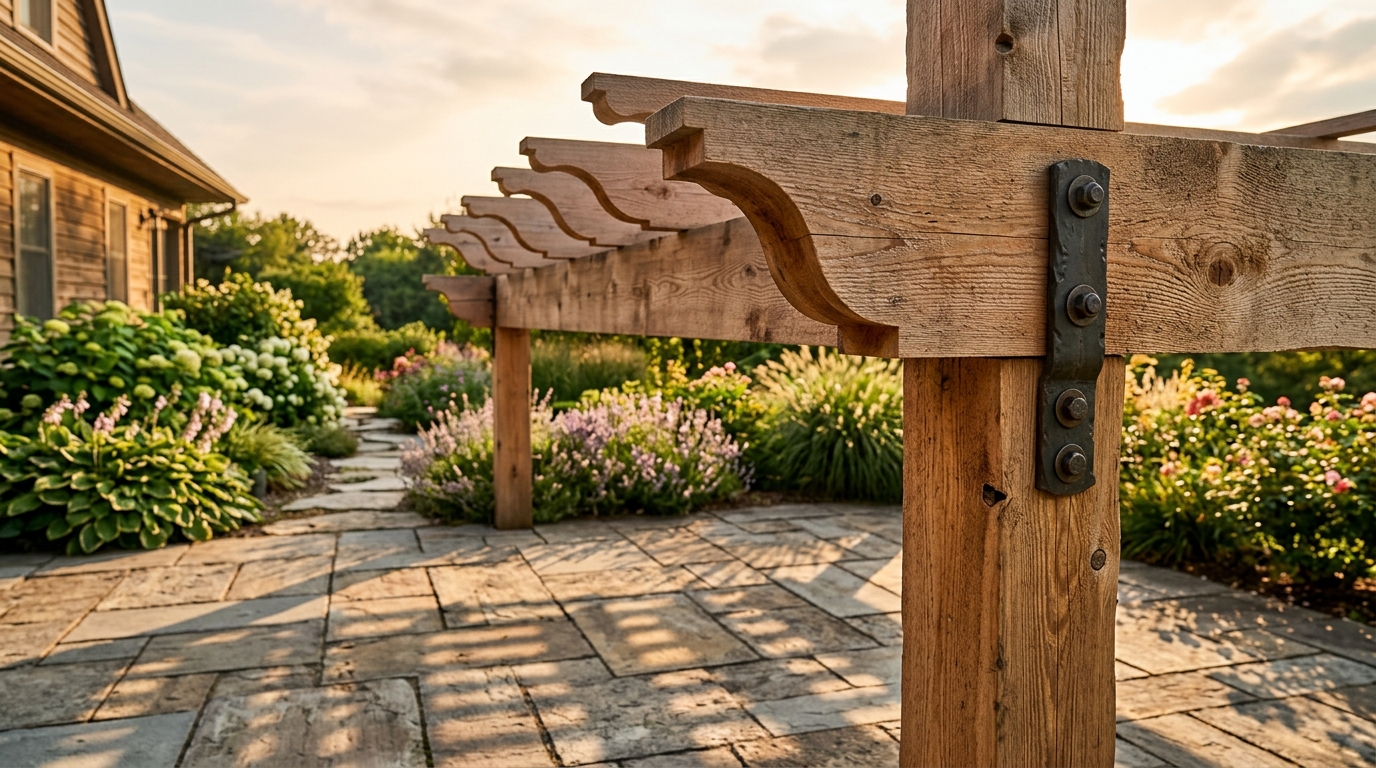
Hardware on the structural connections decides whether the pergola stays plumb or pulls apart at the joints. Galvanized or stainless lag bolts with proper washers handle outdoor exposure for the structure’s full life. Cheaper plated hardware rusts within a few seasons and bleeds stain into the wood around it.
Stain or finish on cedar costs around 200 dollars in materials per pergola but doubles the visible lifespan if applied every two to three years. Untreated cedar still looks fine for a decade, just weathered. The choice between maintained and unmaintained pergola is a real design conversation we have with the homeowner.
Gutter and downspout coordination matters when an attached pergola sits below a house roofline. Roof runoff sheeting onto the pergola wears the structure from above. The design checks how water leaves the roof and routes it away from the pergola posts and beams.
The American Wood Council publishes the Prescriptive Residential Wood Deck Construction Guide (DCA-6), which covers post, beam, and footing standards aligned with how we engineer pergolas.
Frequently Asked Questions
What Does a Pergola Design Phase Cover?
The design covers post placement, beam sizing, rafter spacing, sun-angle orientation, footing depth, attachment method (attached or freestanding), and material specification. Everything goes on a scaled drawing that any qualified carpentry crew can build to.
Do I Need a Permit for a Pergola in Des Plaines?
Most permanent pergolas in Des Plaines need a building permit, especially structures attached to the house or larger than 100 square feet. Smaller freestanding pergolas sometimes skip the permit, and we tell you which category yours falls into.
Cedar or Pressure-Treated Pine for the Pergola?
Cedar holds up to outdoor exposure for two decades with minimal maintenance and looks intentional as it weathers, while pressure-treated pine costs less but twists, warps, and stains over time. We default to cedar unless the homeowner has a budget reason to choose otherwise.
Attached or Freestanding Pergola for My Patio?
Attached pergolas tie into the house framing and read as an extension of the home, while freestanding pergolas anchor on independent footings and accept easier removal later. Site geometry usually decides between them during the design walk.
How Long Does a Pergola Design Take?
Most pergola design plans wrap in 2-3 weeks from site walk to final document. Larger pergolas with custom features (louvered tops, integrated lighting, retractable shades) can run 4-6 weeks because each feature needs its own specification.
Can the Pergola Plan Be Built by a Different Contractor?
Yes, plans are written so any qualified carpentry or hardscape contractor can build to them. Post locations, beam dimensions, rafter spacing, footing depth, and material spec are all documented for the build phase.
Ready To Get Started?
Looking for pergola design in Des Plaines? Schedule with Amliv Land Designs. Family-run, twenty-plus years across Cook and DuPage Counties. Call us at (847) 485-9619 to get your pergola project started today!