
Walkway Installation in Des Plaines: Designing the Path to Your Front Door
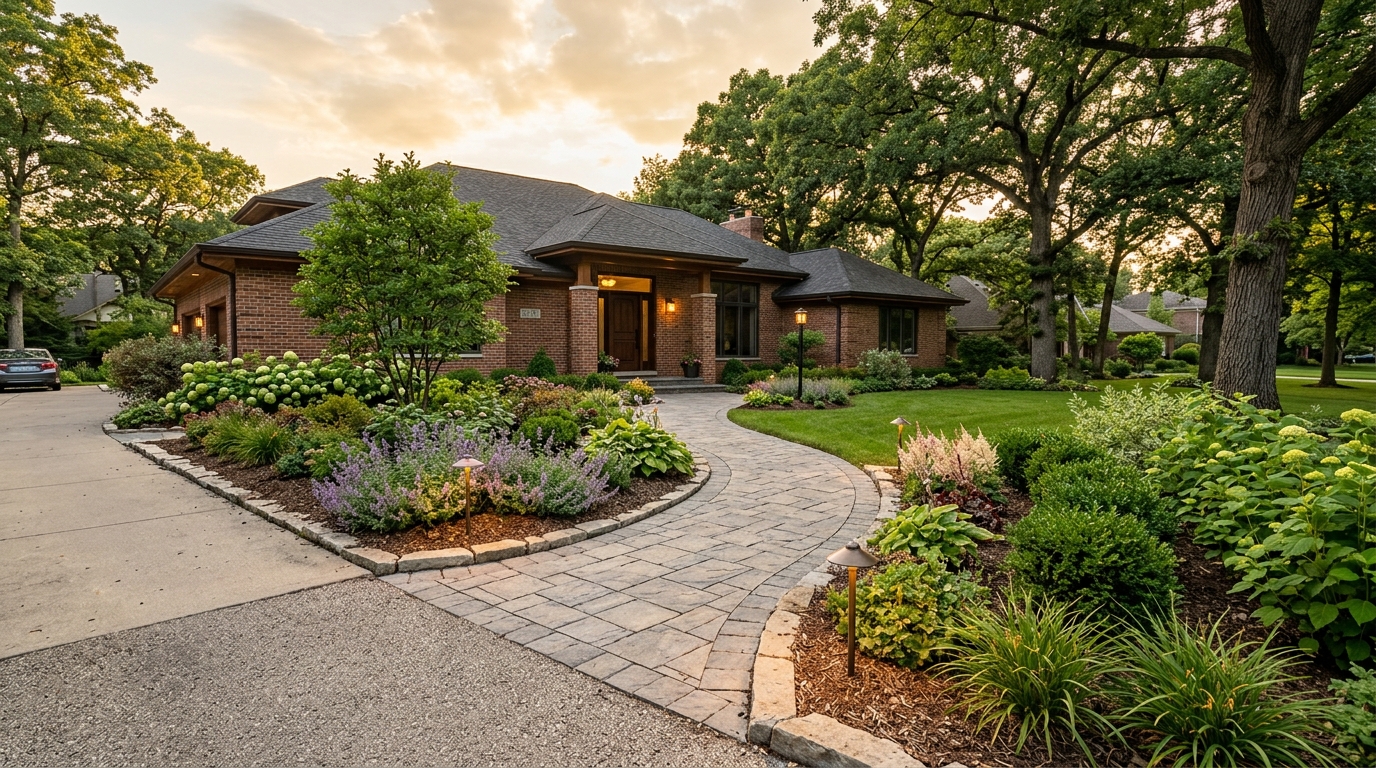
Thoughtful walkway installation in Des Plaines starts with the understanding that the walk from the public sidewalk to your front door is the first conversation your home has with visitors. Where mid-century brick ranches in the Cumberland neighborhood sit next to newer two-stories along the Oakton Street corridor, and front yards run shallow on some blocks and deep on others, that conversation deserves to be planned. We design walks in clay paver, tumbled concrete paver, bluestone, and natural flagstone, with footing that holds through every Cook County winter and the freeze-thaw cycles of USDA Zone 6a.
TL;DR
- Front walkways should be four and a half to five feet wide for comfortable two-person passage.
- Proper grading sheds meltwater toward planting beds, never toward the house or driveway.
- Step risers run five and a half to six and a half inches, with treads at least twelve inches deep.
- Low-voltage 2700K path lighting at eight to ten foot spacing guides visitors after dark.
- Curves should respond to trees, grades, or beds rather than appear for decoration alone.
The Arrival Sequence: From Public Sidewalk to Front Door
Every front walkway tells a story in three or four moves. First is the threshold from the public sidewalk into your property, often marked by a pier, a pair of low boxwoods, or a slight widening of the paver field. Second is the body of the walk, where visitors read the yard on either side. Third is the pause. Usually a small landing of three by four feet, before stepping up to the door. When any of these moves is missing, the approach feels rushed without the visitor knowing why.
Most Des Plaines lots give us twenty to forty feet of front yard between the property line and the foundation, whether on the deeper parcels north of Golf Road or the tighter frontages closer to downtown. That is enough for a gentle curve with a radius of eight to twelve feet, a slight widening near the door, or a small landing that reorients a visitor before they ring the bell. On shorter lots, the work is about restraint. A clean, slightly wider straight run in a soldier-coursed paver reads better than a forced curve with nowhere to go.
We also pay attention to where the walkway meets the driveway. Many Des Plaines homes have the front door visible from the driveway, so most guests skip the public sidewalk and cut across the lawn. A connecting branch off the driveway, even a three-foot spur in matching paver, prevents the worn dirt track that otherwise forms in the Kentucky bluegrass by August.

Width, Curve, and Pace
A front walkway should be wide enough for two people to walk side by side without one stepping into the mulch. In practice that means four feet at the narrowest, four and a half to five feet through the main run. Anything under three and a half feet feels like a service path and makes a 26-inch snow shovel awkward to swing.
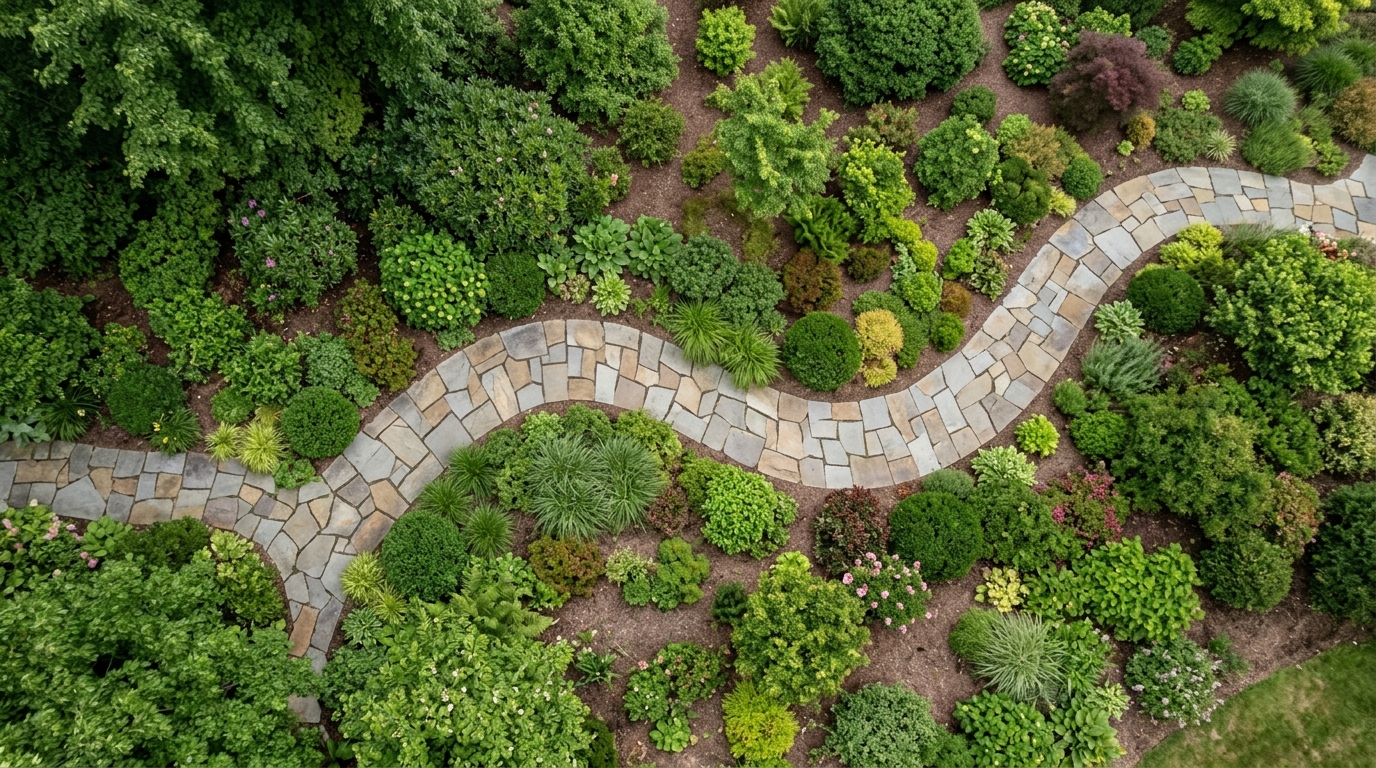
Curves earn their keep when they have a reason. A curve around a mature parkway maple (the kind that still lines many of the older blocks near Maine West High School), an existing yew bed, or a grade change reads as intentional. A curve in the middle of a flat lawn for its own sake reads as decorative. We sketch the walk on the ground in white marking paint and walk it at dawn and dusk before any stone is cut, because a line that looks right in CAD sometimes feels wrong underfoot.
Step Risers, Tread Depths, and Safe Footing
When a walkway changes elevation, step proportions decide whether the approach feels safe or treacherous. We design risers between five and a half and six and a half inches tall, with treads at least twelve inches deep, ideally fourteen to sixteen inches on a front entry. These proportions follow ADA guidance for public-accessible paths and translate well to residential walks used by guests of every age and ability. We typically specify Unilock Brussels Dimensional or Belgard Mega-Arbel step units, sourced from regional yards along the Mannheim Road corridor, set on a compacted CA-6 base over four to six inches of clean stone.
Where a yard slopes meaningfully from sidewalk to door, we prefer to break the rise into landings rather than stack steps. Two single steps with a three-foot landing between them is far easier to navigate carrying groceries than a flight of four. Step nosings should also be visible. We often specify a different finish, a chiseled bullnose, or a deliberate quarter-inch shadow line at the front edge of each tread so the eye registers the change underfoot. That detail matters most in winter, when fresh snow flattens every visual cue and a homeowner is shoveling at six in the morning before coffee.
Grading, Drainage, and Walkway Installation for Des Plaines Winters
A walkway in our climate has to do more than look good in May. It has to shed meltwater in February, stay clear of puddles during April rains, and not ice over every time the temperature swings around freezing. That work happens at grading and base prep, not at the surface. We slope walks at roughly a quarter inch per foot of cross fall (about two percent), enough that water runs off but not so much that the surface feels tilted.
The direction of that cross fall matters. We slope water toward planting beds and lawn. Never toward the house. Never onto the driveway where it will refreeze into a slick patch. On lots where the yard slopes back toward the foundation, common on older blocks east of Lee Street where decades of mulch top-dressing have built up four to six inches against the brick, we regrade a strip on either side of the walk and add a four-inch perforated drain tile in pea gravel before setting the first stone. The heavy clay subsoil under most of the Des Plaines River floodplain holds water for days after a storm, so a properly built base is not optional here.
Path Lighting and the Edges of the Walk
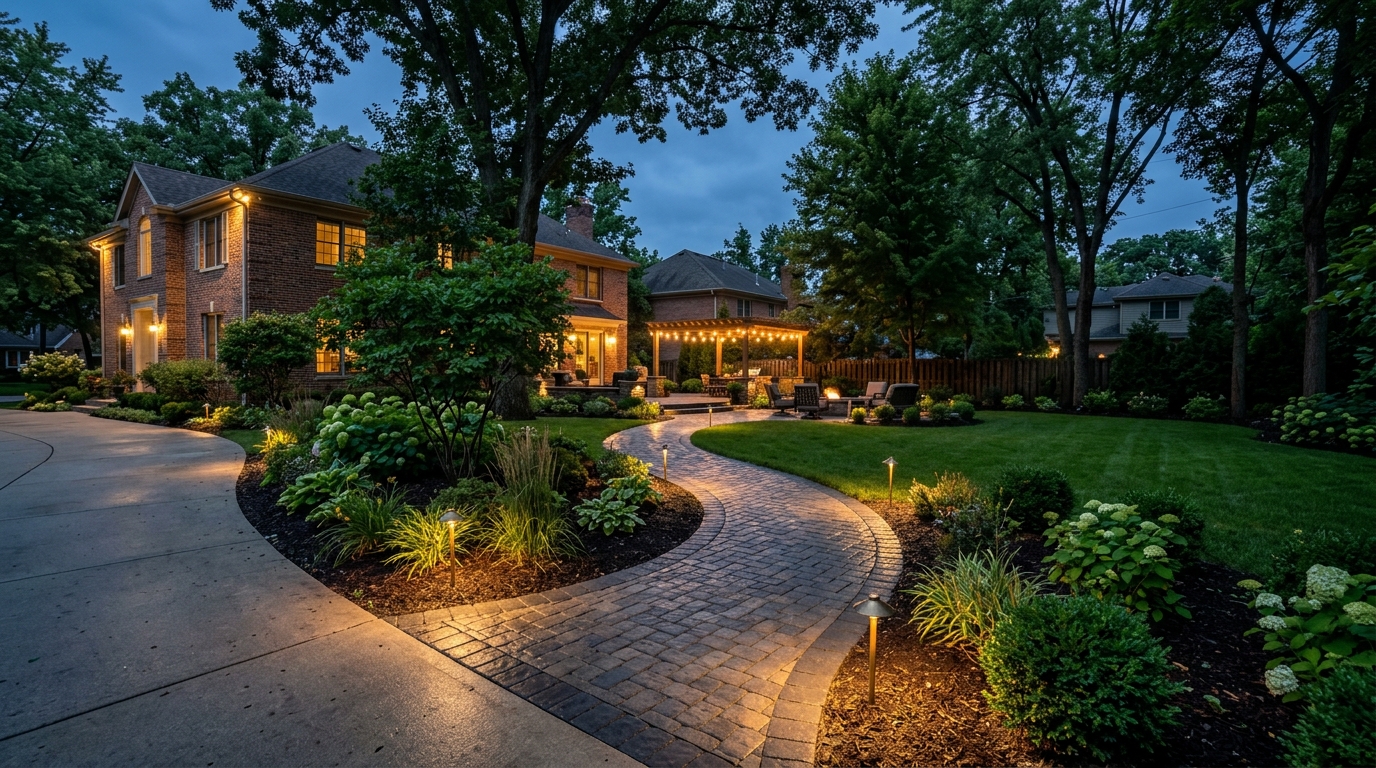
A front walkway is a nighttime feature for at least five months a year here, since the sun is down by 4:30 in December. Low-voltage 12V LED path lights from Kichler, FX Luminaire, or Volt, set back six to twelve inches from the walk edge and spaced eight to ten feet apart, guide feet without creating a runway effect. We plan the lighting layout alongside the walkway, because 12-gauge direct-burial cable and fixture sleeves are far easier to set before the surface goes down.
The fixtures themselves should be quiet. A path light that draws attention to itself is doing the wrong job. We choose warm color temperatures, usually 2700K at two to three watts per fixture, and shielded copper or brass heads that throw light down onto the walk rather than into a visitor’s eyes. More on our broader approach to nighttime design lives on the landscape lighting design page.
How the Walk Talks to the Planting Beds
The transition between hard surface and planting bed separates a thoughtful walkway from a stock one. A clean Permaloc aluminum edge, a stone soldier course of the same paver turned on end, or a deliberate two-inch gap planted with Elfin thyme all read differently. The choice depends on the architecture of the house and the planting style of the rest of the yard.
We use planting beds to soften the geometry of the walk where it needs softening, and reinforce it where it needs to feel formal. A symmetrical pair of Green Velvet boxwoods at the base of a stoop reads formal, and works well on the colonial revivals you see on quieter streets near Lake Park. A drift of Karl Foerster feather reed grass or little bluestem lapping at one edge reads relaxed. Both are correct, depending on the house. We discuss plant selection on the garden design page.
How Long Does a Walkway Installation Take in Des Plaines?
A typical 40-80 linear foot front-door paver path takes us 2-4 days onsite. Longer routes, curved layouts, or natural stone walkways stretch into a second week. Heavy rain pauses the work since compaction needs dry base conditions, so we keep a weather buffer day in the project schedule.
Do I Need a Permit to Install a Walkway in Des Plaines?
Sometimes. Walkways within property lines and not crossing into the public right-of-way usually skip the permit. Anything that crosses into the parkway or city sidewalk does need one. We assess during the site walk and pull the permit if it's required.
Can a Walkway Be Installed Over an Existing Concrete Path?
Sometimes, depending on the condition of the slab. A sound, level slab can take a paver overlay with thin bedding. A cracked or settling slab usually has to come out before the new walkway gets installed. We tell you which category your existing slab falls into during the site walk.
What Pattern and Material Should I Pick for My Walkway?
Pattern and material decisions live in the design phase, before install. Common choices: running bond pavers for a clean modern look, herringbone for traditional, irregular flagstone for a softer garden path, poured concrete for utility. We'll walk you through the tradeoffs at the design stage.
Will the Install Crew Tear Up My Lawn?
Some disturbance happens during excavation and material delivery. We minimize it with plywood paths, planned routes, and protected plantings. Disturbed turf gets restored with fresh sod or seed before we leave. The path itself sits where the path is. Surrounding lawn comes back.
Can the Walkway Be Lit With Low-Voltage Path Lighting?
Yes, and worth specifying during design rather than as an afterthought. Conduit for low-voltage wire gets stubbed in during the install while the trenches are still open, and fixture locations live on the plan. Adding lighting after a finished walkway means trenching across the new path.
Schedule a design consultation with Amliv Land Designs at (847) 485-9619 or email amlivlanddesigns@gmail.com. Vilma works with homeowners across Des Plaines and the northern Chicago suburbs on residential landscape design, installation, and lighting.