
Paver Driveway Design in Des Plaines, IL
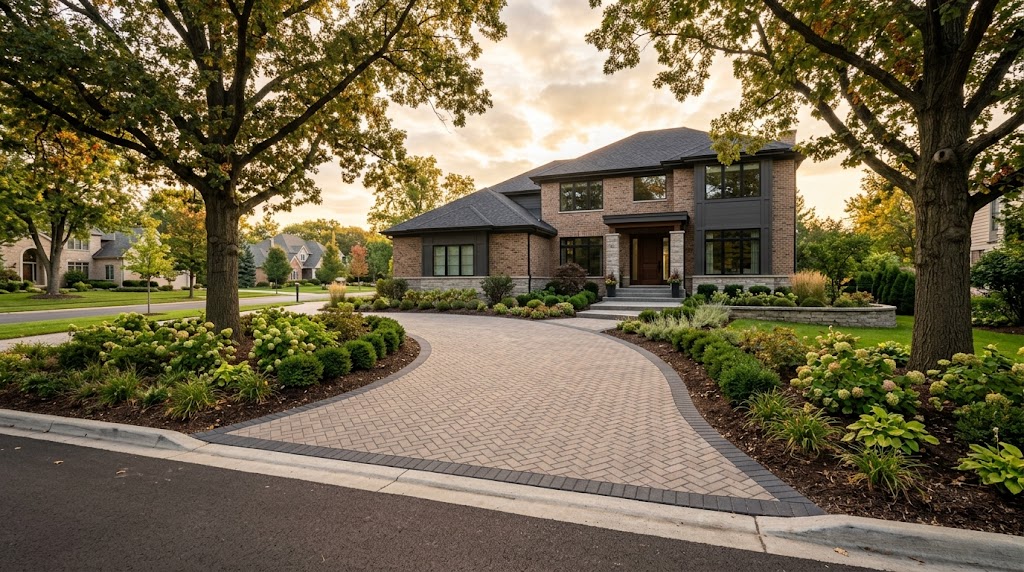
Paver driveway design in Des Plaines is the planning step that decides whether the finished driveway holds up to vehicle weight, freeze-thaw cycling, and twenty years of snow plowing, or whether it starts shifting and cracking by year five. Pattern selection, base depth, edge restraint, drainage routing, and load-rated paver thickness all live on the design drawing before any excavation starts.
TLDR
- Driveway design covers pattern, base spec, edge restraint, drainage routing, and load-rated paver thickness.
- Driveway pavers need to be 60mm or 80mm thick. Patio pavers at 50mm fail under vehicle weight.
- Eight to ten inches of compacted base is the spec, patio installs use six.
- Drainage routing matters. A driveway is a giant sloped surface that catches every snowmelt.
- Edge restraint takes vehicle-load lateral force, not just patio-grade pressure.
We are Amliv Land Designs. Family-run, twenty-plus years designing residential paver driveways across Cook and DuPage Counties. Plans we draw account for the vehicle loads, the Chicago freeze-thaw cycle, and the snow plowing that hits a driveway every winter. The driveway spec is significantly different from a patio spec, and the design phase is where those differences get locked in.
Below: how a paver driveway design phase actually runs, the failure modes we see when driveways get installed at patio spec, why Chicago freeze-thaw demands a specific build spec, and customer-intent answers about cost factors, longevity, and what the design phase delivers.
Driveway design rarely lives on its own. Most plans we run share base spec and labor with the brick paver installation phase, tie into the walkway and path routing, and coordinate with the broader drainage plan for the lot.
What Paver Driveway Design in Des Plaines Actually Covers
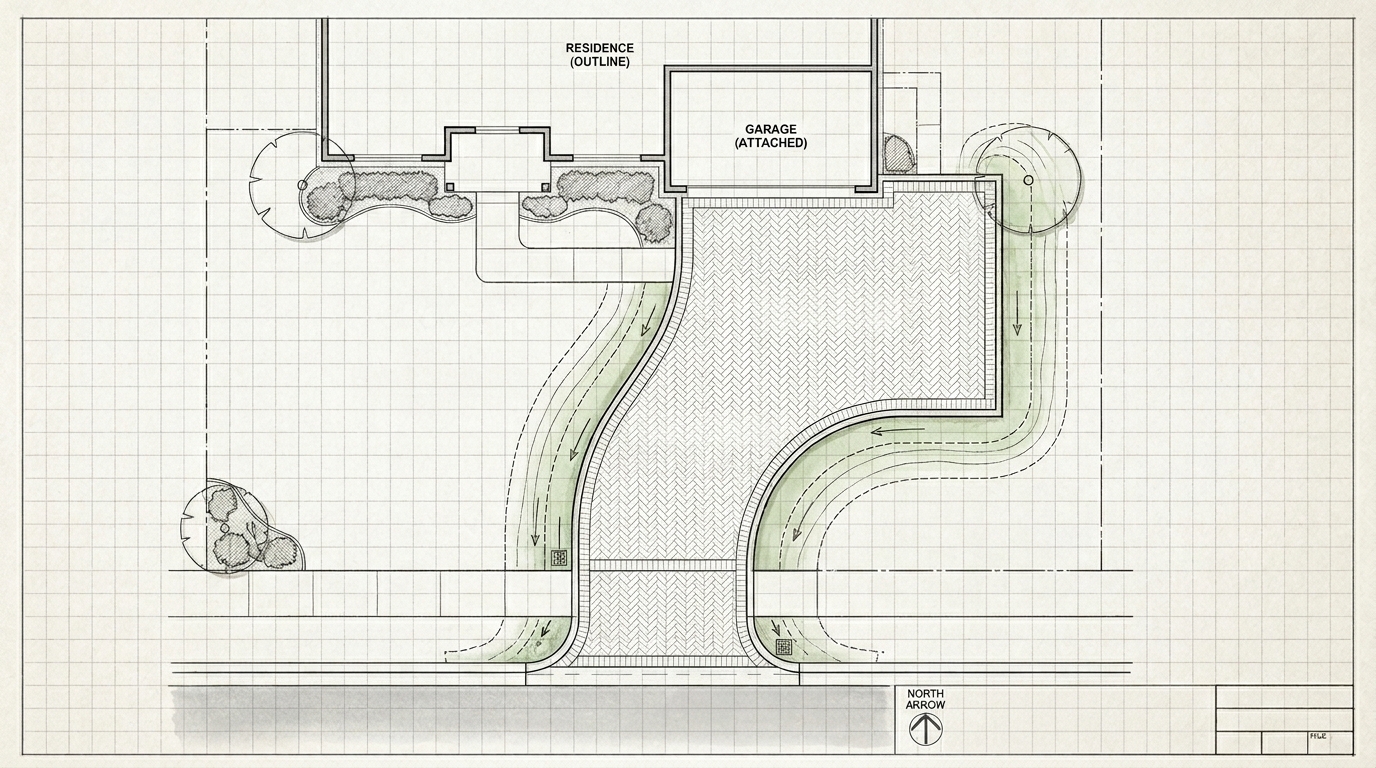
We open every paver driveway plan with a site walk. The walk maps the existing driveway, identifies the slope direction, checks where stormwater currently flows during a rain event, and confirms the proposed footprint against Des Plaines setback rules. Pattern selection happens with the homeowner once the walk is done: running bond, herringbone, or basket weave each carry their own structural and visual tradeoffs.
Base depth specs at eight to ten inches of compacted CA-6 over geotextile fabric, well past patio-grade. Paver thickness gets specified at 60mm minimum, or 80mm for heavier vehicle loads. Edge restraint, drainage routing, and any required permits all live on the same scaled drawing the install crew works from.
What 20 Years of Paver Driveways in Cook County Taught Us
Twenty years of paver driveway projects in this corridor reveals the patterns that separate a 25-year driveway from a 5-year one.
First mistake: patio pavers used on a driveway. Patio pavers at 50mm crack under vehicle wheel loads, especially when the load concentrates on a single paver. Driveway pavers at 60mm or 80mm distribute the load and survive.
Second mistake: insufficient base depth. Six inches of base is the patio spec. A driveway needs eight to ten inches of compacted CA-6 base because the loads are vehicle-grade, not patio-grade.
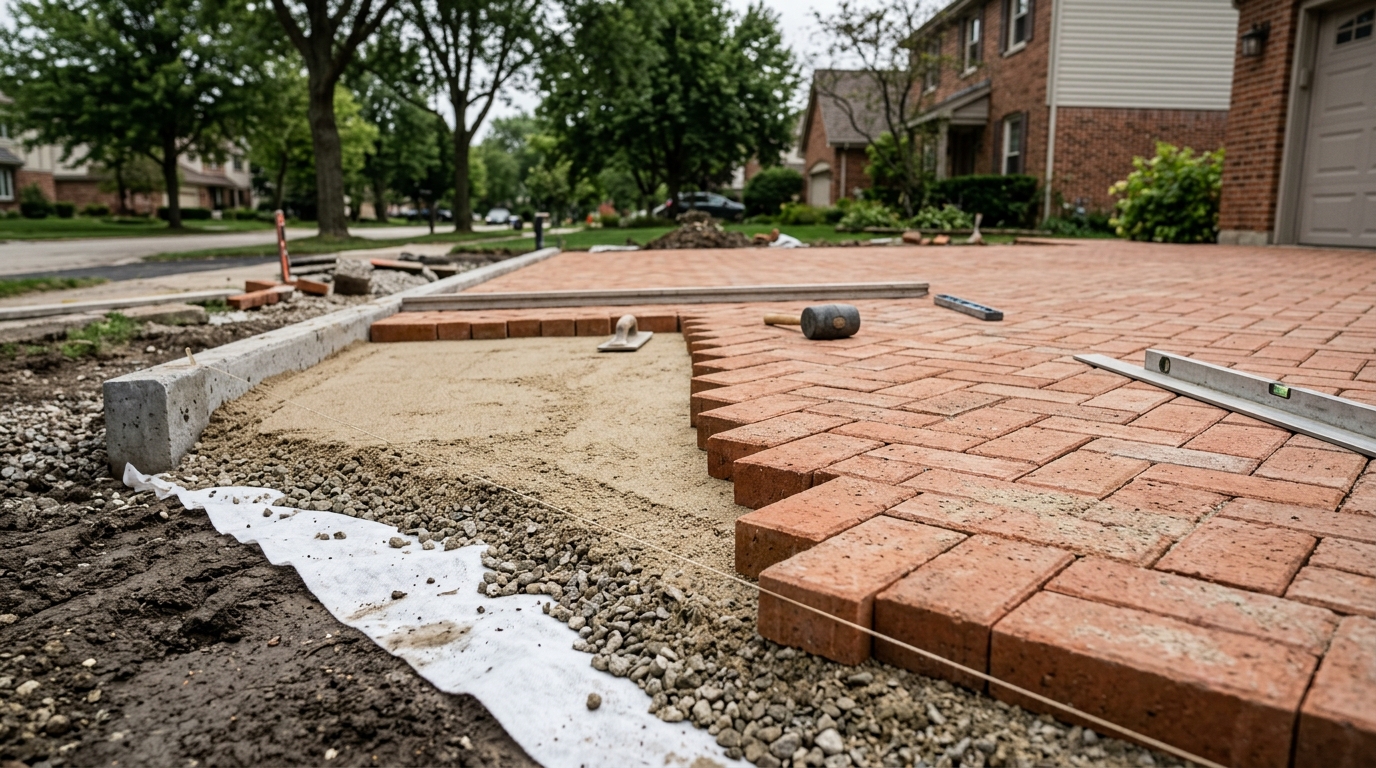
Third mistake: edge restraint sized for patio pressure. Vehicle tires push outward on the perimeter pavers every time a car turns. Patio-grade edge restraint walks within a couple of years on a driveway.
Fourth mistake: drainage ignored. A driveway is a large sloped surface. Snowmelt and stormwater routing has to leave the surface intentionally, not seep through the joints into the base where it freezes and expands.
Fifth mistake: pattern chosen for looks without considering vehicle traffic. Some patterns (herringbone for example) lock pavers against shear better than others (running bond perpendicular to traffic). The pattern is a structural choice, not just a visual one.
Each of these is a design-phase decision. The build crew can only execute against what the plan specifies.
Why Chicago Freeze-Thaw Demands a Specific Driveway Spec
Chicago freeze-thaw makes paver driveway engineering different from anywhere south of the Mason-Dixon.
Snow plowing adds a second mechanical pressure. Plow blades hit the driveway dozens of times each Chicago winter, and pavers set on undersized base move when the blade catches an edge. Edge pavers without proper restraint walk away from the field over a few seasons. Driveway base spec assumes mechanical disturbance, not just static vehicle load.
Snow plowing is the second pressure. Plow blades hit the driveway surface dozens of times each winter. Pavers set on insufficient base will move when struck. Edge pavers without proper restraint walk away from the field. The base spec has to assume mechanical disturbance, not just static load.
Salt and de-icer are the third piece. Calcium chloride and other de-icers attack mortar joints and the surface of cheaper pavers. We spec freeze-thaw rated pavers that handle salt exposure without spalling.
These three regional realities push the right driveway spec well past what patio specs provide. The plan reflects all three before any excavation begins.
When Paver Driveway Design in Des Plaines Beats Concrete or Asphalt
Paver driveways outperform poured concrete and asphalt on three lines that matter over the long term.
Number one is how long the surface lasts. Pavers installed at the right base depth keep performing for several decades. Concrete starts visibly cracking somewhere in years ten through fifteen as freeze-thaw and de-icing salt break down the surface. Asphalt needs a fresh seal every couple of years, plus a full resurfacing typically around year twelve.
Second, repairability. A damaged paver gets pulled and replaced individually. A cracked concrete slab requires saw-cutting, removal, and re-pouring to match. Asphalt patches show as visible repairs forever.
Third area where pavers outperform is in how the surface handles rainwater and snowmelt. The joints between pavers act as small infiltration points across the whole driveway. Solid slabs cannot do that. Every gallon of rain or melt has to flow off the surface to wherever the slope sends it, and that destination is usually a problem.
Resale value math works out in the homeowner’s favor on paver driveways. Appraisers consistently rank paver driveways higher than concrete or asphalt of comparable age. The premium is documented in the major appraisal databases and carries through to listing photos and buyer perception.
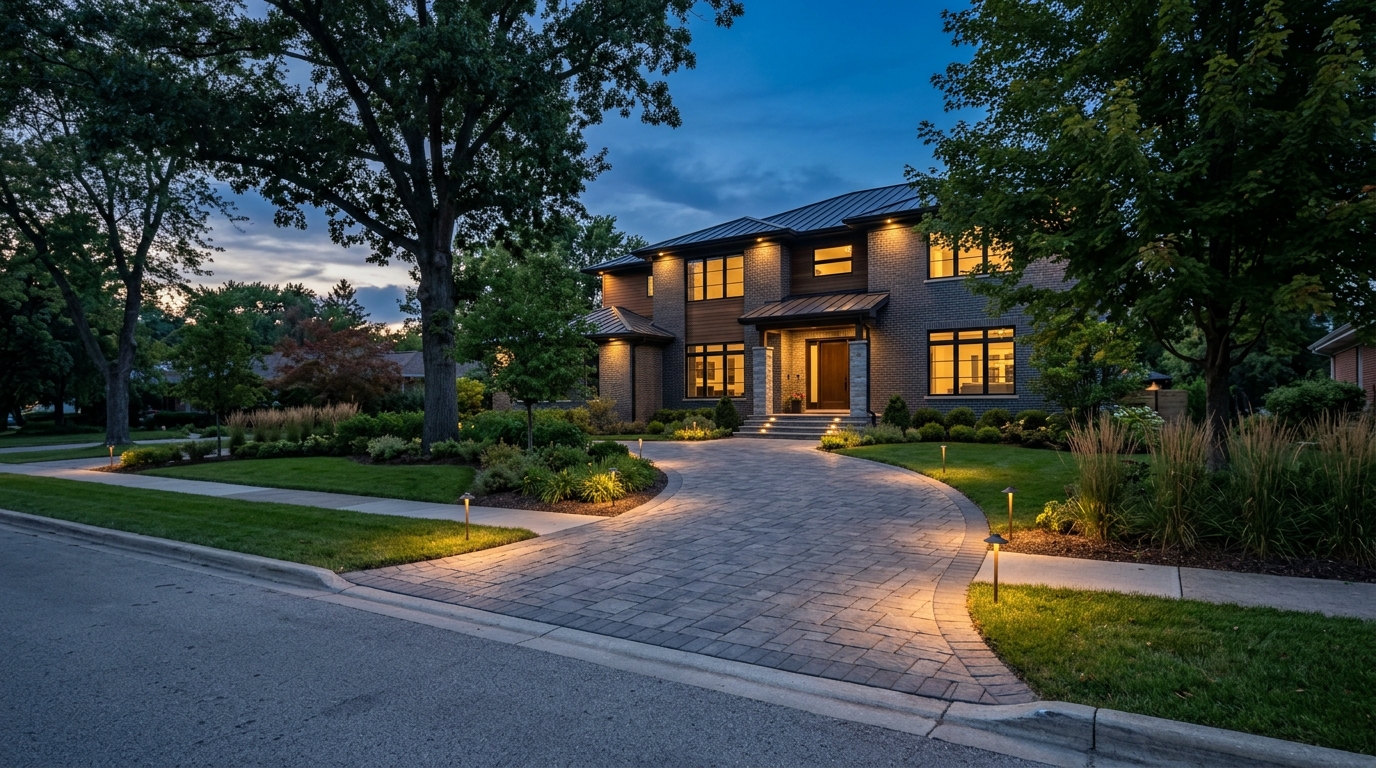
A driveway designed to spec is one of the highest-leverage hardscape investments on a Chicago property. Twenty-five years of structural performance, repairability when something does shift, and visual presence that holds up in every season all come from the design phase, not from the install crew. Spec the driveway right once and avoid paying for the wrong driveway twice.
Site grade and slope decisions on a paver driveway carry as much weight as material selection. A driveway that pitches even slightly toward the house drives stormwater and snowmelt at the foundation every season. Plans we draw verify the slope direction across the entire footprint and route water away from the structure with deliberate cross-slope and surface drainage. The detail catches first-time buyers off guard.
What Pattern Choices Mean for a Paver Driveway
Pattern selection affects both how the driveway looks and how it performs structurally under vehicle loads.
Running bond is the simplest pattern: pavers offset by half a paver in each course. Easy to install, clean look, but the pattern offers less shear resistance against vehicle braking and turning forces. Best for low-traffic residential driveways.
Herringbone runs pavers at 45 or 90 degrees to the driving direction in an interlocking weave. The interlock provides excellent shear resistance, which means the pattern handles vehicle loads better than running bond. The visual reads as traditional. Most of our driveway plans default to herringbone for this reason.
Basket weave alternates pairs of pavers at 90 degrees to each other. The pattern reads as decorative and works well on shorter driveways or aprons. Shear resistance sits between running bond and herringbone. We use it when the visual matters more than maximum structural performance.
I-pattern combines paver shapes (typically a larger paver with smaller fill pavers) into a deliberate variation. Works as a high-end visual choice. Requires careful base prep and edge restraint because the pattern transitions create more potential failure points than uniform patterns.
Paver color is not just about preference. A pale paver shows oil drips and tire-track shadowing more obviously, while a dark paver shows white salt residue from de-icers more obviously. Most homeowners pick whichever issue bothers them less rather than chasing the absolute best look.
Saw cut transitions to the existing apron or sidewalk decide whether the driveway reads as designed or improvised. A clean saw cut at the property line shows a deliberate edge. A ragged transition signals deferred maintenance the day the project is finished.
Plow compatibility belongs on the design checklist. Slope, edge restraint, and paver pattern each affect how a plow blade interacts with the surface. Patterns laid perpendicular to the plow line interlock against the blade pressure better than patterns running with the line of travel.
The Interlocking Concrete Pavement Institute publishes the ICPI technical resource library, covering the base depth, edge restraint, and paver thickness standards we apply on every driveway design.
Frequently Asked Questions
What Does a Paver Driveway Design Phase Cover?
The design covers pattern selection, base depth and material, paver thickness, edge restraint spec, drainage routing, and any required permits. Everything goes on a scaled drawing the install crew builds to.
Do I Need a Permit for a Paver Driveway in Des Plaines?
Almost always, especially when the driveway crosses into the public right-of-way at the apron, when the project changes the existing driveway footprint, or when work involves grading or drainage tied to municipal stormwater. We pull the permit as part of the design phase.
How Thick Do Driveway Pavers Need to Be?
Driveway pavers need to be 60mm thick at minimum, or 80mm for heavier vehicles or commercial use. Patio pavers at 50mm crack under vehicle wheel loads and should never be specified for a driveway.
How Long Does Paver Driveway Design Take?
Most paver driveway design plans wrap in 3-5 weeks from site walk to final document. Larger driveways or projects with significant grading and drainage redesign can run 6-8 weeks because each detail needs its own specification.
Can a Paver Driveway Be Installed Over an Existing Concrete or Asphalt Surface?
Sometimes, depending on the existing surface condition. A sound, level concrete slab can take a paver overlay with thin bedding, while a cracked or deteriorated surface has to be removed first.
Can I Take the Driveway Plan to a Different Installer?
Yes, plans are written so any qualified paver contractor can build to them. Pattern, base depth, paver thickness, edge restraint, and drainage routing are all documented in the build package.
Ready To Get Started?
Looking for paver driveway design in Des Plaines? Schedule with Amliv Land Designs. Family-run, twenty-plus years across Cook and DuPage Counties. Call us at (847) 485-9619 to get your driveway project started today!